


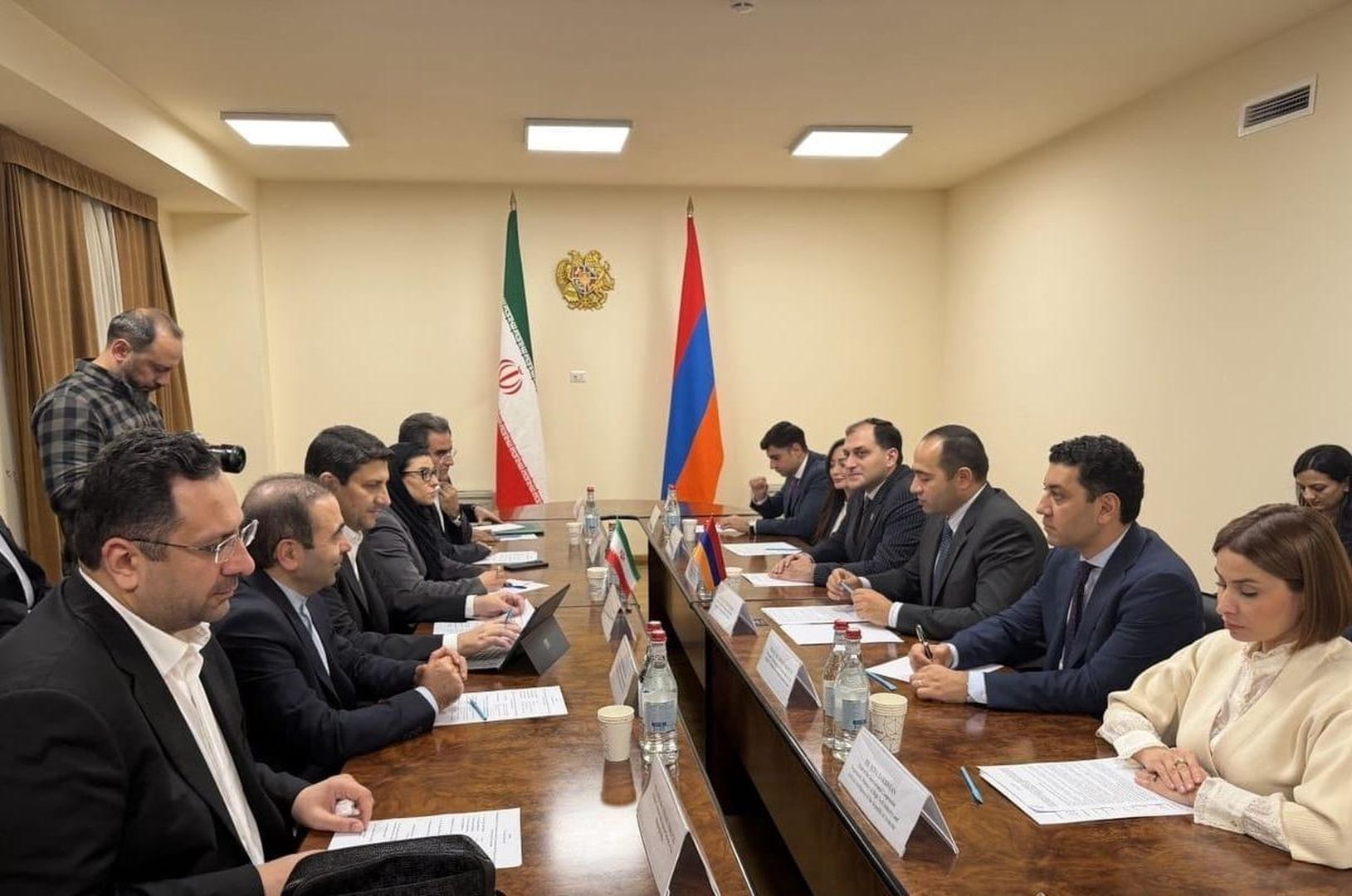
BAKU, Azerbaijan, November 21. Iranian Minister of Information and Communications Technology Seyed Sattar Hashemi, who visited Yerevan on November 19, held a series of meetings the following day, during which he emphasized Tehran’s intention to deepen ties with Armenia. The visit can, in fact, be viewed from several different angles.
First, it is worth examining the issues discussed during the Iranian minister’s meetings. The two sides identified coordination on regulation and radio frequency spectrum management in their border regions, the development of fiber-optic communication lines, and the establishment of alternative routes for international traffic exchange as key areas of cooperation.
Iran’s Communications Infrastructure Company expressed its readiness to work with relevant Armenian agencies. Other areas of mutual interest included artificial intelligence, data analytics, semiconductor design, industrial automation, and space technologies.
The importance of involving innovative companies, universities, and research centers from both countries in joint projects was also highlighted.
Iran’s capabilities in digital government, digital identification, and integrated services were another focus of the discussions. Tehran said Iranian companies were ready to participate in Armenia’s digital transformation projects and put forward a proposal to Yerevan in this regard.
Hashemi also highlighted the capabilities of the Payam Special Economic Zone and International Airport, proposing joint investment by companies from both countries, as well as cooperation in equipment manufacturing and assembly, technology transfer, and the export of technological products.
He identified postal services and logistics as other promising areas, including facilitating the exchange and transit of international mail and expanding ties between private and innovative companies.
The discussions also addressed the resumption of direct mail exchanges at the Norduz-Meghri border crossing between Iran and Armenia, the launch of bilateral postal services, and the possibility of routing parcels from other countries to Iran through Armenia.
The Iranian minister recalled that a draft memorandum of understanding on cooperation had been prepared and sent to the Armenian side. He called for the document to be reviewed and finalized, and for a joint action plan to be drawn up to implement the agreements reached.
During the meetings, Hashemi also condemned US and Israeli military attacks against Iran, drawing attention to civilian casualties and damage to the country's civilian infrastructure. He described the use of artificial intelligence technologies in those attacks as a particularly noteworthy issue.
Pointing to Iran’s experience in combating cyber threats and its relevant infrastructure, the minister also stressed Tehran’s readiness to share its expertise and capabilities with Armenia in protecting communications infrastructure and managing cyberattacks.
Overall, the visit can be seen as an attempt by Tehran to expand cooperation with Armenia beyond traditional political and economic ties into strategic areas such as digital technologies, communications infrastructure, logistics, and cybersecurity.
For several months, Iran has been feeling the adverse effects of a maritime blockade, followed by an air blockade. Against this backdrop, it is seeking to safeguard trade across its land borders and meet its needs by drawing on the capabilities of neighboring countries. As part of this effort, Tehran is pursuing closer ties and improved relations with countries to its east, west, and north.
Iran's latest outreach to Armenia, accompanied by an extensive range of proposals, is particularly significant given the country's current economic constraints, maritime and air blockades, and numerous sanctions. This development draws attention to the TRIPP (Trump Route for International Peace and Prosperity) project. The fact that the Iranian minister focused on infrastructure and communications while also bringing up the United States offers a clear indication of the broader considerations behind the visit.
Iran is also seeking to keep Armenia in focus within the framework of the International North-South Transport Corridor (INSTC). Although Iran has identified three routes for the corridor - the eastern route through Turkmenistan, the central route across the Caspian Sea, and the western route through Azerbaijan - it is also seeking to promote Armenia as a potential fourth route rather than leave it outside its transport network.
At a time when transport corridors are gaining considerable importance, Iran is seeking both to persuade Armenia to use Iranian territory as part of the INSTC and to expand the number of routes running through Iran.
In broader terms, it is becoming increasingly clear that Iran, which sees the TRIPP project as contrary to its interests in economic and other fields, is working on an alternative approach. Tehran intends to respond to the United States' growing involvement in Armenia through the TRIPP project with countermeasures across various sectors.
The proposals put forward by Iran - ranging from postal services to artificial intelligence and digital government - indicate that Tehran has serious reservations about the TRIPP project. By strengthening its presence in the region through fundamental and infrastructure-related initiatives, Iran is seeking to safeguard its own interests.


