


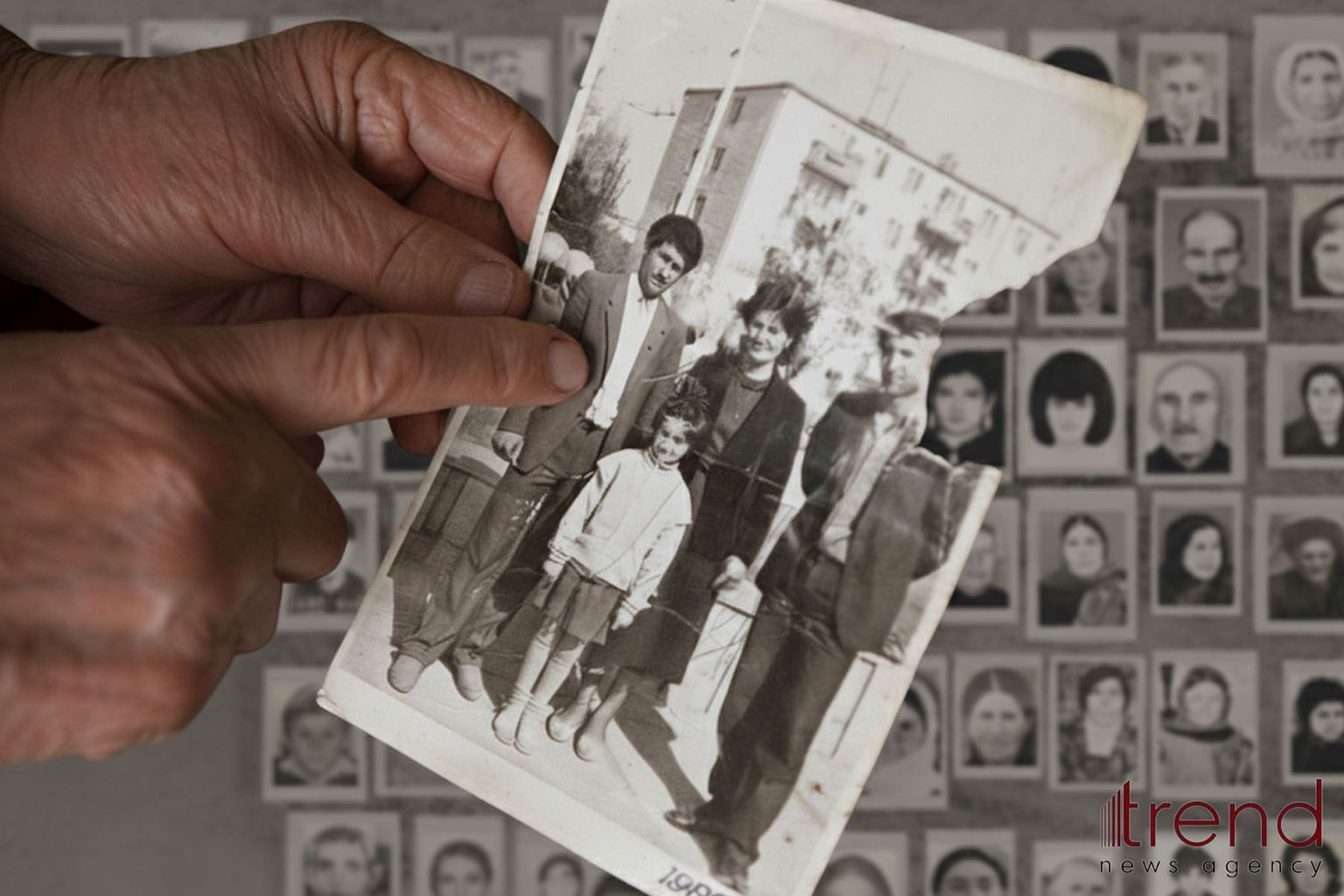

BAKU, Azerbaijan, November 20. One of the key humanitarian issues on the Azerbaijan-Armenia peace agenda is determining the fate of missing Azerbaijanis. Decades after the wars, the whereabouts of 4,010 Azerbaijani citizens remain unknown. Azerbaijan is waiting for Armenia to provide information that could help establish what happened to these people.
The issue goes beyond the decades-long anguish of the missing persons' families. It is also important in terms of international humanitarian law, investigations into war crimes, mutual trust and the establishment of lasting peace in the region.
Over 200 burial sites Armenia has yet to disclose
During contacts between the state commissions on missing persons, Armenia pledged to provide the locations and coordinates of more than 200 burial sites, including mass graves. However, it has yet to disclose this information.
Meanwhile, Azerbaijan has submitted to Armenia, based on various sources and witness accounts, lists of citizens who were captured during the First Karabakh War and held in captivity without being reported to international organizations.
Statements by former senior Armenian military officials indicating that they have information about burial sites further underscore the importance of the issue.
The discovery of 32 mass graves in territories liberated from occupation to date also demonstrates the scale of the problem. Work is ongoing to recover human remains, identify the victims and investigate the circumstances of their deaths.
The fate of 54 Azerbaijani prisoners who had been registered by the International Committee of the Red Cross (ICRC) also remains unresolved. According to the information provided, the remains of 17 people have been returned, while those of 33 individuals reportedly killed in detention have yet to be handed over to their families.
The fate of missing persons remains central to the peace agenda
On August 8, 2025, a Joint Declaration was signed between Azerbaijan and Armenia in Washington in the presence of the US president, while the text of a peace agreement was initialed.
Article 9 of the draft agreement envisages cooperation on missing persons and cases of enforced disappearance. This includes information exchange, efforts to establish the fate of missing persons, the search for and return of human remains, and relevant investigations.
Azerbaijan rightly considers that Armenia's disclosure of information on burial sites and missing persons would be an important step toward strengthening trust in the peace process.
President Ilham Aliyev also drew particular attention to the issue in his address to participants of the 4th international conference held within the Baku Dialogue format on October 7, 2026. The head of state called on Armenia to provide information on missing persons, archival documents and burial sites. He also proposed establishing a dedicated mechanism under the UN to address missing persons cases.
Azerbaijani NGOs appeal to the international community
Calls to establish the fate of missing Azerbaijanis are being raised not only at the state level but also by civil society organizations on international platforms.
In 2025, the Karabakh Missing Families Public Union held a rally outside the UN Office in Geneva, near the Broken Chair monument, to bring the expectations of missing persons' families to the attention of the international community.
In October 2026, the union held a series of rallies in Brussels outside the European Parliament and other European Union institutions.
The Gilavar Photo Club Public Union has also organized photo exhibitions across Europe to draw international attention to missing persons and the threat posed by landmines.
In October 2026, the organization held exhibitions in Geneva, Brno, Ljubljana, Sarajevo, Zagreb, Salzburg, Rome and Milan. The exhibitions highlighted demands for Armenia to provide accurate minefield maps and information about missing Azerbaijanis.
Mine threat complicates the search for missing persons
The search for missing persons is also directly linked to the landmine problem. The discovery of mines around some mass graves complicates search and exhumation operations.
Some of the minefield maps provided to Azerbaijan by Armenia have limited accuracy, while maps for certain areas have not been provided at all. The lack of information on minefields laid along the former line of contact established after 2020 is particularly concerning.
The discovery of more than 500,000 mines and other explosive devices in territories liberated following the anti-terrorist measures conducted in September 2023 has once again demonstrated the scale of the threat.
Mines are currently being found in Karabakh and East Zangezur not only at former military positions but also near residential areas, along roads, in forests, on riverbanks, in agricultural fields and in cemeteries.
For this reason, providing the precise coordinates of burial sites and accurate minefield maps is essential both for locating missing persons and for ensuring civilian safety.
Families continue to seek justice and answers
Determining the fate of missing persons remains one of the key priorities in addressing humanitarian issues in Azerbaijan-Armenia relations. Years after the end of the war, thousands of families still do not know where their loved ones were buried, the circumstances in which they died or where their remains are located. Armenia's disclosure of information on more than 200 burial sites, archival documents and accurate minefield maps could help put an end to this uncertainty.
The issue is therefore not only about investigating the consequences of past wars, but also about upholding the fundamental rights of families, restoring humanitarian justice and strengthening lasting peace in the region.


