


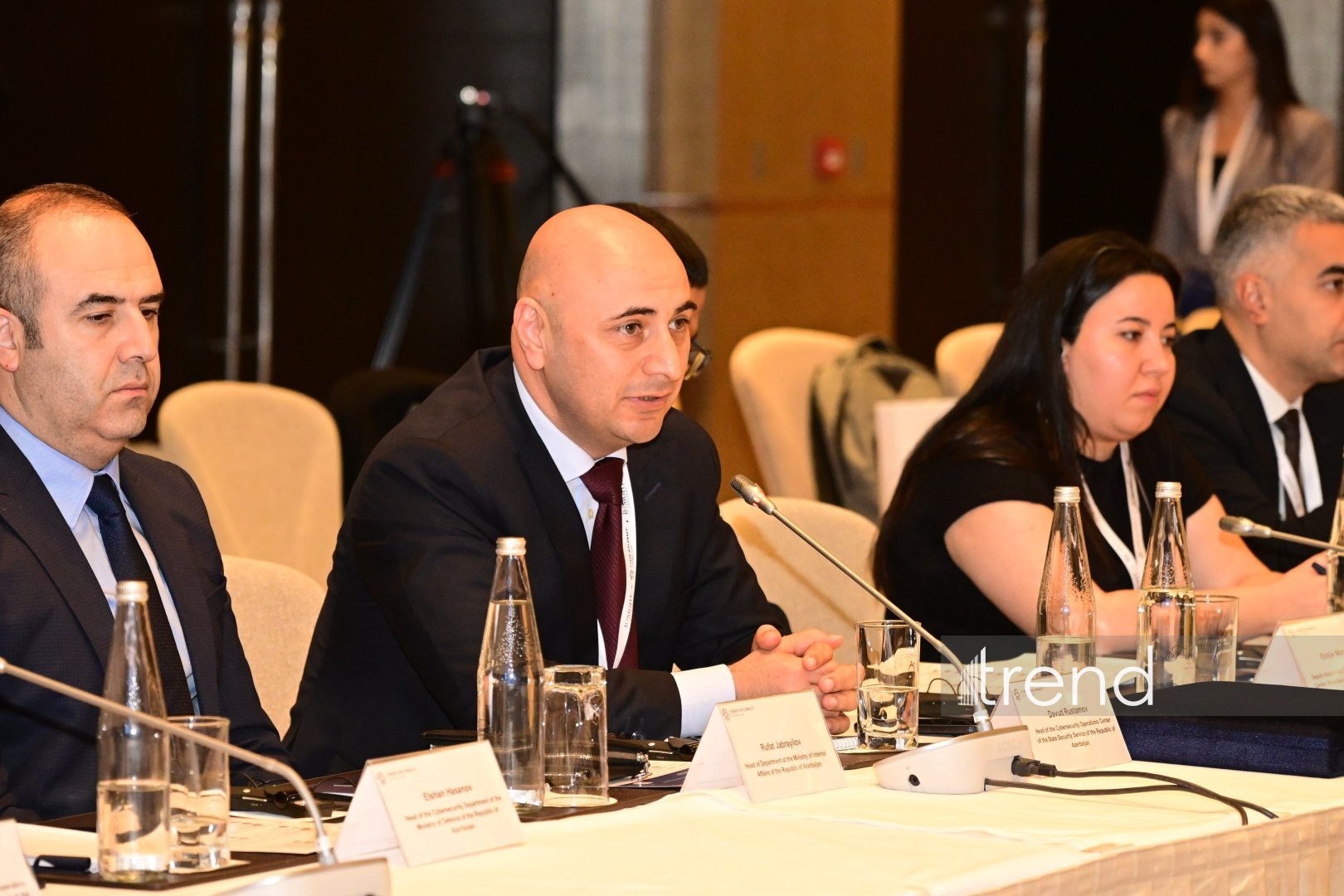

BAKU, Azerbaijan, November 19. Outdated libraries and other vulnerabilities used in artificial intelligence-based applications pose serious cyber threats to critical information infrastructure, Head of the Cybersecurity Operations Center of the State Security Service of Azerbaijan, Davud Rustamov, said during a panel discussion titled "Protection of Critical Infrastructure: Managing Cross-Border and National Security Risks" at the 2nd International Conference on Cyber Diplomacy in Baku today, Trend’s correspondent reports from the event.
He noted that, since 2020, Azerbaijan has begun establishing a legislative framework for critical infrastructure, drawing upon the experience of Israel, Türkiye, Italy, the US, and other developed countries.
"We have our own unique approach within our legislation. Anyone can learn about our experience in this field by examining the legislative acts," Rustamov explained.
According to him, the legislative process concerning the security of critical information infrastructure has been completed. The State Security Service has been designated as the primary authority responsible for security in this domain and exercises state oversight over the security of critical information infrastructure. Furthermore, the service combats cyber threats of a global nature.
Addressing the risks posed by artificial intelligence technologies, Rustamov remarked that most applications currently developed using these technologies contain certain vulnerabilities.
"Almost all AI-based applications contain various vulnerabilities, as they utilize a diverse range of software libraries, including some that are outdated. These vulnerabilities can pave the way for cyberattacks that leverage other AI-driven solutions," he emphasized.
He pointed out that state-affiliated actors, in particular, target critical information infrastructure. The State Security Service carries out various mandates in this area, including counter-terrorism, counter-intelligence, and efforts to combat cybercrime.
The head of the center stated that the service conducts digital forensic investigations, as well as security audits and penetration testing. Furthermore, Indicators of Compromise (IoCs) are regularly shared with operators of critical infrastructure and other stakeholders, as well as with international partners.
"We are interested in expanding our international partnerships. This is because the timely sharing of malicious IP addresses, domains, hashes, and other indicators of compromise strengthens our capabilities and plays a crucial role in combating global threats," Rustamov mentioned.
Speaking about the priorities that national security agencies should focus on, Rustamov highlighted the importance of continuously monitoring how artificial intelligence is reshaping the threat landscape.
According to him, artificial intelligence now enables existing attack tactics, such as reconnaissance and impersonation, to be executed more rapidly and on a larger scale. Consequently, it’s essential to continuously assess the activities of threat actors and the methods they employ, as well as the capacity of infrastructure operators to detect and respond to attacks on time.
He noted that, to this end, national cyber centers, intelligence services, and infrastructure operators must collaborate, exchange information regarding observed threats, and test their response plans. Rustamov noted that a platform called MISP, used for the exchange of information regarding malicious software and threats, is active in Azerbaijan, with the participation of representatives from the private sector. Operators of critical infrastructure, government agencies, and other voluntary participants connect to this platform to share data on malicious indicators of compromise daily.
He added that Azerbaijan has also joined international MISP platforms (Malware Information Sharing Platform, now MISP Threat Sharing) and shares the malicious indicators exchanged there with local partners.
The head of the center emphasized that the second priority is to elevate international cooperation to an operational level. He explained that a partner country might identify the initial signs of a cyberattack campaign even before the operators in the targeted country do. However, such an early warning is only valuable if it is communicated to the relevant parties promptly and enables the implementation of concrete measures.
"We need reliable, 24/7 communication channels among national incident response teams, as well as agreements for the rapid exchange of threat intelligence. Furthermore, we must conduct joint exercises to test how coordination will be executed during actual cross-border incidents," he said.
Rustamov pointed out that the preparedness level of countries should be assessed based on several key questions: how quickly can threats be identified, how rapidly can action be taken in coordination with partners, and can the continuous operation of essential services be ensured while responding to a cyber incident?
He also highlighted the importance of establishing a unified national cybersecurity landscape rooted in collective defense. In his view, such a system would integrate data from critical infrastructure operators, sector regulators, incident response teams, law enforcement agencies, and intelligence services onto a single platform.
According to Rustamov, an early warning system should provide a clear picture of which critical services are affected, the likelihood of the threat spreading to other operators or sectors, and a distinction between confirmed facts and matters still under investigation. At the same time, operators must be provided with timely alerts and instructions on specific measures to be taken.
In conclusion of the speech, Rustamov noted that current trends in cyberattacks, including those targeting government institutions and utilizing artificial intelligence, are being monitored.
He specifically highlighted the risks posed by uncensored artificial intelligence models circulating on "darknet" resources. He noted that such models offer malicious actors extensive capabilities to execute and automate cyberattacks, as well as to develop complex attack scenarios.
"This is a very serious issue. Law enforcement agencies may not always be prepared to counter such sophisticated attacks. In the digital age, we are facing attacks that are extremely difficult to investigate using traditional methods," Rustamov stressed.
The 2nd International Conference on Cyberdiplomacy, themed “Power and Influence in the Age of Artificial Intelligence: A Regional Perspective on the Changing Cyber Environment,” is taking place in Baku.
The conference brings together representatives of government agencies from various countries, international organizations, research centers, and the private sector.
The event focuses on a range of current issues, including the impact of artificial intelligence on international relations, cybersecurity, digital sovereignty, interstate cooperation in cyberspace, information security, and the protection of critical infrastructure.
The conference is jointly organized by the State Service for Special Communications and Information Security of the Republic of Azerbaijan and the National Institute for Research and Development in Informatics of Romania, with the participation of the Office of the President of the Republic of Azerbaijan, the Ministry of Foreign Affairs, the Ministry of Digital Development and Transport, the State Security Service, and other local partners.


