


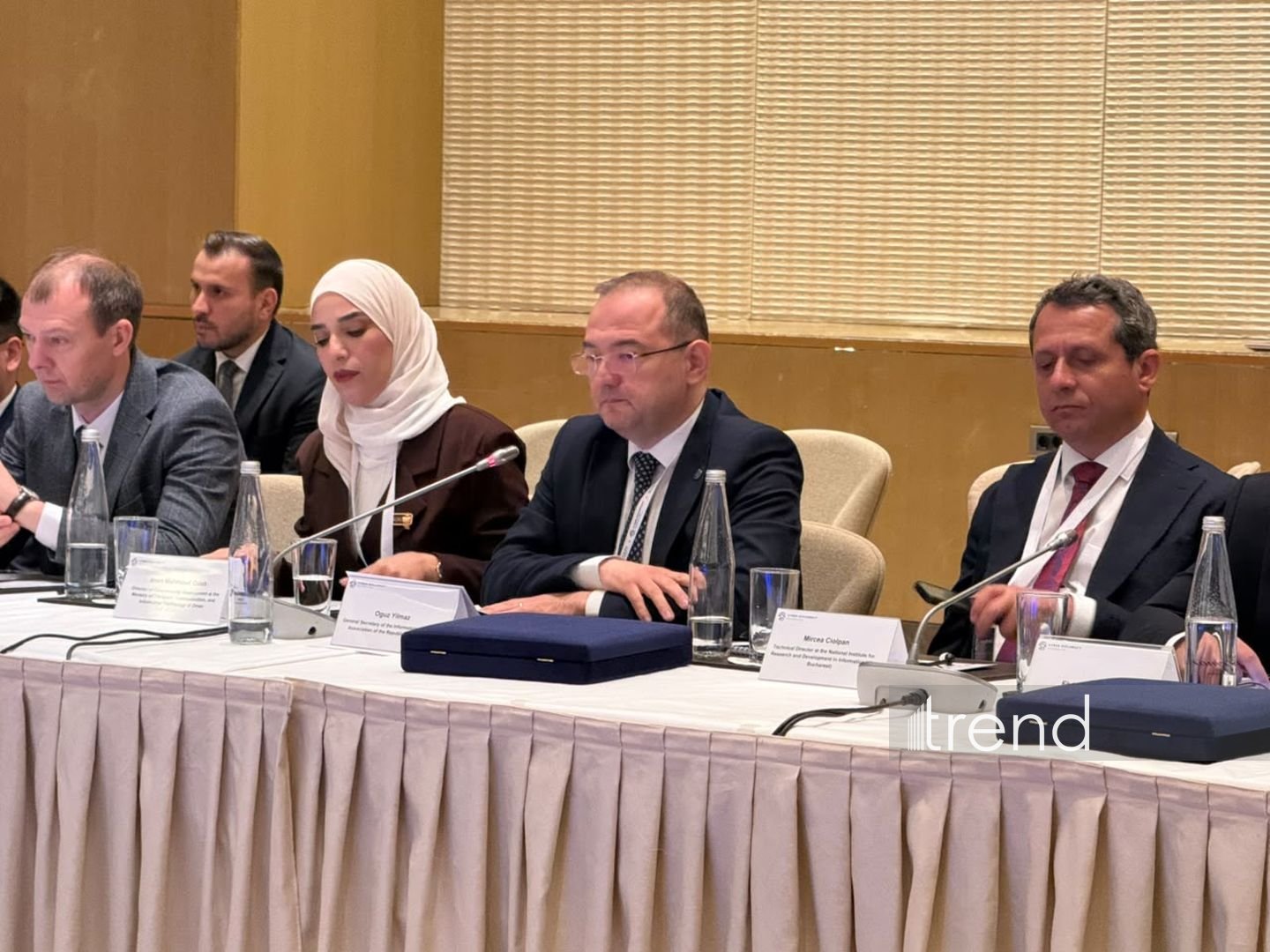

BAKU, Azerbaijan, November 19. Establishing lists of trusted technology vendors, mutually recognizing cybersecurity certificates, jointly developing products, and conducting exercises that utilize their own technologies can strengthen cooperation within international cyber alliances, Secretary General of the Information Security Association of Türkiye, Oğuz Yılmaz, said during a panel discussion titled "Cyber Alliances and Strategic Autonomy: Balancing Independence and Partnership" at the 2nd International Conference on Cyber Diplomacy in Baku today, Trend’s correspondent reports from the event.
According to him, cyber alliances need to develop not only political and operational interaction but also technological cooperation, an area that currently remains underdeveloped.
Yılmaz noted that while countries already exchange threat intelligence and conduct joint exercises, they often rely on technological solutions from external vendors that are not always compatible with one another.
"A partnership cannot be more sovereign than the technology upon which it is built," he emphasized.
In this regard, the expert proposed four practical steps to strengthen the technological component of cyber alliances.
The first step is to establish a list of trusted vendors within each alliance, enabling participants to identify manufacturers and developers from among their partners and prioritize their products.
The second proposal involves the mutual recognition of cybersecurity certifications. As Yılmaz explained, a product that has undergone testing and certification in Baku should not have to go through the entire process again in Ankara or Muscat.
The third initiative entails the joint development of technological products, with an agreed-upon distribution of intellectual property rights. The expert believes this approach would help foster greater trust among alliance members.
The fourth step is to conduct joint exercises using the participants' own technologies, including simulations of realistic, cross-border cyber incidents.
Yılmaz stressed that implementing these initiatives does not require new international agreements; cooperation can begin with just two or three partners and gradually expand in scope.
He also highlighted the importance of the rapid exchange of data regarding cyberattacks. Specifically, if one alliance member detects an attack, the relevant technical indicators should be immediately shared with other partners, allowing them to proactively strengthen the defenses of their own infrastructure.
"If a threat is collective in nature, then the defense must also be collective," the expert noted.
According to him, strategic autonomy doesn't imply isolation or the abandonment of partnerships. On the contrary, the ability of each country to independently develop specific technological solutions and make its own unique contribution makes the entire alliance more resilient.


