


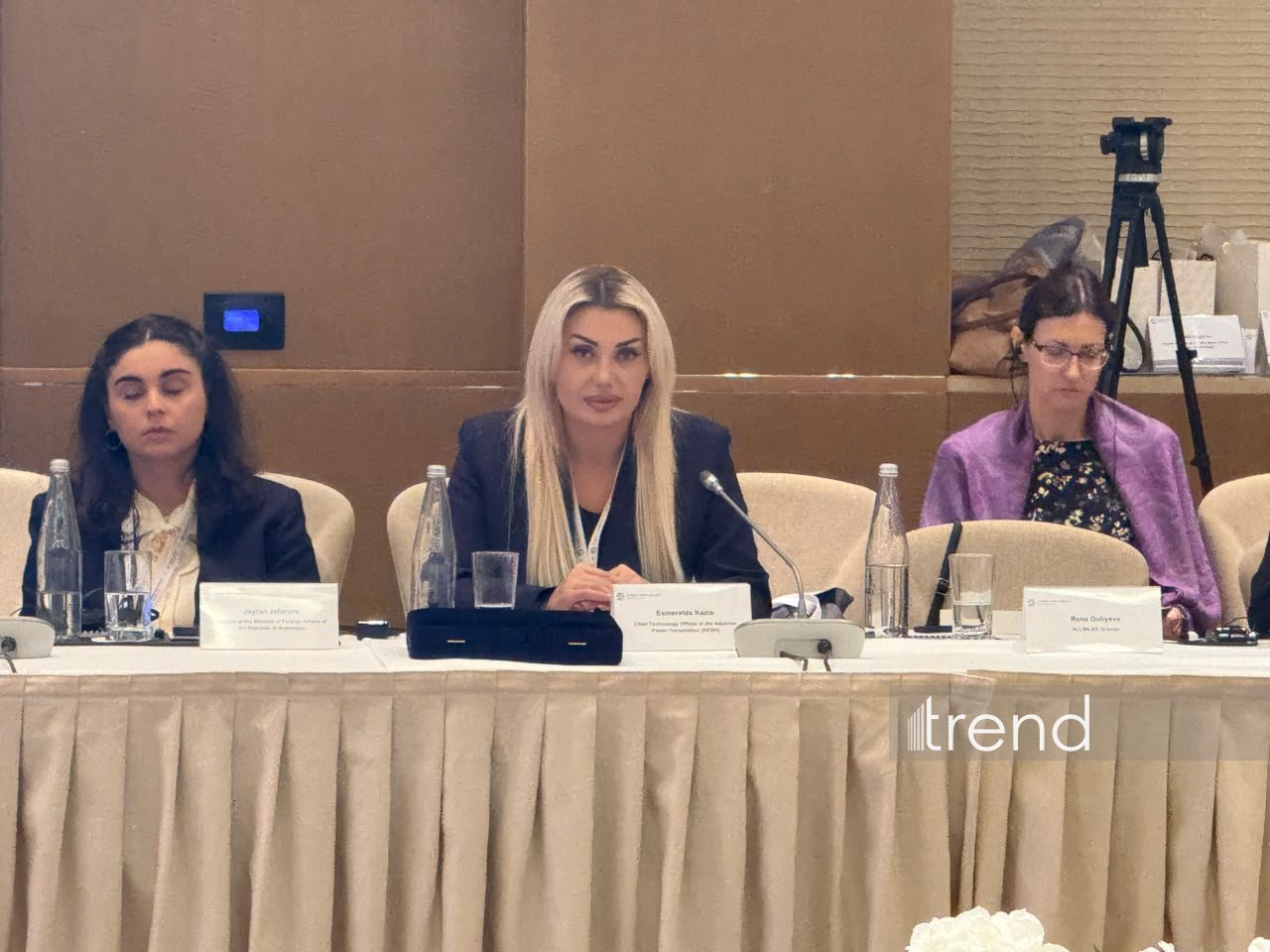

BAKU, Azerbaijan, November 19. AI can significantly speed up the analysis of cyber threats, the processing of large data sets, and the evaluation of digital evidence; however, its conclusions should not replace expert judgment, Chief Technology Officer of the Albanian Electricity Corporation (KESH) and former Director of the Monitoring and Incident Response Department at Albania's National Cyber Security Authority (AKSK), Esmeralda Kazia said, Trend's correspondent reports.
She made the statement at the panel session “Foreign Policy in the Age of Artificial Intelligence: Defining New Rules for Diplomacy” as part of the Second International Conference on Cyberdiplomacy.
According to her, AI is capable of analyzing large volumes of information in a significantly shorter time, comparing millions of events, identifying patterns, and establishing connections that are difficult to detect through traditional analysis.
“Artificial intelligence can help us process evidence more quickly. It can identify patterns and connections that we might otherwise overlook,” Kazia noted.
At the same time, the expert emphasized that AI results are not always reliable: the system can produce erroneous conclusions with a high degree of confidence. Therefore, governments need to distinguish between facts, analytical assessments, and the decisions made based on them.
Kazia cited the cyberattack on Albania in July 2022 as an example, which affected the country’s digital infrastructure and government services. According to her, this incident demonstrated how quickly a technical threat can escalate into a foreign policy issue.
She noted that when responding to such incidents, states must not only establish what happened but also assess the reliability of digital evidence, identify possible perpetrators, and decide how to inform the public and international partners.
According to Kazia, in the case of Albania, the government attributed responsibility for the cyberattack to Iran and, with the support of NATO and its partners, decided to sever diplomatic relations with Tehran. In this context, one of the most important tasks was to transform technical data into conclusions on which the state could base its policy decisions.
The expert emphasized that AI can be useful in the stages of collecting, processing, and analyzing information; however, final decisions must remain with humans.
“A machine cannot exercise constitutional powers or bear diplomatic and moral responsibility,” she said.
Kazia also noted that the digital dimension is becoming increasingly entrenched in international relations: the status of states is influenced not only by physical borders, but also by algorithms, data, cloud infrastructure, digital platforms, and technological standards.
In her view, small states should participate in shaping international rules for the use of AI and digital technologies, rather than merely adapting to decisions made by other countries.
She added that strategic autonomy does not mean technological isolation. It is important for states to understand how the systems they use work, to be able to critically evaluate their conclusions, and to retain responsibility for the decisions they make.
The 2nd International Conference on Cyberdiplomacy, themed “Power and Influence in the Age of Artificial Intelligence: A Regional Perspective on the Changing Cyber Environment,” is taking place in Baku.
The conference brings together representatives of government agencies from various countries, international organizations, research centers, and the private sector.
The event focuses on a range of current issues, including the impact of artificial intelligence on international relations, cybersecurity, digital sovereignty, interstate cooperation in cyberspace, information security, and the protection of critical infrastructure.
The conference is jointly organized by the State Service for Special Communications and Information Security of the Republic of Azerbaijan and the National Institute for Research and Development in Informatics of Romania, with the participation of the Office of the President of the Republic of Azerbaijan, the Ministry of Foreign Affairs, the Ministry of Digital Development and Transport, the State Security Service, and other local partners.


