


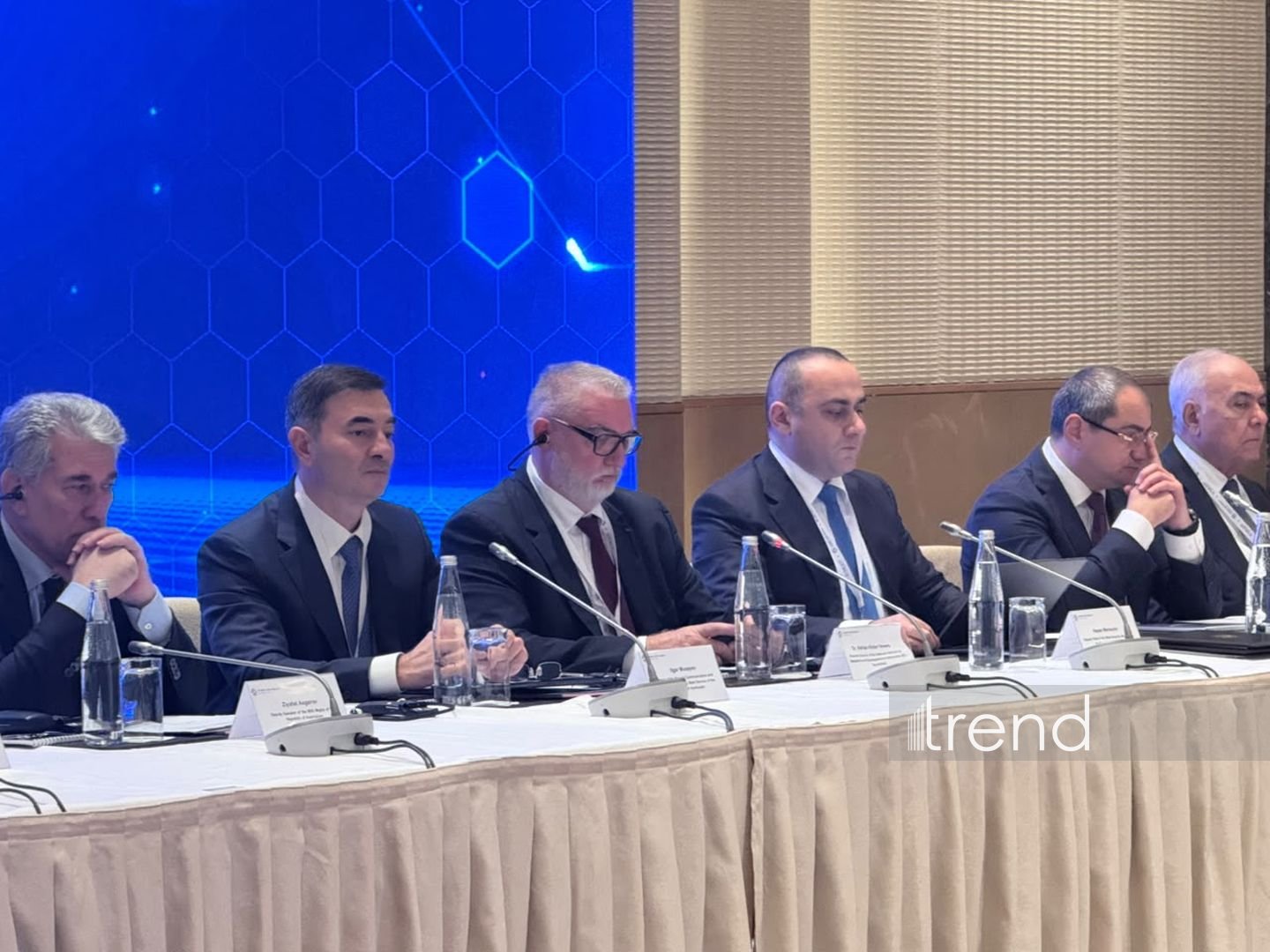

BAKU, Azerbaijan, November 19. Strong international partnerships enable countries to access capabilities they do not possess, develop skills they can use domestically and strengthen their strategic autonomy, Director General of Romania's National Institute for Research and Development in Informatics (ICI Bucharest) Adrian Victor Vevera said, Trend's correspondent reports from the event.
He made the remarks at the 2nd International Conference on Cyber Diplomacy in Baku.
He noted that, during the first conference held in Baku in 2024, the institute he heads signed an agreement with ADA University's Institute for Development and Diplomacy to establish a Cyber Diplomacy Twinning Center.
According to Vevera, the initiative marked a new stage in ICI Bucharest's integration into European security networks, while Baku became home to the first twinning center dedicated to cyber diplomacy.
He said that since then, the center has brought together officials from various institutions for cyber diplomacy training.
"This shows what this conference can achieve. It has become a pathway for our institutions to continue working together," he said.
Vevera emphasized that this year's conference theme, "Power and Influence in the Digital Age: A Regional Perspective on the Changing Cyber Landscape," addresses important issues at the intersection of technological geopolitics and international security.
He said artificial intelligence is no longer merely a tool for innovation but has also become a decisive factor in foreign policy and in shaping new rules for diplomacy.
"This is a discussion about diplomacy in the technological world, and cyber diplomacy is a new way forward in this field," Vevera noted.
According to him, complex challenges now need to be addressed, ranging from managing information warfare and defense in the digital age to defining responsible state behavior and accountability in cyberspace.
Vevera pointed out that this year's conference places particular emphasis on how artificial intelligence is reshaping the balance of power and influence.
He noted that one of the key questions for government institutions is how much room they have to make independent decisions when relying on technological infrastructure and expertise that no single country controls.
"Strategic autonomy and international cooperation come together precisely here. I would measure strategic autonomy by the choices a country can still make when the capabilities it normally relies on are no longer available," he said.
According to Vevera, this raises several important questions: can a country keep essential services running, assess a situation independently and turn to partners without becoming entirely dependent on any one of them?
He stressed that strong partnerships give each participant greater capacity to act.
"They give each partner access to capabilities they may not have on their own and help develop skills that can be used domestically. This is what brings cooperation and strategic autonomy together," he added.
Vevera said this issue is particularly important in a region where energy, transport and digital networks connect the Black Sea region with the South Caucasus.
"The Black Sea is a region of particular interest to Romania, while the South Caucasus is of particular interest to Azerbaijan," he noted.
He pointed out that a cyber incident may originate with a single operator, but keeping essential services operational may require coordinated action by institutions in several countries.
According to Vevera, artificial intelligence can help detect problems more quickly, but the ability to respond to an incident jointly depends on relationships established beforehand and the willingness to share information even when the situation is not yet fully clear.
He said that under the Cyber Polygon project implemented in 2024–2026, ICI Bucharest and its Azerbaijani partners had put this cooperation into practice in the energy sector.
"This is an example of what we can achieve when we prepare together. It also points to a broader regional priority: as we build new connections, we must plan from the outset how to keep them secure," he emphasized.
Vevera said there was further potential to expand regional cooperation in the future.
He noted that at a ministerial meeting held in Brussels on November 16, representatives of the European Union and partner countries, including Azerbaijan, reaffirmed their commitment to strengthening cooperation in regional security and connectivity.
According to him, this cooperation covers the Black Sea region and the South Caucasus, as well as the corridor extending toward Central Asia. Transport, digital technologies and energy are among the areas of shared interest.
Vevera said that expanding connectivity between Romania and Azerbaijan further increases the importance of cooperation in cybersecurity.
"By working together, we develop expertise that each of us can use in our own country and prepare to protect the infrastructure on which we all rely across the region," he noted.
Concluding his remarks, the institute's director general said that cyber diplomacy, strategic alliances and cooperation frameworks provide the foundation for building mutual trust, cross-border resilience and strategic autonomy.
He stressed the importance of continuing discussions, exchanging views and strengthening cooperation on the ideas, challenges and opportunities shaping the future of cyberspace.


