


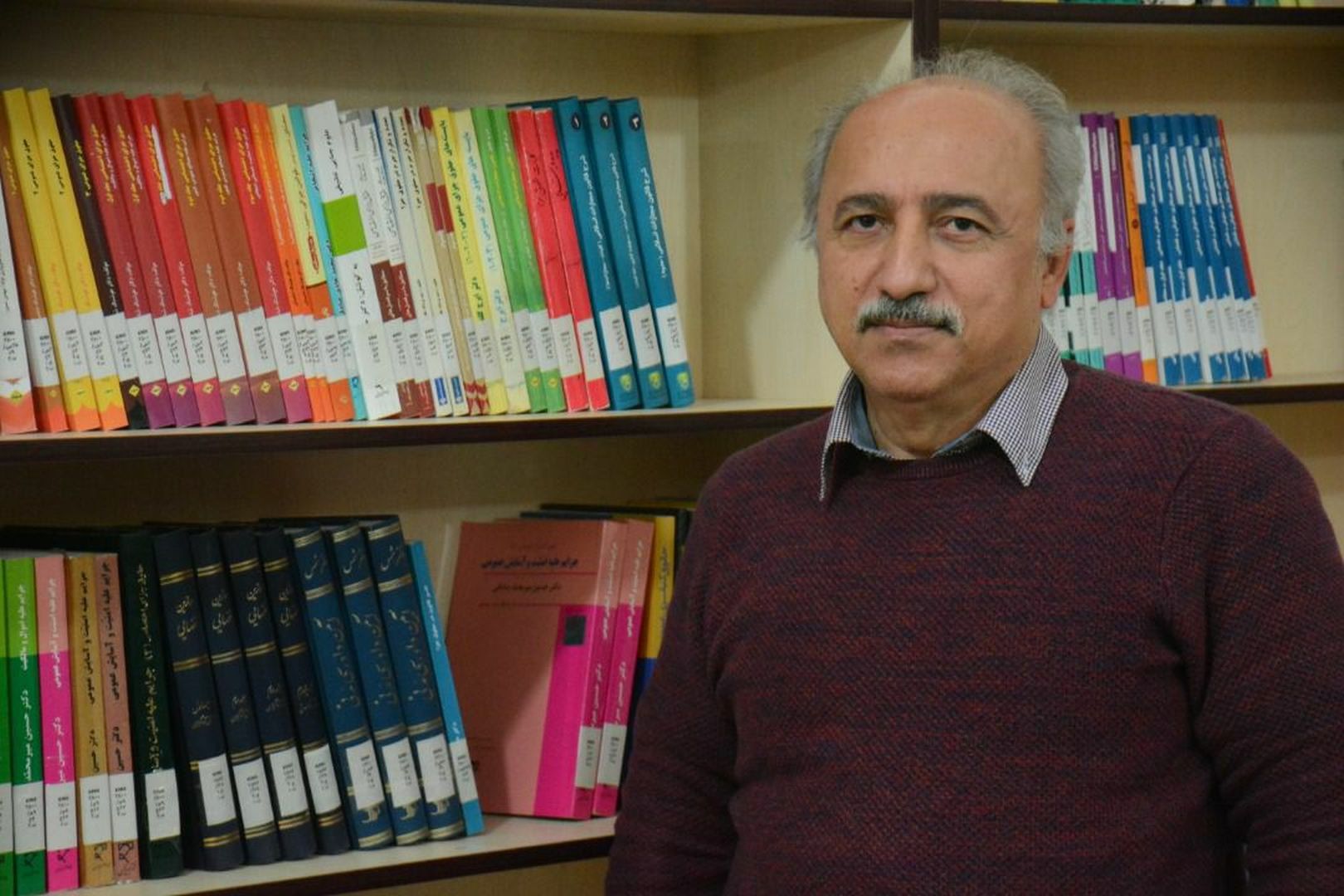

BAKU, Azerbaijan, November 19. The problem of inflation in Iran, and its root cause, stems from the supply side, specifically from production costs, an Iranian economist and a faculty member at Shahid Chamran University in Iran, Seyyed Morteza Afghah, told Trend in an exclusive interview.
"However, from an economic perspective, the root of the inflation problem in Iran is generally considered to be demand-driven. This is attributed to high levels of liquidity, specifically, the fact that the growth rate of liquidity exceeds the growth rate of domestic production," he noted.
The expert said that, in economics, inflation is typically linked to a situation where the growth rate of liquidity outpaces that of domestic production. For this reason, in the period following the Iran-Iraq War, economists, particularly proponents of a free-market, liberal economic approach, have consistently argued that liquidity levels are too high and that the government must reduce liquidity to curb inflation. On this basis, economists globally who emphasize the role of money supply in inflation also maintain that liquidity contributes to rising inflation.
Afghah added that while proponents of a liberal, free-market economy argue that high liquidity drives inflation, many small and medium-sized manufacturing enterprises report suffering from a lack of liquidity. This issue hasn’t received much attention to date, highlighting a discrepancy between the views of economists and the reality of the actual economy, a persistent problem that remains present today.
"Even now, despite claims that liquidity is high, the primary challenge, or at least one of the foremost challenges, facing Iran’s manufacturing sector, particularly small and medium-sized enterprises, is a lack of liquidity," he remarked.
Afghah pointed out that the cost of production in Iran is extremely high, a situation stemming largely from domestic issues. This is linked to significant flawed policies, a lack of policy stability, and instability in management. Inadequate management and the frequent turnover of executives further exacerbate the problem.
The expert said that the enactment of laws related to the production sector, characterized by a dizzying number of regulations, some of which are even contradictory, has further exacerbated the problem. This combination of systemic shortcomings and an inefficient bureaucracy acts as a barrier to production and development. Collectively, these factors have resulted in high production costs in Iran.
According to him, a product that costs "N" to manufacture in Iran could be produced in another country, under competent and stable management, at a cost of "N-1," while maintaining the same level of quality.
"Therefore, in my view, the primary driver of inflation in Iran is not merely an excess of liquidity; rather, it stems from deficiencies in management and the implementation of policies," he noted.
Afghah added that the lack of legal stability within the economic sector, the incompetence and frequent turnover of managers, and an inefficient bureaucracy are all contributing to inflation in the country. Furthermore, another issue driving up production costs is the sector's heavy reliance on foreign currency. Since 80% of the country's imports consist of intermediate goods, or products used in the production of other goods, any increase in the value of foreign currency against the Iranian currency leads to a rise in the cost of domestic production.
"Ultimately, there are two primary reasons for high inflation in Iran: first, a lack of legal stability and an inefficient bureaucracy; and second, the rising value of foreign currency against the Iranian currency. To address these issues, several steps must be taken: officials, whether elected or appointed, must possess sufficient expertise in their respective fields, and there must be stability in foreign currency-related revenues, ensuring that inflation from imported goods is not passed on to domestic production," he noted.
According to him, it is clear that no country can produce every product it needs domestically using only its own resources and labor force. Therefore, countries meet their needs through trade with other countries.
Afghah expressed hope that the economic blockade and the restrictions on imports and exports currently facing Iran will prove to be temporary. Otherwise, if the war doesn’t end, sanctions against Iran aren’t lifted, and regional tensions don’t subside, there is no solution. This is because Iran lacks both the reserves to cover all its product requirements and the capacity to manufacture them domestically. The raw materials for many goods produced in Iran are imported.
In conclusion, the expert expressed hope that if the war and the blockade end, the country will return to a normal state, with prosperity increasing through both domestic production and trade relations with other countries.


