


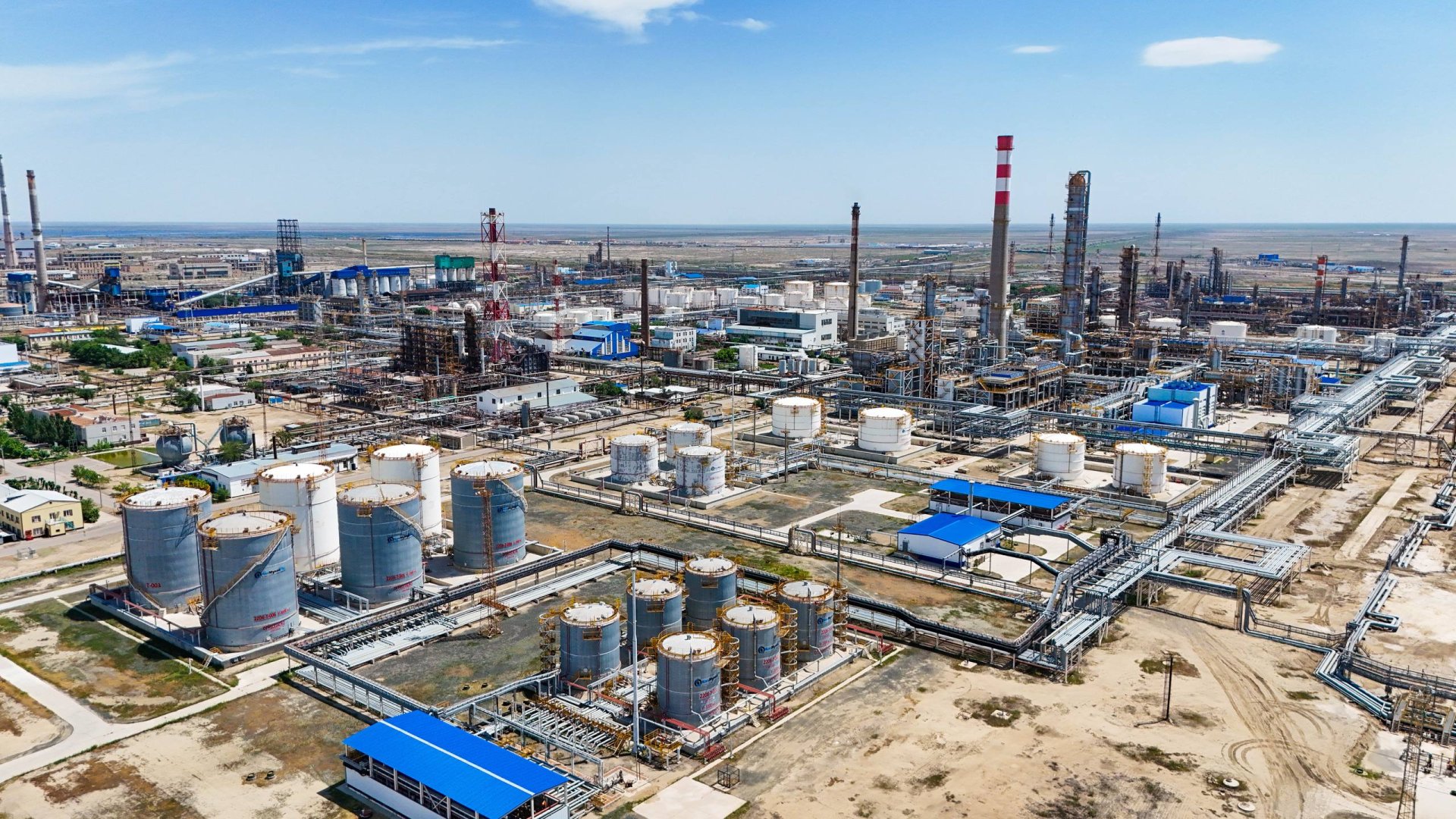

BAKU, Azerbaijan, November 18. The Atyrau Oil Refinery (ANPZ) processed approximately 4.7 million tons of crude oil in January-October 2026, producing more than 1.6 million tons of gasoline, over 1.7 million tons of diesel fuel, and around 190,000 tons of jet fuel, KazMunayGas (KMG) reports.
The figures were reviewed during a production meeting held as part of a working visit to the Atyrau region by KMG Chairman of the Management Board Askhat Khassenov. The meeting focused on the refinery's operational performance and the progress of its investment projects.
The refinery's yield of light petroleum products exceeded 80.5%, while the depth of crude oil processing surpassed 91%. Its current daily diesel fuel output stands at 6,600 tons.
The refinery is implementing 17 strategic and investment projects. One of the key initiatives is the extension of the maintenance interval to three years. The project includes 47 measures and is currently 36% complete.
The initiative envisages switching processing units to a three-year operating cycle between scheduled maintenance shutdowns. It is also intended to ensure stable operation of deep oil processing facilities and increase the output of light petroleum products.
The extension of the maintenance interval, together with the technical upgrade of the loading rack for light petroleum products to handle straight-run naphtha and kerosene-gas oil fractions, is expected to increase the refinery's annual crude oil processing capacity from 5.5 million to 6.7 million tons.
Work is also underway to improve the reliability of power supplies through the reconstruction of external power networks, construction of a power transmission line, installation of a backup gas turbine power plant, and introduction of an automated dispatch control system. The refinery also plans to expand its railway infrastructure to increase its capacity for receiving crude oil.
Environmental protection is another priority. The refinery is implementing a flare gas recovery project aimed at reducing emissions and continues to install floating roofs in its storage tanks. By the end of 2026, floating roofs are expected to be installed in 71 of the refinery's 75 tanks. According to the project data, these measures are expected to reduce hydrocarbon emissions from the tanks by up to 90%.
Additional gas analyzers are being installed at the refinery's four existing environmental monitoring stations to enable monitoring of all required ambient air quality indicators. The work is scheduled for completion by the end of the year.
The facility has also established a system for transmitting environmental monitoring data directly from the stations to Kazhydromet every 20 minutes.
The refinery also supports workforce development through its ANPZ Intern program, which provides training opportunities for graduates of colleges and universities.
Following the visit, Khassenov instructed the refinery's management to meet the deadlines for investment projects, improve production efficiency, ensure reliable and safe operations, and expand the use of digital technologies.


