


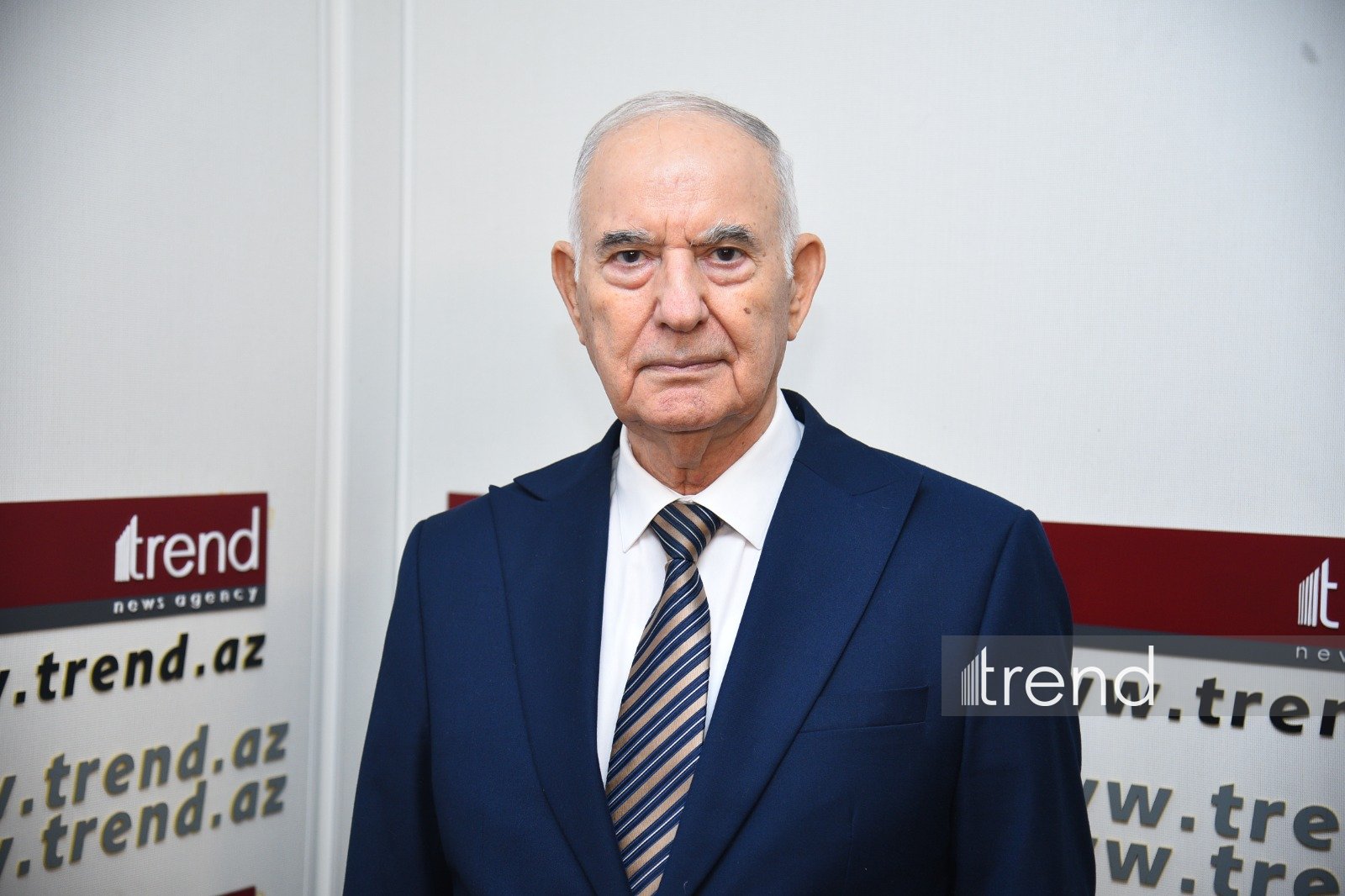

BAKU, Azerbaijan, November 17. National Revival Day symbolizes the Azerbaijani people's will for freedom, political analyst Azer Garayev told Trend.
According to him, November 17 – National Revival Day – is the anniversary of one of the most significant events in the history of Azerbaijan.
“Today marks a historic milestone when the aspirations of our people for national freedom were openly expressed, and the idea of independent statehood gained broad public support. National Revival Day serves as a symbol of the Azerbaijani people’s commitment to their national identity, traditions of statehood, and desire to live in freedom.
The political and social processes unfolding in the Soviet Union during the late 1980s led to the strengthening of national movements within the union republics. The weakening of central authority, injustices in the handling of national issues, and, in particular, Armenia’s territorial claims against Azerbaijan, gave rise to significant discontent in our country. The situation surrounding Karabakh served as a catalyst for increased national solidarity and political activism within Azerbaijani society.
These events further intensified the people’s desire for freedom, a desire that had taken shape over many years. People wanted to have a say in determining their own destiny, to defend their national interests, and to independently shape the future of their country," he stressed.
According to him, on November 17, 1988, mass protest rallies began in what was then Lenin Square (now Freedom Square) in Baku, involving thousands of people. Reports regarding the felling of trees in the Topkhana forest, events in Karabakh, and Armenia’s territorial claims against Azerbaijan were the primary factors that exhausted the public's patience. People demanded the preservation of the republic's territorial integrity, the protection of national rights, and an end to the Soviet leadership's unjust policies toward Azerbaijan.
"One of the most significant features of the 'Square Movement' was the unification of people from various strata of society around a common goal. Intellectuals, students, workers, youth, and representatives of diverse professions gathered in the square. Over time, the slogans voiced there took on a broader significance, with the ideals of national liberation, sovereignty, and independence coming to the forefront.
On November 22, a large contingent of Soviet troops was deployed to Baku, and a curfew was imposed in the city. However, despite all the pressure, the people didn't leave the square. The mass protests were dispersed only on the night of December 5, following the intervention of Soviet military forces. Nevertheless, the authorities couldn't silence the people's aspirations for freedom and independence. On the contrary, the events in the square led to a further strengthening of national consciousness and propelled the struggle for freedom into a new phase," he remarked.
Garayev pointed out that the popular movement, which began in November 1988, played a significant role in the subsequent political history of Azerbaijan. This process fostered the strengthening of national self-awareness, the widespread dissemination of the idea of state independence within society, and the consolidation of the people's determination to take charge of their own future.
"On November 17, 1990, a session of the Supreme Soviet of the Nakhchivan ASSR was held under the chairmanship of National Leader Heydar Aliyev. During the session, the words 'Soviet Socialist' were removed from the name of the autonomous republic, and the body was renamed the Supreme Assembly of the Nakhchivan Autonomous Republic. Furthermore, the tricolor flag of the Azerbaijan Democratic Republic was adopted as the state flag of the Nakhchivan Autonomous Republic, and an appeal was addressed to the Supreme Soviet of the Azerbaijan SSR to recognize it as a state symbol throughout the entire territory of Azerbaijan. This step represented a significant political development toward the restoration of national statehood traditions.
Finally, on October 18, 1991, the Constitutional Act on the State Independence of the Republic of Azerbaijan was adopted. Thus, our people gained the opportunity to rebuild the independent state they had long aspired to possess. The struggle that began in 1988 in Freedom Square became etched in memory as a pivotal stage on the historic path toward the restoration of independence.
By a law adopted on October 27, 1992, November 17 was declared National Revival Day. This decision formalized the special place that this date holds in the history of the Azerbaijani people, as well as its significance in the struggle for national liberation," he noted.
The analyst emphasized that the restoration of Azerbaijan's independence brought forth new tasks for our people.
"In the years that followed, the country faced complex political, economic, and military challenges. The preservation of state independence, the ensuring of stability, the strengthening of the economy, and the defense of national interests on the international stage became the primary priorities. Today, Azerbaijan is an independent, sovereign state that holds a distinct position within the system of international relations. The path of development our country has traversed, the achievements it has attained, and the restoration of its territorial integrity once again demonstrate the historical significance of the struggle our people began decades ago.
The core message of National Revival Day remains as relevant today as it ever was: the unity of the people, national solidarity, and the will for statehood lie at the foundation of every success. In November 1988, the aspiration of the people who gathered in Freedom Square was to live in a free and independent Azerbaijan. Today, that aspiration has become a reality.
November 17 is also a day of historical memory that must be passed on to future generations because knowing the hardships and struggles through which independence was achieved allows one to understand its true value more deeply. National Revival Day stands as a testament to the Azerbaijani people’s determination for freedom, their national unity, and their will to determine their own destiny,” Garayev added.


