


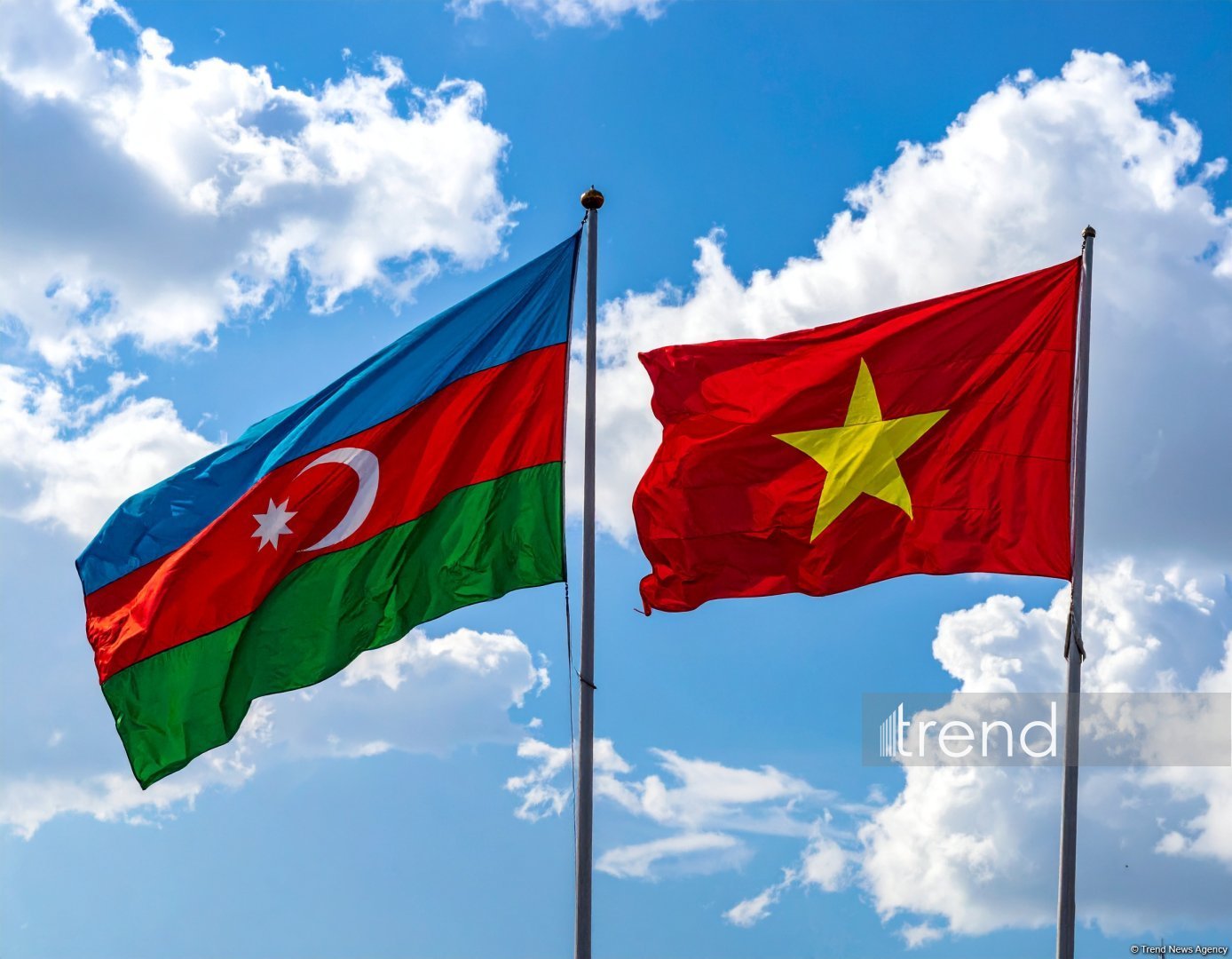

BAKU, Azerbaijan, November 18. Although thousands of kilometers separate Azerbaijan and Vietnam geographically, historical ties, economic transformations, and aligned strategic interests bring the two countries closer together. In the past, Azerbaijani specialists helped rebuild Vietnam’s industry and develop its oil sector, while Vietnamese students traveled to Baku to pursue their education. Today, decades later, this cooperation extends far beyond traditional humanitarian and energy-related links: Baku and Hanoi are exploring opportunities for joint investments, industrial development, renewable energy, transport logistics, and new technological projects.
The economic history of both states adds a special dimension to this process. Azerbaijan and Vietnam have followed different, yet in many ways comparable, paths of transformation. Both countries leveraged their available economic resources, implemented consistent state programs, and opened up to external markets to accelerate development, strengthen their industrial capacity, and enhance their roles in the global economy.
These processes now lay the foundation for a new phase in bilateral relations. The focus has shifted beyond the mere trade of Azerbaijani oil toward the creation of complementary economic ties. In this framework, Azerbaijan could serve as a gateway for Vietnamese businesses to access markets in the Caucasus, Central Asia, and Europe, while Vietnam could become a key partner for Azerbaijan in the dynamically developing region of Southeast Asia.
From historical friendship to strategic partnership: bridge whose construction began decades ago
The history of Azerbaijani-Vietnamese relations predates the establishment of formal diplomatic ties between the two independent states. Its foundation was laid during the Soviet era, thanks to the engagement between the National Leader of the Azerbaijani people, Heydar Aliyev, and President Ho Chi Minh.
In 1959, Ho Chi Minh visited the Azerbaijan SSR. During the visit, discussions were held on how to assist Vietnam in developing its oil industry, training specialists, and rebuilding the country. Subsequently, thousands of Azerbaijani engineers, oil workers, and other professionals took part in the development of Vietnam’s infrastructure and industry.
A significant milestone in the history of bilateral relations occurred in 1983, when Heydar Aliyev, then serving as First Deputy Chairman of the Council of Ministers of the USSR, led a Soviet delegation to Vietnam. This visit held both diplomatic and practical economic importance.
This historical engagement also left a notable mark on the educational sphere; during the Soviet era, approximately 5,000 Vietnamese citizens received their education in Azerbaijan.
The ties between the two peoples also found a geographical expression: in the early 1980s, Baku and the Vietnamese oil-industry city of Vung Tau established a sister-city relationship. A Baku Street was created in Vung Tau, while a Vung Tau Street can be found in the Ahmadli settlement of Baku.
Following the restoration of Azerbaijan’s independence, the relationship was given a new diplomatic framework. Diplomatic relations between the two countries were established on September 23, 1992. A key development was the state visit of the President of Azerbaijan, Ilham Aliyev, to Vietnam in 2014, which helped to invigorate political contacts and expand bilateral cooperation. The next significant milestone was the state visit of the General Secretary of the Central Committee of the Communist Party of Vietnam, To Lam, to Azerbaijan on May 7–8, 2025. Following talks with President Ilham Aliyev, the two sides adopted a Joint Declaration on the Establishment of a Strategic Partnership.
Thus, a relationship whose foundations were laid more than half a century ago has attained a qualitatively new political status.
Two economic success stories: different models, shared logic of transformation
The growing rapprochement between Azerbaijan and Vietnam is compelling not only from the perspectives of diplomacy and geography. It offers an opportunity to compare two economic narratives in which state policy, the leveraging of national advantages, and integration into the international economy have played pivotal roles.
At first glance, the economic trajectories of Azerbaijan and Vietnam appear markedly different. One possesses vast hydrocarbon reserves, which it utilized to attract international capital and develop export infrastructure. The other achieved rapid industrialization through reforms, the export of manufactured goods, and integration into global production chains.
Yet, upon closer inspection, a common logic emerges.
Both countries viewed economic development as a long-term state objective. Both sought to harness international cooperation to secure technology, capital, and professional expertise. Both placed a strong emphasis on infrastructure, human capital development, and the expansion of foreign economic relations.
Energy cooperation remains one of the most well-developed areas of the Azerbaijan-Vietnam relationship. However, its nature is gradually evolving: while the partnership was initially centered on crude oil supplies and the exchange of professional expertise, the two sides are now exploring opportunities to expand cooperation into oil refining, petrochemicals, field exploration, oilfield services, liquefied natural gas (LNG) supplies, and renewable energy.
Azerbaijan has already established a foothold in Vietnam’s energy supply system. Since 2023, more than 1.1 million tons of Azerbaijani crude oil have been delivered to the country.
The history of cooperation in this sector spans over a decade. A notable example is a contract between SOCAR Trading and the Vietnamese company Binh Son Refining and Petrochemical (BSR) for the supply of five million barrels of Azerbaijani "Azeri Light" crude oil to the Dung Quat oil refinery.
A new phase of energy cooperation gained further momentum in May 2025, when SOCAR and PetroVietnam signed a memorandum of understanding. During the same period, a cooperation agreement was also formalized between SOCAR Trading Singapore and Binh Son Refining and Petrochemical.
In discussions held in October 2026, the parties explored the further expansion of cooperation in the exploration and development of oil and gas fields, oil refining, petrochemicals, and oilfield services. Prospects for the supply of liquefied natural gas (LNG) to Vietnam were also discussed.
For Azerbaijan, this opens up opportunities not only to maintain its existing export position but also to expand its presence in one of Asia’s most dynamic energy markets. For Vietnam, cooperation with SOCAR offers an opportunity to diversify its sources of raw material supplies and expand its partnerships with international energy companies.
Moreover, the prospects for cooperation aren't limited to traditional hydrocarbons. One of the most promising areas is the development of renewable energy sources. During To Lam’s state visit to Baku in 2025, President Ilham Aliyev invited Vietnamese companies to invest in renewable energy projects in Azerbaijan and expressed the Azerbaijani side’s readiness to consider investments in similar projects in Vietnam.
A practical follow-up to these agreements was a memorandum signed between the Ministry of Energy of Azerbaijan and the Vietnamese firm ROX Group on September 25, 2026, during the second Azerbaijan International Investment Forum.
The document outlines the exploration of two potential projects: a 600 MW wind power plant in Azerbaijan and a 200 MW solar power plant in the Nakhchivan Autonomous Republic. As part of this collaboration, the parties intend to conduct feasibility studies, assess grid connection capabilities, and examine prospects for exporting the electricity generated.
ROX Group is also exploring investment opportunities in Azerbaijan’s renewable energy and real estate sectors. Thus, the interest of the Vietnamese business community is gradually extending into new sectors of the economy.
Industry and technology: opportunities beyond raw material trade
Another significant area is industrial cooperation. Of particular interest is potential collaboration with the Vietnamese conglomerate Vingroup and its subsidiary, GSM (Green Smart Mobility), which focuses on the development of eco-friendly transport solutions. During discussions between the Azerbaijani delegation and representatives of Vingroup, the parties explored the possibility of assembling electric vehicles in Azerbaijan, as well as potential cooperation in the real estate sector.
A significant institutional milestone was reached in May 2025 with the signing of a memorandum on cooperation in technology, innovation, and development between the relevant ministries of the two countries.
Cooperation in the defense industry also warrants special attention. During To Lam’s visit to Baku in 2025, a document on collaboration between the two countries' defense agencies was signed.
Looking ahead, industrial cooperation could encompass equipment manufacturing, technical maintenance, engineering services, digitalization, and professional training. However, specific projects in these areas will require further development.
Transport and logistics: Azerbaijan as a link between Vietnam and European markets
While the energy sector has historically served as the foundation for economic ties, transport and logistics could become a key driver for their further expansion.
Vietnam is a major export-oriented manufacturing hub in Southeast Asia. A significant portion of its output is destined for international markets, primarily in the US, Europe, and other parts of Asia. Situated at the crossroads of the East-West and North-South transport corridors, Azerbaijan is well-positioned to offer Vietnamese exporters alternative logistical routes. In this context, the Middle Corridor, which connects China and Central Asia to Europe via the Caspian Sea, Azerbaijan, Georgia, and Türkiye, is of particular significance. For Vietnam, utilizing this route could be advantageous for diversifying the paths used to transport goods to Europe.
Notably, this cooperation is already yielding practical results. According to the Ministry of Energy of Azerbaijan, transit shipments involving Vietnam and passing through Azerbaijani territory increased by more than 200% in 2025. From January through September 2026, this growth reached approximately 600%.
Aviation is another equally vital component of transport connectivity. In November 2026, AZAL (Azerbaijan Airlines) held discussions with representatives from the Vietnamese airline Vietjet Air, as well as the Sovico Group and Vingroup. The talks focused on the prospects for establishing direct air links between Azerbaijan and Vietnam, the potential for Vietjet Air to operate flights to Baku and other regional airports in Azerbaijan, and opportunities for collaboration with AZAL.
The launch of direct flights could provide fresh momentum not only to tourism, but also to business ties, investment negotiations, educational cooperation, and corporate partnerships.
Trade and investment: goal of diversifying mutual exchange
Despite historically strong relations and the significant potential of both economies, the current level of trade between Azerbaijan and Vietnam does not yet fully reflect the true scope of their bilateral partnership.
A defining feature of the existing trade model is the substantial role played by Azerbaijani oil. As President of Azerbaijan Ilham Aliyev stated while delivering a press statement alongside General Secretary of the Central Committee of the Communist Party of Vietnam, To Lam, there is a need to balance trade turnover between the two countries.
"Unfortunately, the dynamics of trade in the economic and trade sectors depend on Azerbaijan's oil sales to Vietnam. When oil sales are high, trade increases, and when they drop, it decreases too. Of course, we would like to see our trade become more balanced, and to achieve this, information exchange is necessary, of course. What projects are implemented in our countries, what investment opportunities there are, what rules, legislative framework, and tax administration there are – all these issues should be clear to business circles. If this is the case, I am sure that trade will not depend on the oil factor alone," the head of state remarked.
Therefore, a key priority is to expand the mutual supply of non-oil sector goods. Vietnam holds potential for Azerbaijani producers in areas such as agricultural products, textiles, processed goods, and industrial items. Azerbaijan, for its part, can offer the Vietnamese market energy resources, petrochemical products, agricultural goods, and logistics services.
A significant milestone was reached on July 16, 2025, with the inaugural meeting of the Joint Azerbaijan-Vietnam Business Council and a business forum held in Hanoi. The event brought together representatives from government bodies, investment agencies, and leading companies from both countries. During the forum, cooperation agreements were signed between the Azerbaijan Export and Investment Promotion Agency (AZPROMO) and the Vietnam National Association of Enterprises (VINEN), as well as between companies from both countries in sectors including cotton products, agriculture, and other areas.
The third meeting of the Intergovernmental Commission on Economic, Trade, and Scientific-Technical Cooperation took place in Hanoi on July 17, 2025. The parties reviewed 58 initiatives across 17 priority areas for the 2025–2027 period.
Thus, the next phase of cooperation should focus on increasing the participation of the private sector, raising awareness among companies regarding market opportunities in both countries, and establishing conditions for long-term investment.
Political dimension: shared approaches to international relations and mutual support
The economic component of the Azerbaijan-Vietnam partnership is developing against the backdrop of a traditionally friendly political dialogue. Despite their geographical distance, the two countries share many common approaches to issues concerning international law, state sovereignty, territorial integrity, and multilateral cooperation.
The establishment of a strategic partnership in May 2025 served as a significant affirmation of both sides' political will to further deepen their relationship.
The Joint Declaration places particular emphasis on strengthening engagement within the framework of the United Nations, the Non-Aligned Movement, and the Conference on Interaction and Confidence Building Measures in Asia (CICA). Furthermore, the parties expressed their readiness to foster cooperation between Azerbaijan and the Association of Southeast Asian Nations (ASEAN), as well as its member states.
The interaction between the two countries within international organizations is of significant importance.
During the 44-day Patriotic War, Vietnam, as a member of the Non-Aligned Movement, supported the inclusion of references to the 1993 UN Security Council resolutions regarding the Armenia-Azerbaijan conflict in a draft statement by the UN Security Council President. Azerbaijan views this move as a significant demonstration of support for its position.
Thus, political engagement creates a favorable foundation for economic cooperation, as the relationship is built not only on commercial interests but also on mutual trust and aligned approaches to a range of international issues.
A key feature of the economic and political relations between Azerbaijan and Vietnam is that they are underpinned by more than half a century of human-to-human contact.
Assistance provided by Azerbaijan to Vietnam in the wake of natural disasters holds a special place in their humanitarian cooperation.
In September 2024, through its International Development Agency (AIDA), Azerbaijan allocated $200,000 in humanitarian aid to address the aftermath of Typhoon Yagi. From September through October 2025, an additional $100,000 in aid was provided to Vietnam to help address the consequences of flooding.
Another symbol of this cooperation was the opening, on March 18, 2026, of a new building for the Tran Phu School in the Luc Yen district of Lao Cai province. The educational facility, designed to accommodate 1,400 students, was constructed with support from Azerbaijan as part of the recovery efforts following Typhoon Yagi.
Ultimately, the engagement between Azerbaijan and Vietnam could serve as an example of how two countries, situated in different parts of the continent and operating under distinct economic models, can combine their respective strengths to create new opportunities.
The bridge between the Caucasus and Southeast Asia, the foundations of which were laid as far back as the last century, is now taking on new substance. It has evolved beyond a historical bridge of friendship into a prospect for a long-term economic partnership, one capable of linking the industrial capacities of Asia, the energy potential of the Caspian region, and the markets of Europe.


