


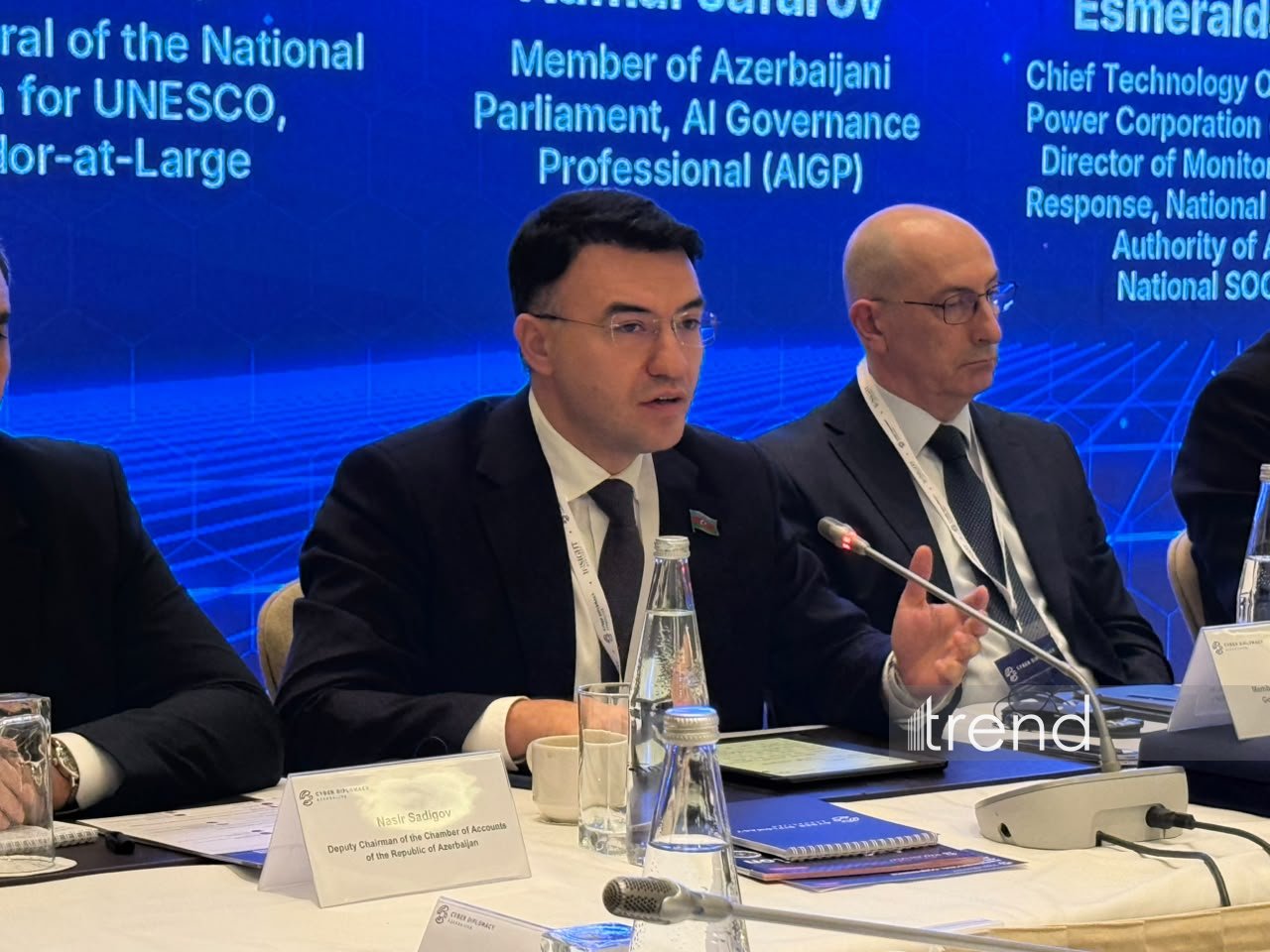
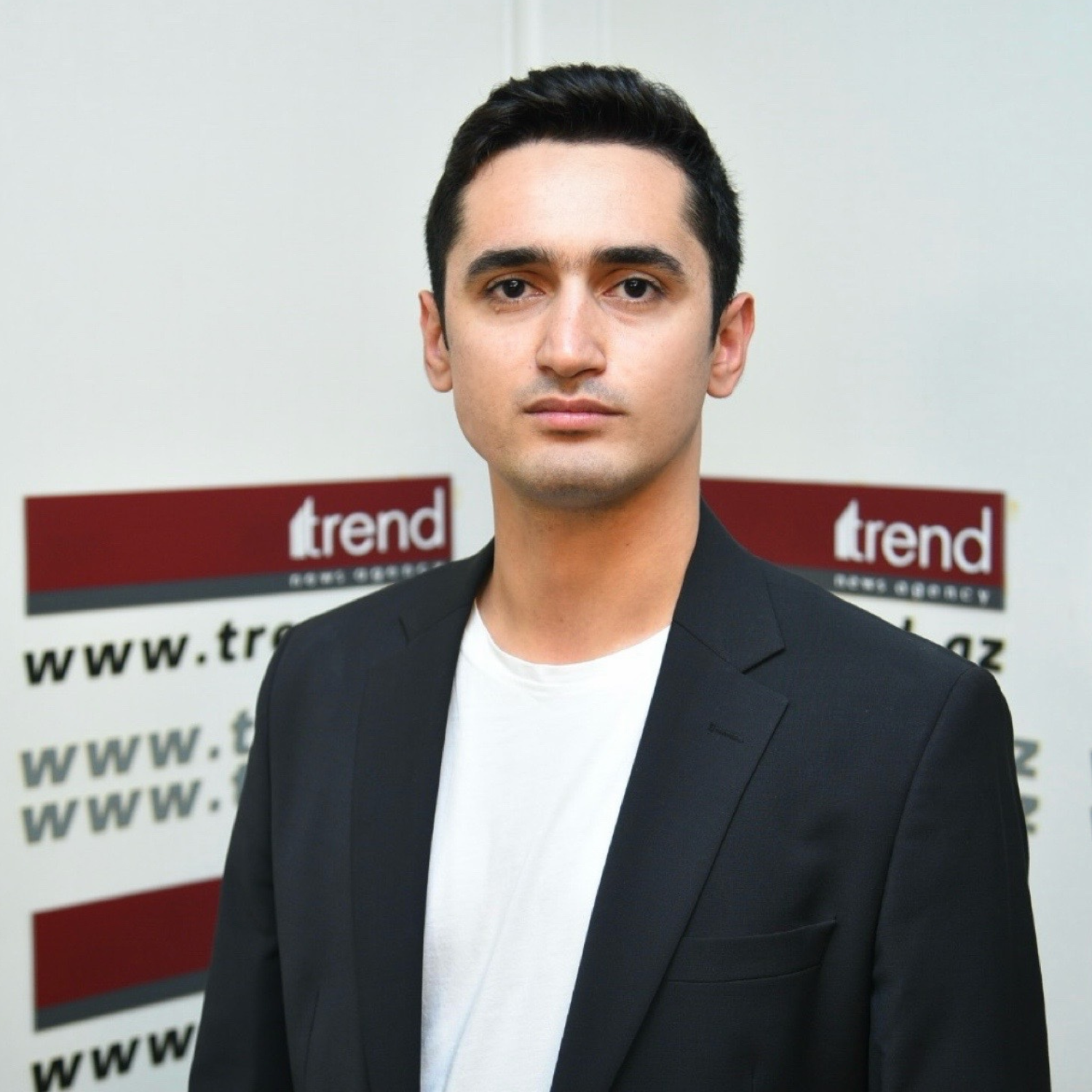
BAKU, Azerbaijan, November 19. Civil servants must pay special attention to the protection of information constituting state secrets, personal data, and professional secrets when using artificial intelligence tools, a member of the Azerbaijani Parliament Committee on Legal Policy and State Building, Kamal Jafarov said, Trend's correspondent reports.
Jafarov made the remark at the panel discussion “Foreign Policy in the Age of Artificial Intelligence: Defining New Rules for Diplomacy,” held as part of the Second International Conference on Cyberdiplomacy.
"Entering such data into artificial intelligence platforms violates the requirements of current legislation," he added.
The MP noted that digital development is one of the main priorities of state policy in Azerbaijan.
According to him, artificial intelligence creates both new opportunities and new threats. Therefore, it is necessary to be prepared to respond to emerging challenges, especially risks related to cybersecurity and information security.
The MP believes that the 2nd International Conference on Cyberdiplomacy serves this mission precisely.
Jafarov noted that artificial intelligence influences foreign policy in three main areas.
Stating that the first area involves the use of artificial intelligence in diplomacy as a tool, the lawmaker noted that ministers and diplomats can use this technology to monitor media in various languages, summarize negotiation texts, and prepare draft speeches.
He emphasized that artificial intelligence can provide a significant advantage even to small diplomatic missions.
Noting that the second area relates to artificial intelligence itself being the subject of diplomacy, Jafarov pointed out that discussions on this topic are underway at the international and regional levels.
He recalled that a global dialogue on the governance of artificial intelligence is underway within the United Nations, and that at the regional level, there is a relevant convention adopted by the Council of Europe.
The deputy linked the third area of artificial intelligence’s influence on foreign policy to threats. In this context, he noted that other panelists had also raised issues related to deepfake statements and synthetic calls.
Jafarov also outlined his position as a legislator, an expert on artificial intelligence governance, and a trainer regarding how new rules should be formulated.
In his view, artificial intelligence tools must, above all, be used ethically and responsibly.
The MP said that over the past three to four months, he has conducted training sessions on this topic for more than 1,000 civil servants. One of the main issues identified during the training sessions is data protection.
“Unfortunately, some civil servants enter sensitive information into artificial intelligence systems, and sometimes even information constituting a state or professional secret,” he noted.
According to Jafarov, some civil servants, citing the lack of a specific law regulating the use of artificial intelligence and its ethical application, believe they can enter any information into these platforms.
However, the deputy emphasized that there are already specific legislative provisions in force concerning state secrets, personal data, and professional secrets, and these provisions prohibit the entry of such information into artificial intelligence tools.
He also drew attention to misconceptions regarding the use of paid versions of artificial intelligence platforms.
In addition, Jafarov noted that some users believe their data is better protected when using the paid versions of Claude, ChatGPT, and Gemini.
“Users have the misconception that if they use the Pro or Max versions, they are better protected,” the deputy said.
He noted that most users do not read the platforms’ privacy policies.
According to the MP, the privacy policy designed for individual users remains unchanged even in paid individual versions. At the same time, the Enterprise version, intended for corporate users, is subject to a different legal framework and different data transfer rules.
Kamal Jafarov pointed out that when using AI, it is incorrect to assume that data security is guaranteed solely by having a paid subscription.


