


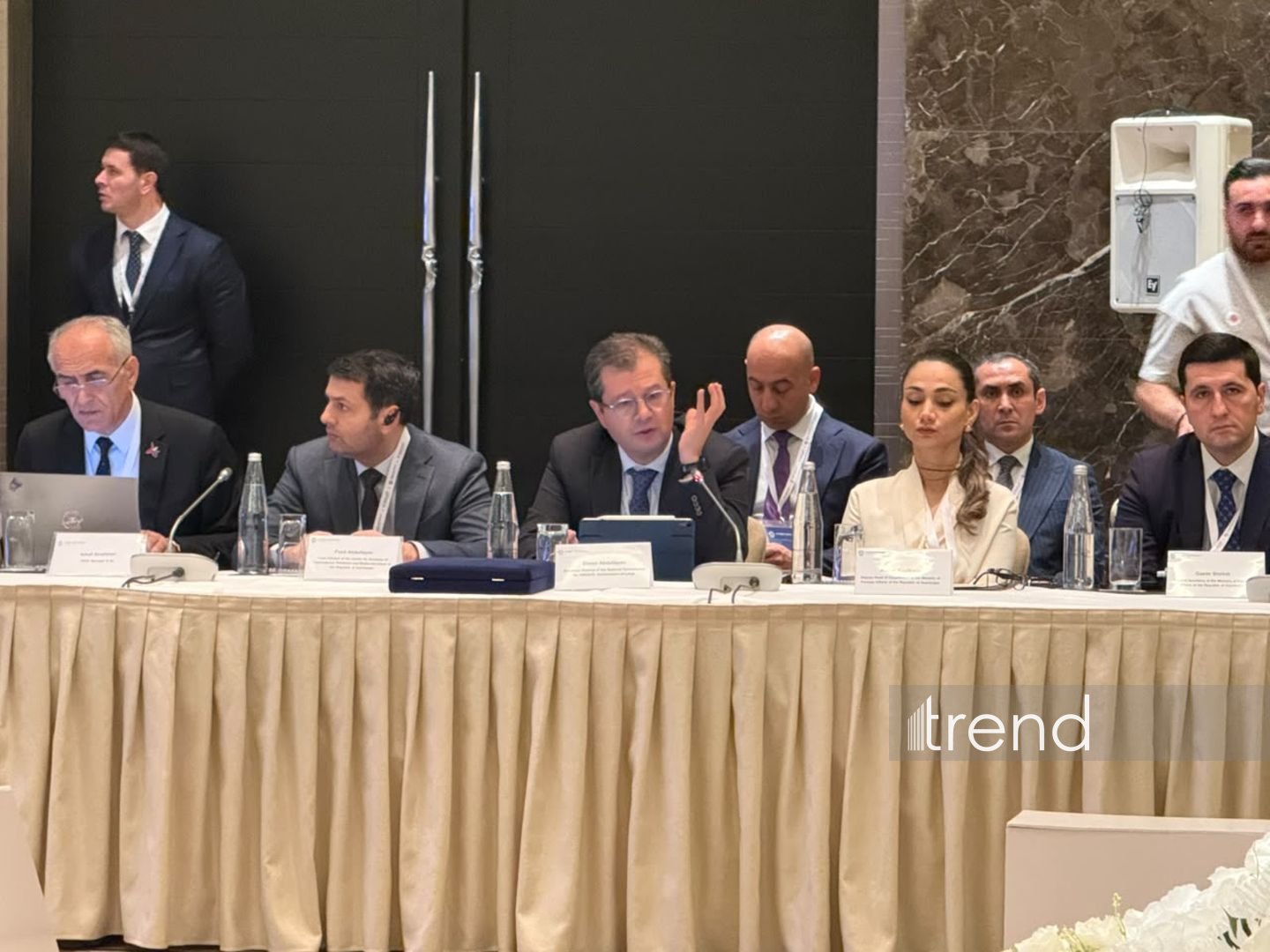

BAKU, Azerbaijan, November 19. AI could reshape the rules of international relations, intensify geopolitical competition, and lead to a concentration of technological capabilities in a few centers of power, Ambassador-at-Large, SG of the National Commission of Azerbaijan for UNESCO, Elman Abdullayev said, Trend's correspondent reports.
Abdullayev made the remarks at the panel discussion “Foreign Policy in the Age of Artificial Intelligence: Defining New Rules for Diplomacy,” held as part of the Second International Conference on Cyberdiplomacy.
"In this regard, it is important to ensure the participation of small and medium-sized countries in international discussions and decision-making related to artificial intelligence," he added.
He noted that the question of whether the world is witnessing the emergence of a new diplomatic tool or entering a new era in which artificial intelligence is reshaping the rules of international relations is becoming increasingly relevant.
Abdullayev also drew attention to the impact of artificial intelligence in the context of international cooperation. According to him, one of the main questions is whether artificial intelligence will strengthen international cooperation or further intensify geopolitical competition.
He expressed particular concern about the future position of small and medium-sized countries.
“Will the new competition in AI bring new opportunities for small and medium-sized countries, or will it further concentrate power in the hands of a few technological superpowers?” Abdullayev asked.
He stated that the time has come for small and medium-sized countries to also participate in international discussions.
The Secretary-General of the National Commission for UNESCO emphasized that another important issue is ensuring that technological progress closely linked to artificial intelligence is guided by the principles of human judgment, international law, and shared responsibility.
Furthermore, Abdullayev noted that governments alone can't resolve these issues.
According to him, bringing together panelists representing diverse views and approaches is crucial for discussing the impact of artificial intelligence on foreign policy choices and international partnerships.
The panel focused primarily on discussing how artificial intelligence might influence foreign policy decisions and international partnerships.


