


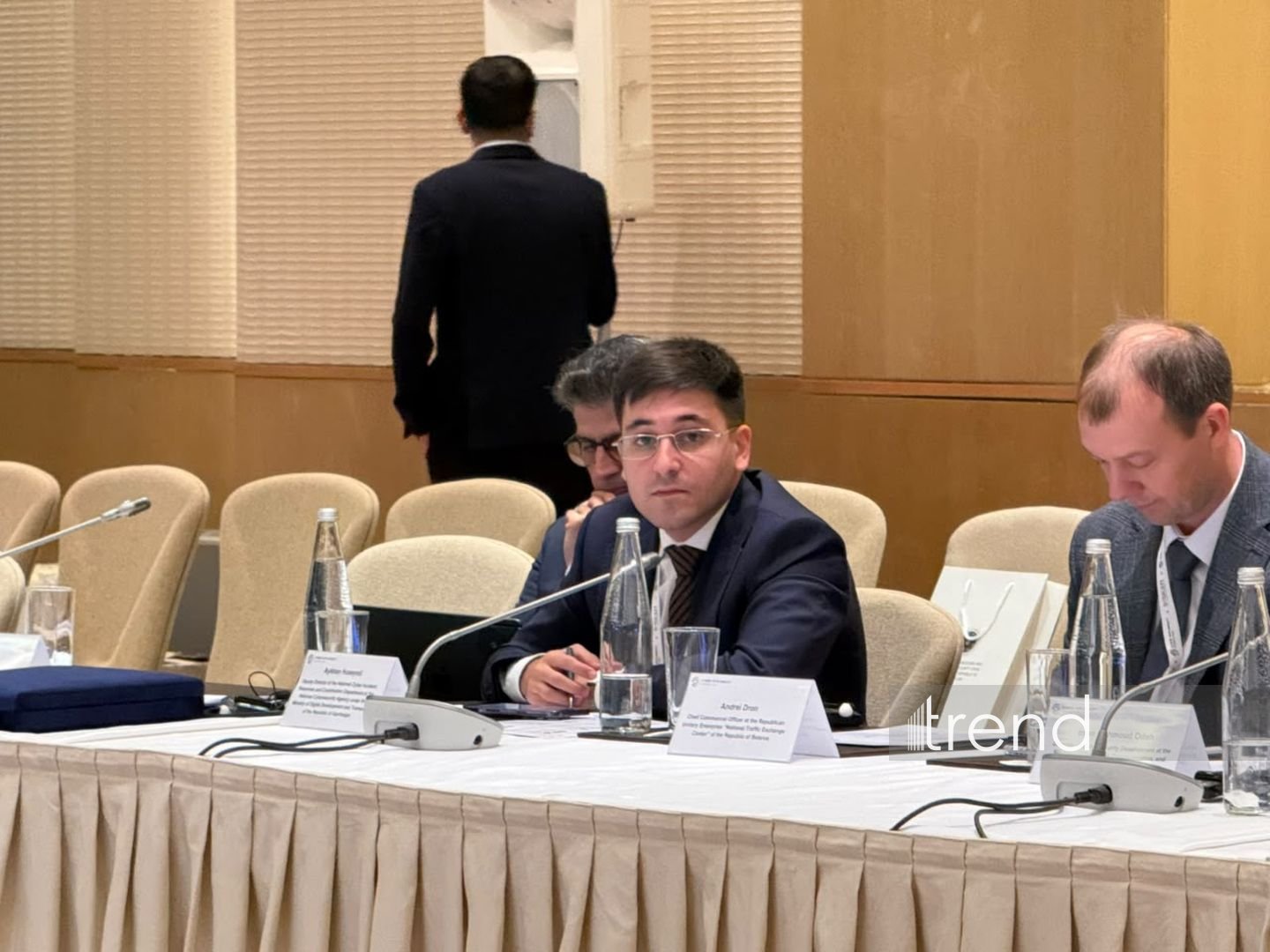
BAKU, Azerbaijan, November 19. Artificial intelligence (AI) agents reduce the time required to carry out cyberattacks from days or weeks to hours, and in some cases, even minutes, Deputy Director of the National Cyber Incident Response and Coordination Department at the National Cybersecurity Agency, Aykhan Huseynli, said, Trend's correspondent reports.
Huseynli made the remarks during a panel discussion titled “Information Warfare and Deepfake: Defending the Truth in the Digital Age,” held as part of the Second International Conference on Cyberdiplomacy in Baku on November 19.
According to him, at the same time, the accessibility of open-source AI tools expands the capabilities required to organize complex attacks.
He noted that on November 13, the US Federal Bureau of Investigation (FBI) issued an urgent warning regarding "Artex", an open-source framework that enables AI agents to conduct penetration tests autonomously.
"The FBI reports that in certain intrusions, attackers progressed from initial targeting to gaining privileged access in less than three hours. Consequently, we are now talking about timeframes measured in hours, or in some cases, even minutes, rather than days or weeks," he explained.
Huseynli pointed out that the primary distinction between traditional cyberattacks and those utilizing AI agents lies in how the process is managed. In traditional attacks, he explained, humans personally handled every stage, including planning, preparation, and the development of tools. In contrast, an attacker now provides an AI model with a general objective and task, and the agent is then capable of executing the key stages of the process from start to finish.
Referring to recent reports from the company "Anthropic," Huseynli said that 80–90% of certain attack operations were carried out by AI, with human intervention occurring in only four or five instances.
He remarked that, in addition to facilitating the execution of attacks, AI lowers the barrier to entry required for complex cyberattacks.
"Previously, when discussing complex cyberattacks, such as APT (Advanced Persistent Threat) attacks, we were referring to state-sponsored actors with substantial financial resources and large teams. Today, however, open-source projects like 'Artix', which was published on GitHub and remained accessible until July of this year, are available for anyone to use. Such multi-agent systems can perform the work of an entire team. Consequently, access to these types of tools has expanded significantly," he mentioned.
Huseynli noted that another manifestation of the accelerating pace of cyberattacks can be seen in the rising number of security vulnerabilities.
He emphasized that the increase in the number of vulnerabilities, combined with the speed at which they are exploited, poses serious challenges for national CERTs (Computer Emergency Response Teams) and other incident response and coordination groups operating in Azerbaijan.
Huseynli pointed out that the process of identifying the party behind cyberattacks, known as attribution, is becoming increasingly complex. According to him, determining which threat actor carried out an attack, or which state sponsored it, is a crucial aspect of cybersecurity.
"However, in today's world, the accessibility of artificial intelligence tools, combined with the speed and scale of attacks, makes it difficult for national institutions to determine whether an attack was executed by a state-backed actor or through artificial intelligence agents," Huseynli added.
The 2nd International Conference on Cyberdiplomacy, themed “Power and Influence in the Age of Artificial Intelligence: A Regional Perspective on the Changing Cyber Environment,” is taking place in Baku.
The conference brings together representatives of government agencies from various countries, international organizations, research centers, and the private sector.
The event focuses on a range of current issues, including the impact of artificial intelligence on international relations, cybersecurity, digital sovereignty, interstate cooperation in cyberspace, information security, and the protection of critical infrastructure.
The conference is jointly organized by the State Service for Special Communications and Information Security of the Republic of Azerbaijan and the National Institute for Research and Development in Informatics of Romania, with the participation of the Office of the President of the Republic of Azerbaijan, the Ministry of Foreign Affairs, the Ministry of Digital Development and Transport, the State Security Service, and other local partners.


