


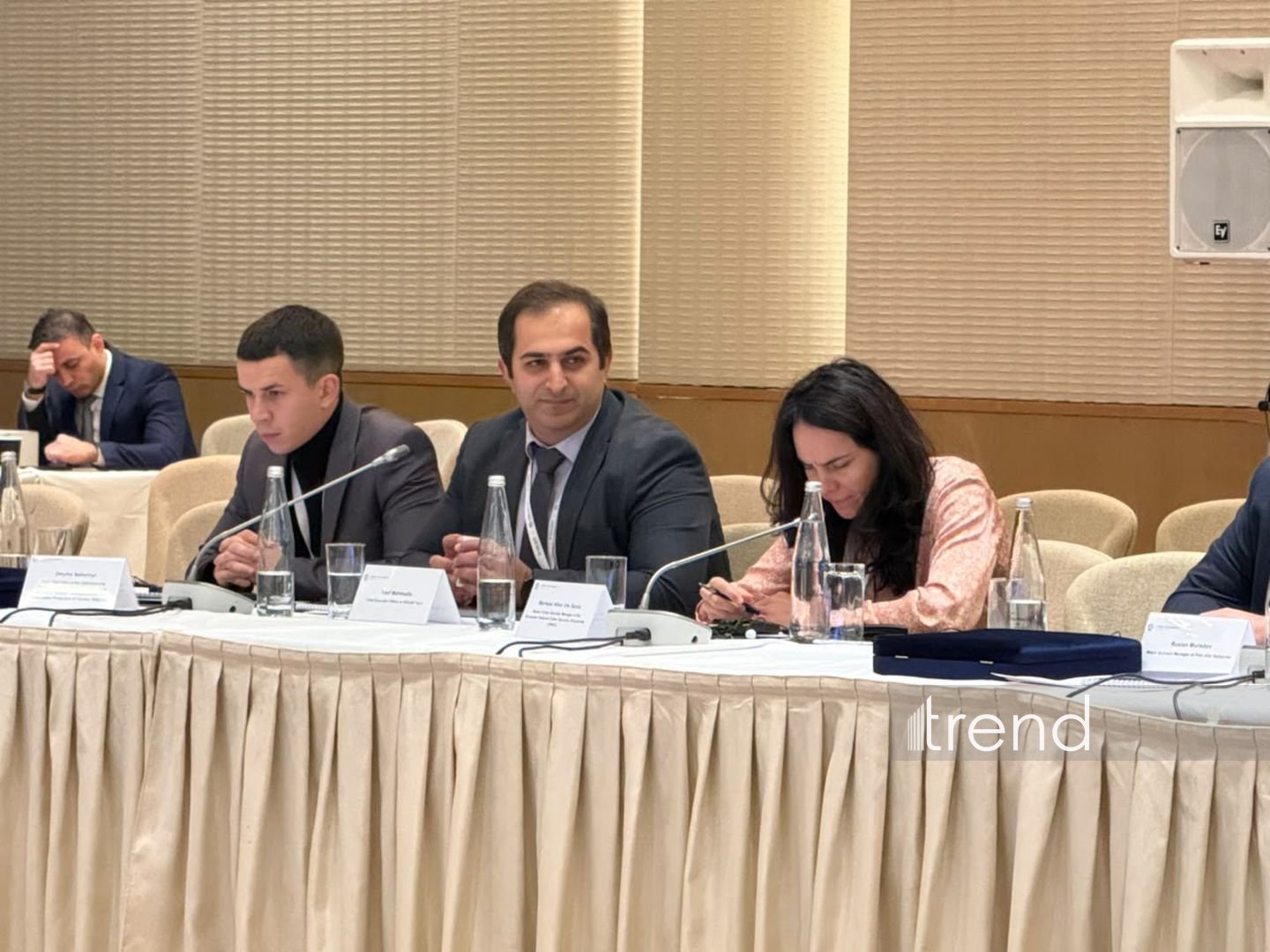
BAKU, Azerbaijan, November 19. Recent global critical software vulnerabilities highlight the need for tighter cybersecurity supply chain controls, CEO of SOCAR Tech, Rauf Mahmudlu, said during a panel discussion titled "Crisis of Trust: Responsible State Behavior and Accountability in Cyberspace" at the 2nd International Conference on Cyber Diplomacy in Baku today, Trend’s correspondent reports from the event.
He said that critical software vulnerabilities discovered in recent weeks are affecting the world's leading companies, making it increasingly difficult for technical teams to respond promptly to such issues.
Mahmudlu noted that in the past, when "zero-day" vulnerabilities were detected, technical specialists worked through the night to restore systems and resolve the problems. However, the current number and scale of these vulnerabilities demonstrate that this approach is no longer sufficient.
According to the CEO, the persistent emergence of such vulnerabilities could potentially require technical teams to work overnight on a daily basis. Therefore, addressing this challenge shouldn’t be limited solely to individual companies protecting their own systems.
He emphasized the need to regulate the supply chain as well. Companies that utilize technology must ensure that other suppliers within that chain also meet the highest security standards.
Mahmudlu pointed out that while certain standards, regulations, and reporting requirements for regulatory bodies already exist, more effective technical oversight mechanisms must be implemented for technology providers. The CEO also highlighted the risks posed by artificial intelligence (AI) models. According to him, it's possible to bypass the safety constraints of "open-weight" AI models at a minimal cost, thereby enabling them to be used for sophisticated cyberattacks.
Mahmudlu noted that while companies may have access to advanced, regulated AI models in certain countries or jurisdictions, open-weight models with similar capabilities can be far more accessible.
He added that until a solution is found for this situation, which cybersecurity experts have termed a "tsunami of vulnerabilities", appropriate intervention and oversight mechanisms must be implemented regarding technology providers and the use of AI models.
The 2nd International Conference on Cyberdiplomacy, themed “Power and Influence in the Age of Artificial Intelligence: A Regional Perspective on the Changing Cyber Environment,” is taking place in Baku.
The conference brings together representatives of government agencies from various countries, international organizations, research centers, and the private sector.
The event focuses on a range of current issues, including the impact of artificial intelligence on international relations, cybersecurity, digital sovereignty, interstate cooperation in cyberspace, information security and the protection of critical infrastructure.
The conference is jointly organized by the State Service for Special Communications and Information Security of the Republic of Azerbaijan and the National Institute for Research and Development in Informatics of Romania, with the participation of the Office of the President of the Republic of Azerbaijan, the Ministry of Foreign Affairs, the Ministry of Digital Development and Transport, the State Security Service, and other local partners.


