


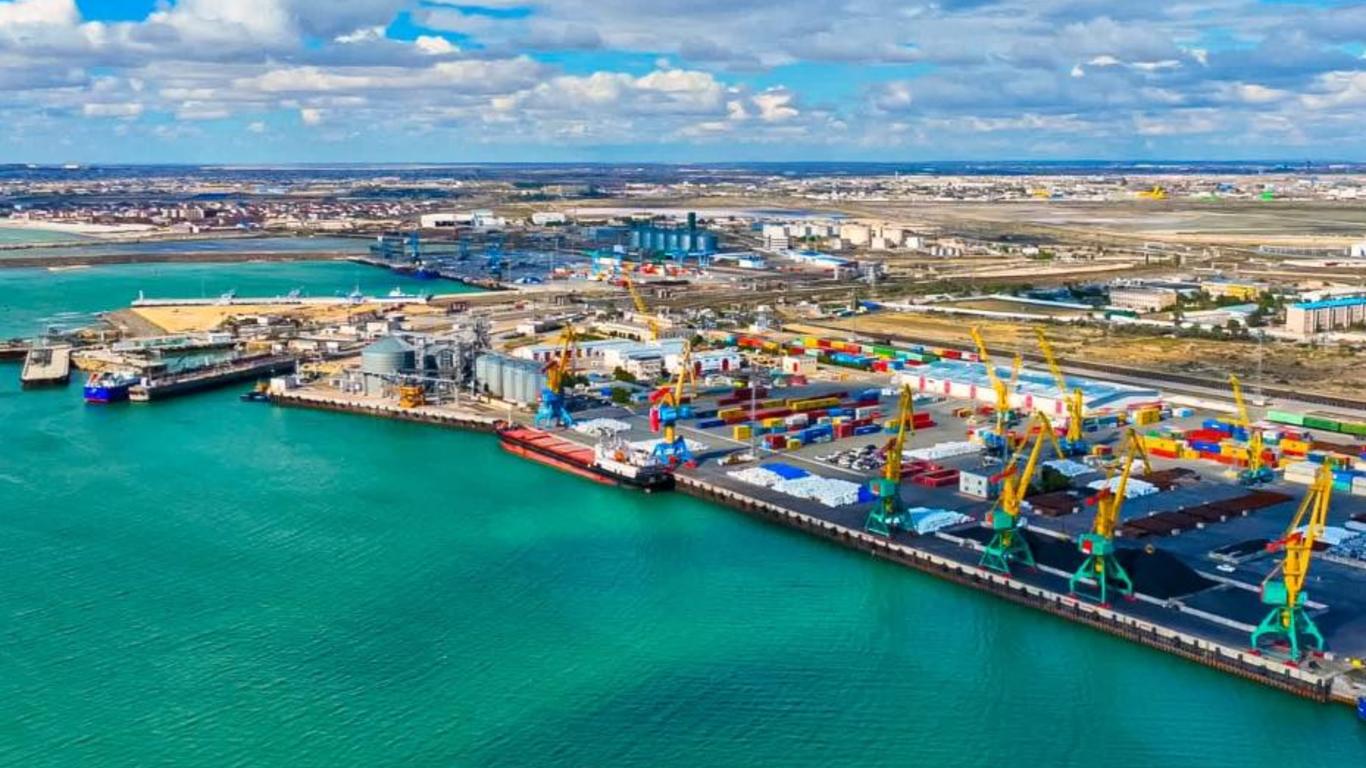

BAKU, Azerbaijan, November 20. Work is underway in the ports of the Caspian Sea to develop the “Maritime Single Window” system as part of the activities of the TRACECA Intergovernmental Commission.
This was announced in a TRACECA statement following the 45th forum of the United Nations Center for Trade Facilitation and Electronic Business (UN/CEFACT), which took place in Geneva.
In addition, the statement notes that a delegation from the TRACECA Permanent Secretariat, led by the organization’s Secretary General, Jasurbek Choriev, participated in the forum, which brought together representatives of governments, international organizations, the business community, and technical experts.
“During the event, participants discussed issues related to the digital transformation of international trade and logistics, including cross-border cargo traceability, regulatory compatibility, digital connectivity of transport corridors, ‘single window’ mechanisms, and sustainable supply chains.
One of the central topics was a discussion of Draft Recommendation No. 50 of the United Nations Economic Commission for Europe (UNECE), aimed at establishing a regulatory and technological framework for the reliable exchange of data between countries with different levels of digital development.
Speaking on November 4 at a discussion on improving the digital connectivity of transit corridors, Jasurbek Choriev noted that for TRACECA—eight of whose 14 member states are landlocked—the integration of transportation routes is one of the key prerequisites for development.
According to him, digital modernization is currently being implemented separately for each mode of transport. As a result, at the interfaces between rail and road transport systems, as well as in port procedures, data is re-entered or duplicated on paper. It is precisely in these areas, as the TRACECA Secretary General noted, that significant potential lies for reducing cargo delivery times along the Middle Corridor.
In addition, it was emphasized that the TRACECA delegation also shared the organization’s practical experience in the field of paperless trade and the harmonization of transit procedures. In particular, the delegation highlighted the progress made in implementing a unified electronic transit permit, the development of the “Maritime Single Window” system in the ports of the Caspian Sea, and the results of pilot testing of the CIM/SMGS electronic railway consignment note with data adapted to UN/CEFACT standards.
The proposed measures, including the development of a transport corridor methodology and common key performance indicators, are consistent with the draft of the new TRACECA strategy for 2027–2036. Its approval is expected by the end of 2026.
The organization also stated that it adheres to a federated governance model based on the principle of “One Route—Many Systems—One Semantic Language.” This model involves creating interoperability interfaces between existing national systems rather than developing centralized digital platforms,” the statement reads.
TRACECA believes that a real reduction in delivery times through the digitalization of multimodal transport is possible through the use of common UN/CEFACT standards and the mutual recognition of electronic documents by all countries along the transport route.
In addition, on November 3–4, on the sidelines of the forum, the TRACECA Secretary General held working meetings with senior officials and subject matter experts from the UNECE, including the Commission’s Deputy Executive Secretary Dmitry Mariyasin and the Director of the Sustainable Transport Division, Hanni Misters.
The parties discussed prospects for deepening cooperation in the field of electronic document management, as well as an initiative to establish TRACECA national centers of excellence for training specialists in the use of UN digital standards.
During the meetings, representatives of the UNECE also presented a project to develop a digital twin of the Trans-Caspian Transport Corridor and expressed their willingness to explore the possibility of involving TRACECA in its implementation.
Following the talks, the parties agreed to exchange specific proposals for the development of a joint work program.


