


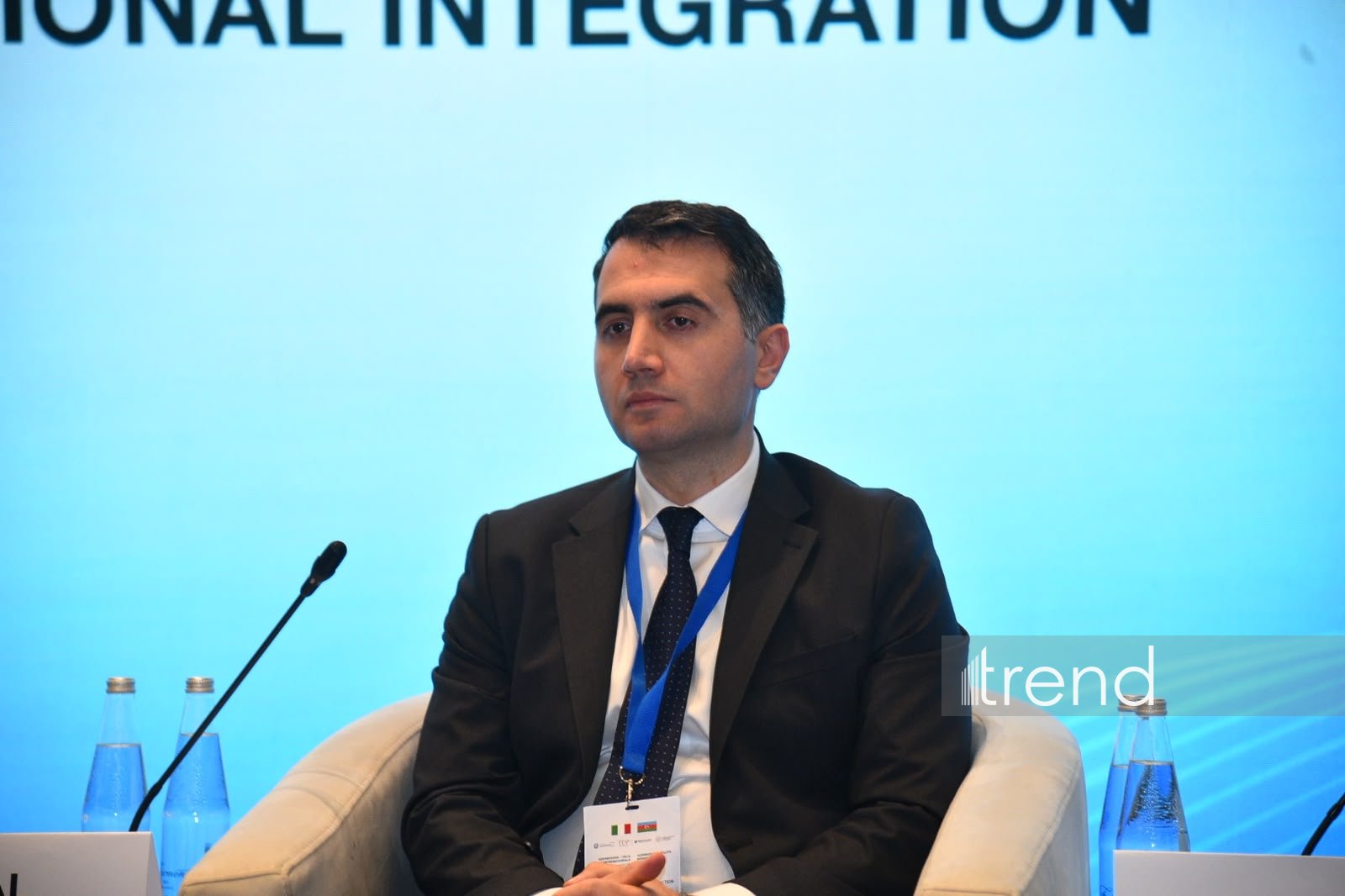

BAKU, Azerbaijan, November 23. The European Bank for Reconstruction and Development (EBRD) supports the implementation of investment projects in Azerbaijan in the areas of infrastructure development, water management, waste management, and energy efficiency, the Associate Director and Senior Banker at the European Bank for Reconstruction and Development (EBRD), Real Hajiyev said, Trend's correspondent reports.
Hajiyev made the statement on Monday at the Azerbaijan-Italy Business Forum in Baku.
He noted that the EBRD is involved in various stages of projects in Azerbaijan, ranging from the development of financial, technical, and engineering solutions to the implementation of investment projects.
According to Real Hajiyev, the bank has contributed to the development of legislation in the field of public-private partnerships (PPPs), as well as to the improvement of the legal and regulatory framework for the energy sector.
He noted that, with EBRD support, the “Green City Action Plan” was also developed, aimed at the long-term and sustainable development of the city of Ganja. This plan envisages transforming Ganja into a healthier, more environmentally friendly, and more attractive city to live in.
According to him, as part of this process, relevant studies are being conducted, gaps in the projects are being identified, and the projects are being adapted to meet international standards and the requirements of local stakeholders. At the same time, attention is being paid to improving project management mechanisms and climate resilience indicators.
Real Hajiyev added that the EBRD is currently working with Azerbaijan’s State Water Resources Agency to improve the efficiency of the agency’s management, financial, and operational activities.
Touching on future investment opportunities, the banker noted that, alongside traditional infrastructure sectors, the focus should also be on areas that have so far attracted relatively little investment.
Among these sectors, he highlighted the construction of landfills, including sanitary landfills; the development of stormwater management infrastructure; improving energy efficiency in government buildings; and the remediation of contaminated sites.
“The key issue is to harness the creative and innovative potential of the private sector and ensure its leading role in implementing investments. Government agencies, for their part, must create comprehensive and favorable conditions for private-sector activity and the implementation of these investments,” Real Hajiyev emphasized.


