


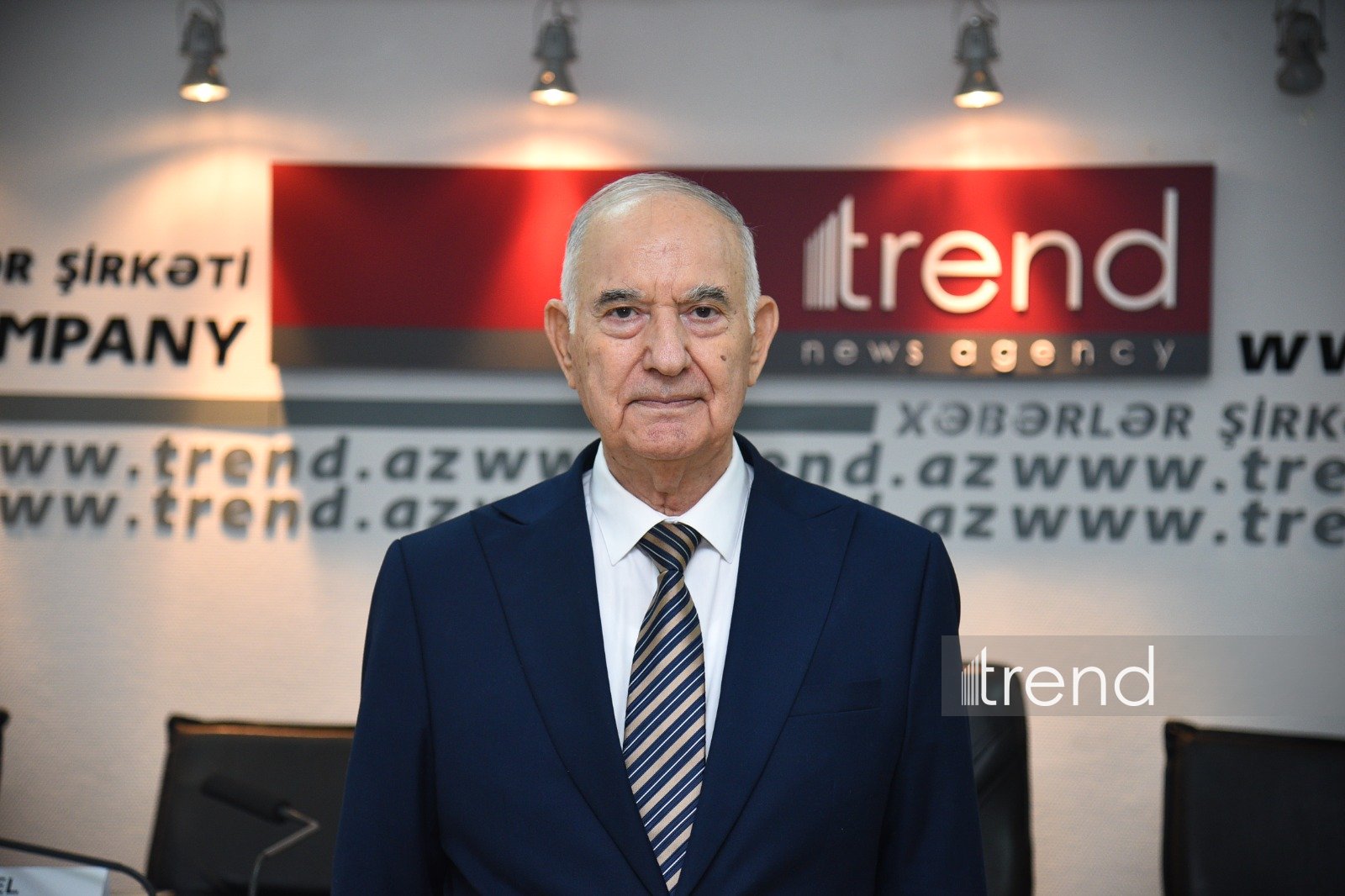

BAKU, Azerbaijan, November 23. Azerbaijani President Ilham Aliyev's official visit to Vietnam can be viewed as the beginning of a new stage in the development of relations between Baku and Hanoi, political analyst Azer Garayev told Trend.
The visit, held on November 19–21, is particularly important in terms of moving the existing friendly relations between the two countries beyond political statements towards concrete economic projects, energy cooperation, transport and logistics links, and security partnerships.
"The adoption of a Joint Statement by Azerbaijani President Ilham Aliyev and Vietnamese President To Lam, as well as the signing of documents covering various areas, was one of the main political outcomes of the visit. These documents demonstrate the two countries' intention to expand the substance of their strategic partnership and translate mutual interests into practical results.
In fact, the current level of Azerbaijan-Vietnam relations rests on long-standing historical foundations. Ho Chi Minh's visit to Azerbaijan in 1959 played an important role in establishing friendly ties between our peoples. The contribution made by Azerbaijani specialists to the development of Vietnam's oil industry during that period also holds a special place in the history of these relations. The fact that Vietnamese specialists received training in the oil sector in Azerbaijan and subsequently took part in the development of their own country shows that cooperation has not only political but also professional and human foundations," he said.
Garayev noted that To Lam's state visit to Azerbaijan in May 2025 and the elevation of bilateral relations to the level of a strategic partnership gave these historical ties new political substance. President Ilham Aliyev's visit to Hanoi a year later is an important step in continuing those agreements and implementing mutual commitments.
"President Ilham Aliyev has highly praised Vietnam's development, emphasizing the country's growing international standing. The head of state noted: "Vietnam is now a very important international actor, playing an important role not only in your region but on a global scale." This statement is important for understanding the political foundations of bilateral relations. Azerbaijan holds an important geopolitical and economic position in the South Caucasus, while Vietnam does so in Southeast Asia. Both countries are seeking to expand their economic ties within their respective regions and increase their participation in international transport and energy routes. In this regard, their cooperation creates additional opportunities to benefit from each other's regional capabilities," he said.
According to him, one of the most important areas of the visit was the expansion of economic and trade ties and an increase in mutual investment. According to information provided by President Ilham Aliyev in an interview with Vietnam's National News Agency, trade turnover between the two countries exceeded $150 million in 2025. Nevertheless, the current figures do not fully reflect the partnership's actual potential.
"Energy, in particular, is one of the priority areas of cooperation. Azerbaijan has extensive experience in the oil and gas industry, while Vietnam has broad economic and industrial capabilities in Southeast Asia. Deepening ties between SOCAR and Vietnam's national oil and gas company PetroVietnam is particularly important in this regard. The parties are considering expanding cooperation in the exploration and development of oil and gas fields, technical services, specialist training, and other areas.
At the same time, discussions on opportunities to export Azerbaijani petroleum products to Vietnam, as well as to other regional markets through Vietnam, are opening up new economic prospects. Such cooperation could help Azerbaijan expand the geographical reach of its energy exports, while enabling Vietnam to strengthen its ties with reliable suppliers," he said.
The political analyst emphasized that the agreement reached on green energy during the visit also deserves attention.
"The exchange of an implementation agreement between Azerbaijan's Ministry of Energy and Vietnam's ROX Group on the assessment, development, and implementation of solar and wind power plant projects is a concrete example of investment cooperation. This could pave the way for greater involvement of Vietnamese businesses in Azerbaijan's energy sector. President Ilham Aliyev's statement on energy security also reveals the strategic significance of this cooperation: 'Energy security, as we always say, is part of the national security of every country.'
This approach demonstrates that Azerbaijan and Vietnam share important interests in this area. Against the backdrop of changes in global energy markets and risks emerging in supply chains, establishing long-term ties with reliable partners is important for both countries. Azerbaijan's experience in energy production and exports creates additional opportunities for Vietnam, while Vietnam's economic potential could expand Azerbaijani companies' access to Asian markets," Garayev said.
According to him, another important area of the visit was transport and logistics cooperation. Azerbaijan's geographical position and modern transport infrastructure offer Vietnamese companies a significant advantage in accessing European markets.
"The Middle Corridor is a convenient route for developing trade links with Europe not only for China and Central Asia but also for Southeast Asian countries. Using Azerbaijan's port, railway, and logistics capabilities could provide an additional option for transporting Vietnamese goods to Europe. According to information provided by President Ilham Aliyev, transit cargo volumes through Azerbaijan exceeded 8,000 tons in January-September 2026, increasing approximately sixfold compared with the same period last year.
This figure shows that cooperation is already beginning to produce practical results. At the same time, the North-South route could offer Vietnamese companies additional opportunities to access new markets. Discussions on launching direct flights are also important for expanding tourism, business ties, and people-to-people contacts," he said.
The political analyst noted that particular emphasis should also be placed on the fact that bilateral relations rest on strong political trust as well as economic foundations. Vietnam supported Azerbaijan's territorial integrity and sovereignty during the 2020 Patriotic War. President Ilham Aliyev expressed his gratitude to the Vietnamese side for this position, stating that the support would never be forgotten.
Furthermore, cooperation within the UN, the Non-Aligned Movement, and the Conference on Interaction and Confidence Building Measures in Asia (CICA), as well as Azerbaijan's readiness to support the development of Vietnam's ties with countries in the South Caucasus and Caspian region, are broadening the geographical scope of the partnership. Vietnam's position within ASEAN also creates additional diplomatic opportunities for Azerbaijan to develop ties with Southeast Asia.
Discussions during the visit on cooperation in the defense industry, security, mine clearance, emergency preparedness, and humanitarian affairs also demonstrate the increasingly multifaceted nature of bilateral relations. In particular, the fact that both countries face mine-related challenges makes the exchange of experience and joint efforts in this area especially relevant," he said.
Garayev emphasized that President Ilham Aliyev's visit to Vietnam is an important step towards expanding cooperation in the Asian direction of Azerbaijan's foreign policy.
"Historical friendship, political trust, and mutual support between Baku and Hanoi are now being complemented by projects in the economic, energy, transport, and security sectors. Most importantly, both sides intend to give these relations tangible results. Azerbaijan can be a reliable partner for Vietnam in the South Caucasus and European direction, while Vietnam can become a promising economic and political partner for Azerbaijan in Southeast Asia. In this regard, the visit not only strengthens the existing ties between the two countries but also lays the groundwork for new opportunities for long-term cooperation," the political analyst added.


