


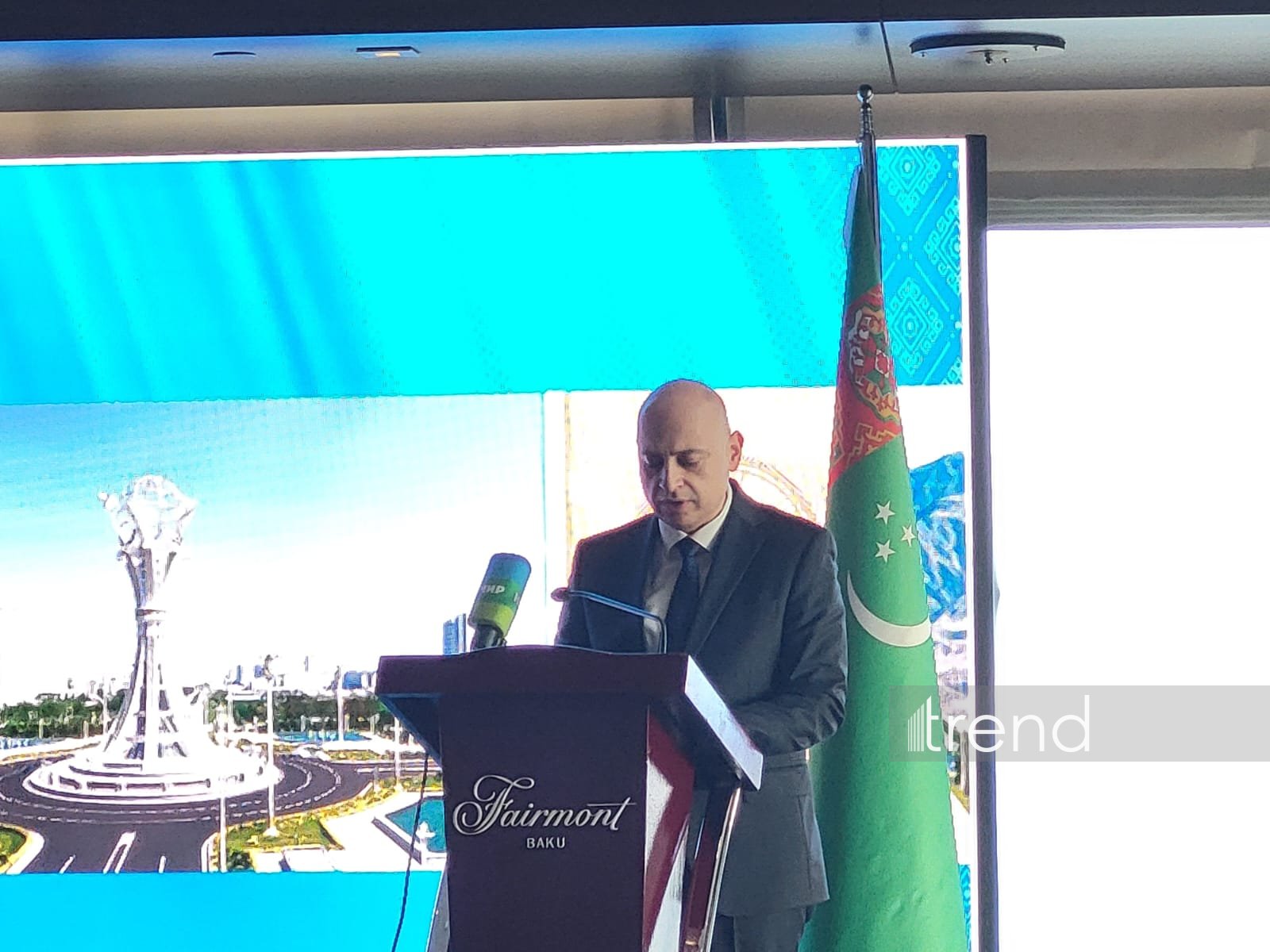

BAKU, Azerbaijan, November 23. Azerbaijan highly values Turkmenistan’s policy of permanent neutrality and consistently supports its international initiatives aimed at strengthening peace, trust, and cooperation, the country’s Deputy Minister of Foreign Affairs Samir Sharifov said, Trend's correspondent reports.
Sharifov made the remarks at an event in Baku dedicated to the presentation of a book by Turkmenistan’s President Serdar Berdimuhamedov titled “Turkmenistan’s Neutrality—The Bright Path to Peace and Trust,” published in Azerbaijani.
According to him, the publication of the book in Azerbaijani allows readers to gain a deeper understanding of Turkmenistan’s state experience and its foreign policy approaches. He also noted that the publication reflects the historical, cultural, and spiritual ties between the two nations.
Sharifov emphasized that the UN General Assembly’s recognition of Turkmenistan’s permanent neutrality in 1995 was a significant milestone in shaping the country’s international stance. According to him, Azerbaijan supports Ashgabat’s initiatives aimed at developing international dialogue. He recalled that Azerbaijan co-sponsored a UN General Assembly resolution declaring 2025 the International Year of Peace and Trust. In addition, Azerbaijani Prime Minister Ali Asadov participated in the International Forum on Peace and Trust in Ashgabat in 2025, where he reaffirmed Azerbaijan’s readiness to participate in Turkmenistan’s initiative to establish a University of Neutrality under the auspices of the UN.
Speaking about bilateral relations, Sharifov noted that the state visit to Azerbaijan by Turkmenistan’s President Serdar Berdimuhamedov in June 2026 gave new impetus to cooperation. According to him, the joint statement and documents adopted during the visit laid the foundation for further expansion of cooperation.
He also highlighted the continuation of high-level contacts, including the participation of Azerbaijani President Ilham Aliyev in the 8th Consultative Meeting of the Heads of State of Central Asia in Turkmenistan in October 2026.
Sharifov added that there is significant potential for further cooperation in the transportation sector, energy, and trade, and that cultural and humanitarian ties also remain an important component of relations between the two countries.


