


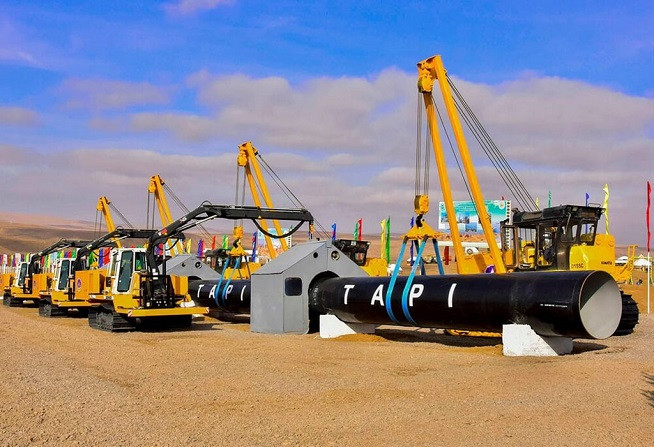

BAKU, Azerbaijan, August 3. Turkmenistan reviewed progress on the Turkmenistan-Afghanistan-Pakistan-India (TAPI) gas pipeline and outlined priorities for expanding hydrocarbon production.
This was reflected in a press release published by Turkmenistan's state concern Turkmennebit on August 3 following a government meeting of the country's oil and gas sector.
According to the statement, the meeting reviewed the performance of the oil and gas complex over the first seven months of 2026. Reports were presented by the heads of Turkmennebit, Turkmengaz, Turkmengeology and TAPI Pipeline Company Ltd., as well as executives of sectoral associations and enterprises.
"Particular attention was paid to construction of the main Serhetabat-Herat section of the Turkmenistan-Afghanistan-Pakistan-India gas pipeline in compliance with international standards," the statement said.
The participants also discussed priorities for further development of the sector, including expanding geological exploration and production drilling to discover new hydrocarbon fields, increasing oil and natural gas output and improving the quality of extracted resources.
Meanwhile, the Turkmenistan-Afghanistan-Pakistan-India (TAPI) pipeline is a planned 1,800-kilometer natural gas pipeline designed to transport up to 33 billion cubic meters of gas annually from Turkmenistan’s giant Galkynysh field to Afghanistan, Pakistan, and India. Ashgabat views the project as one of the main routes for diversifying gas exports and strengthening regional economic integration.
The gas resource base for TAPI is the Galkynysh field, one of the world's largest gas deposits with estimated reserves exceeding 27 trillion cubic meters. In April 2026, Turkmengaz and China's CNPC launched the fourth phase of the field's development. The project involves the construction of new production facilities and the drilling of wells, which will enable the additional production of up to 10 billion cubic meters of commercial gas per year.
In early June, the Belfer Center for Science and International Affairs at Harvard’s Kennedy School noted in its analysis that the TAPI gas pipeline is being re-anchored in regional energy discussions as a structured mechanism for regional energy flows, connecting Turkmenistan’s gas resources with demand centers in South Asia.



