


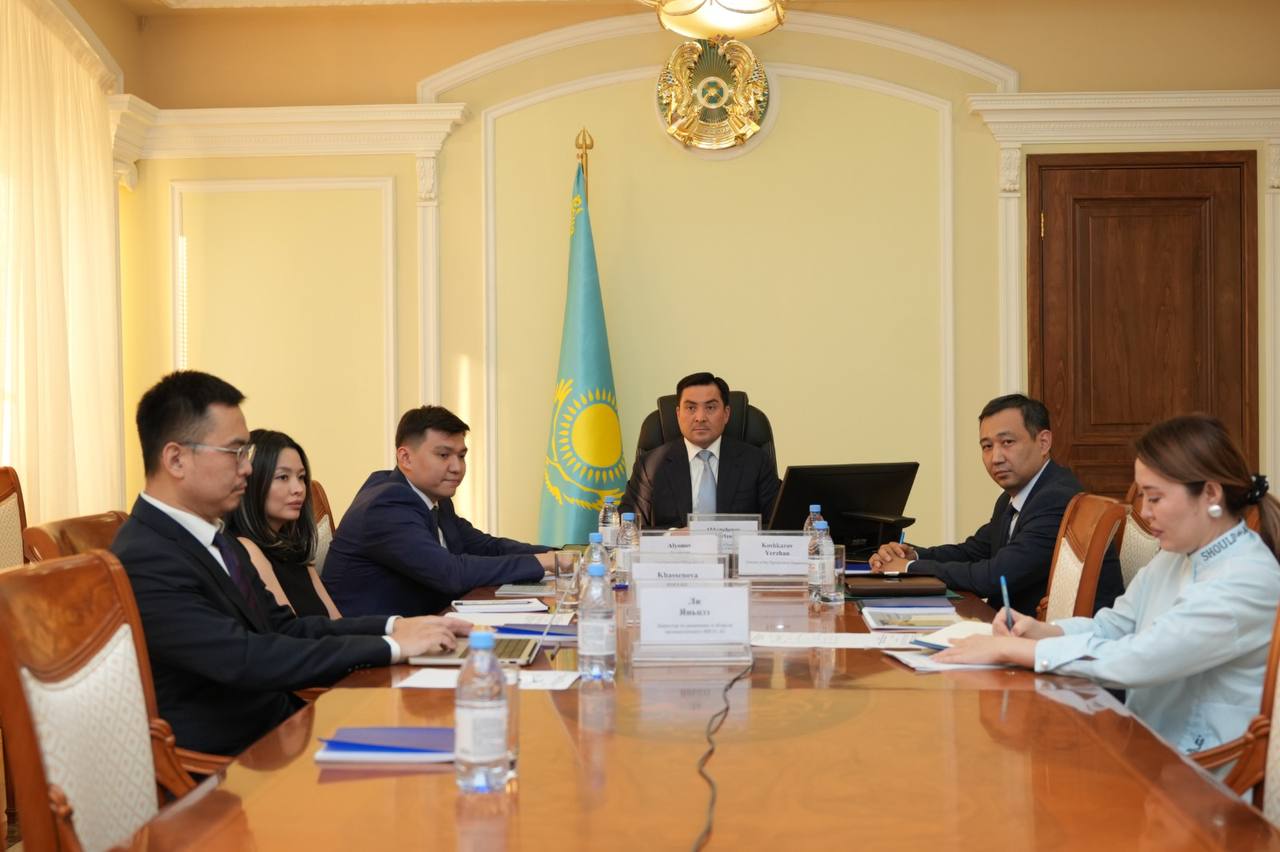

BAKU, Azerbaijan, October 31. Kazakhstan's Ministry of Energy has presented the Energy AI Kazakhstan concept to introduce artificial intelligence into production and management processes across the country's fuel and energy sector by creating a unified digital environment, the ministry said.
The concept was presented at a working meeting chaired by Kazakh Energy Minister Yerlan Akkenzhenov to discuss the application of artificial intelligence in the sector. Participants included Kai-Fu Lee, Chairman of the Board of Directors of 01.AI and a freelance adviser to the President of Kazakhstan, who joined the meeting online, as well as representatives of the Kazakhstan office of Q.AI.
During the meeting, Lee presented the company's approaches to applying AI in the energy sector. Participants reviewed the proposed platform's architecture, functionality, and potential applications within the ministry and its subordinate organizations.
The solutions presented included early detection of risks of fuel shortages, automation of report preparation and verification, and industrial safety monitoring. Their application is intended to improve the speed of industry data analysis and support better-informed decision-making.
Particular attention was paid to digital twins of energy facilities. These tools make it possible to model production processes, assess equipment conditions, identify potential deviations, and evaluate the consequences of different scenarios before technical decisions are made.
The proposed architecture combines industry-specific knowledge bases, information systems, and specialized AI agents designed to perform specific production and management tasks.
One of the key principles of the concept is ensuring Kazakhstan's technological and information sovereignty. The initiative envisages locating data, computing infrastructure, and industry-specific models within the country, under the ministry's control.
The meeting also addressed possible implementation stages, including pilot testing using real industry data, assessing the effectiveness of the proposed solutions, and subsequently scaling up tools that demonstrate practical benefits for the sector.


