


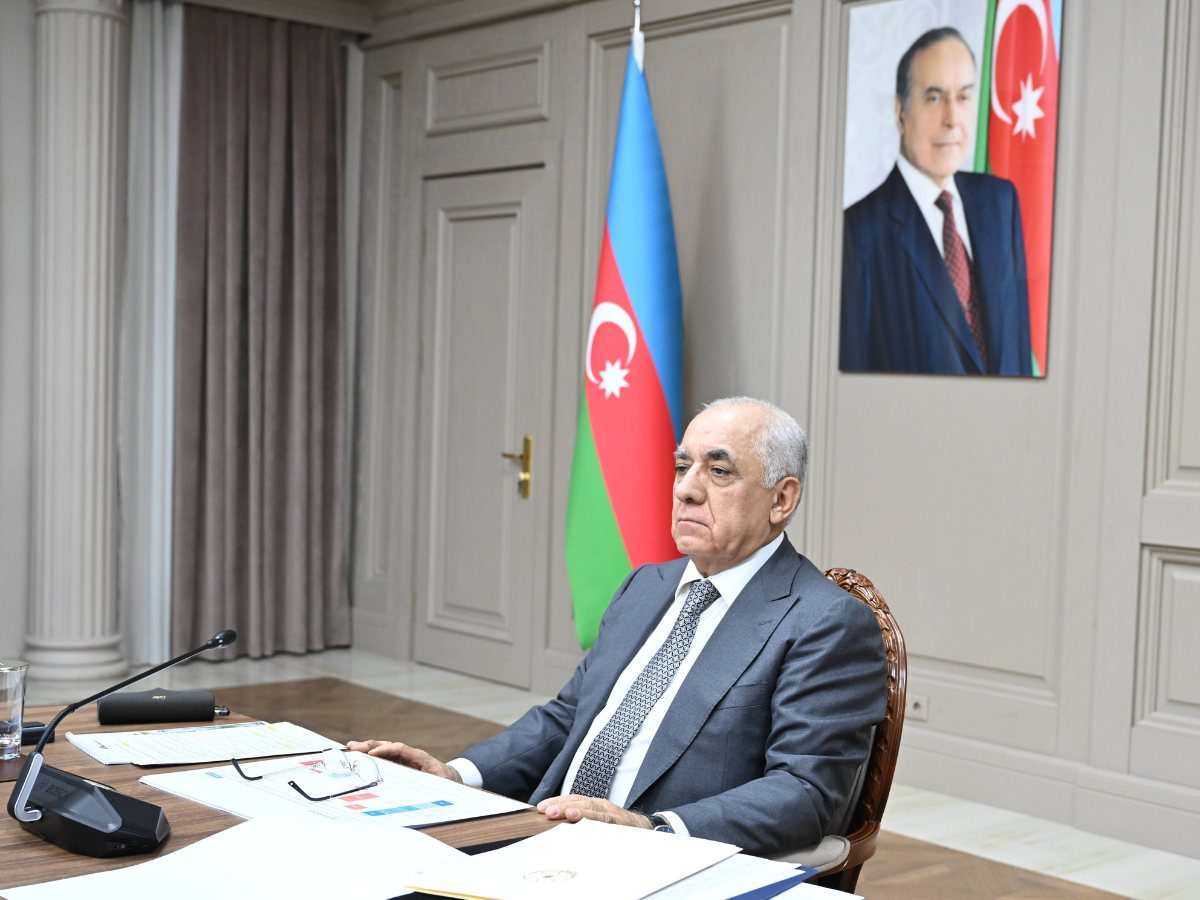

BAKU, Azerbaijan, September 24. Azerbaijan's Prime Minister Ali Asadov, speaking at the Cabinet of Ministers meeting held today, said that the country’s strategic foreign currency reserves have approached $91 billion.
He made the remark at the meeting discussing the draft state and consolidated budgets for 2027, held today, consolidated budget indicators for the next 3 years, and socio-economic development forecasts.
"Currently, our country's strategic foreign currency reserves stand at approximately $91 billion. This figure exceeds our external public debt by nearly 20-fold. As of September 1, our direct external public debt stood at $4.5 billion, representing 5.6% of projected GDP. In the first 8 months of 2026, the foreign trade surplus exceeded $10 billion.
Annual inflation was 5.7% during the first eight months of 2026. Taking into account international organizations' forecasts regarding food and commodity prices, the stability of the manat exchange rate, and the balance of the currency market, average annual inflation is projected to fall to 5.3% next year, remaining within the target range," Asadov emphasized.
The prime minister noted that, taking into account the expected growth rates from the strategy's adoption in 2022 through 2026, the average annual growth rate of the non-oil and gas sector is projected to be 5.1%.
"Despite global risks, macroeconomic and financial stability has been maintained in our country during the period elapsed this year, and our key macroeconomic indicators remain resilient," he explained.
Asadov also noted that, overall, economic growth was achieved despite a decline in production and growth rates within the oil and gas sector:
"From January through August of this year, GDP grew by 1.2% in real terms; specifically, real growth in non-oil and gas GDP was 2.1%, while oil and gas GDP saw a decline of 0.8%. Investments in fixed assets increased by 10%.
During the first 8 months of the current year, the Government—acting under the President's relevant decrees and orders—implemented measures to support economic activity. These included launching a nationwide interest rate subsidy mechanism for loans and allocating additional budget funds, providing transport and logistics subsidies, compensating for certain export costs, and taking other supportive actions," he added.



