


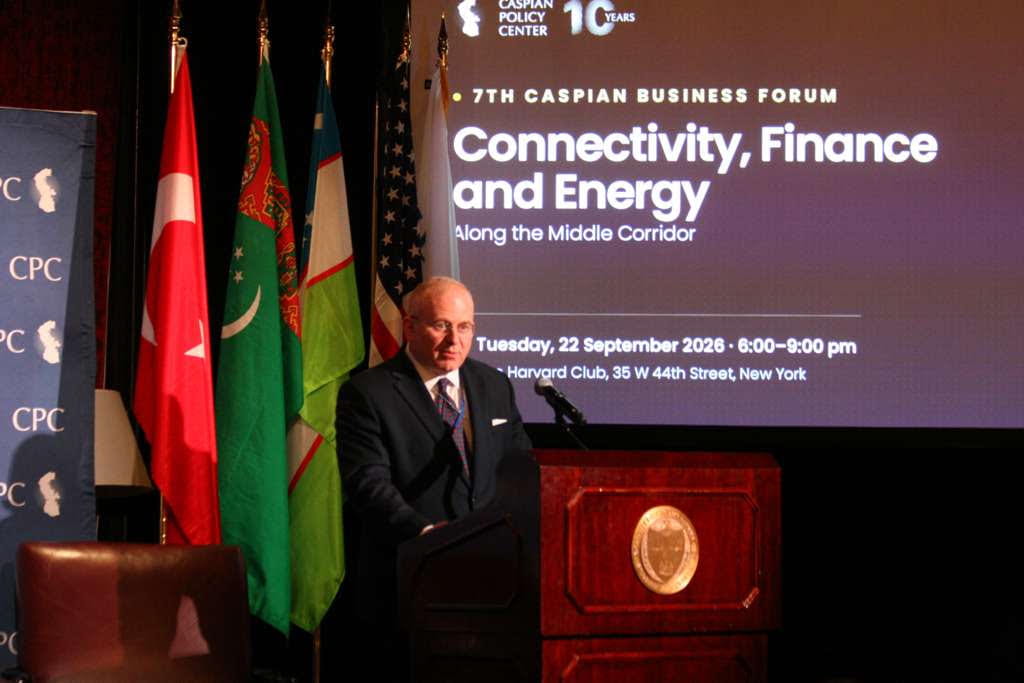

BAKU, Azerbaijan, September 23. The Trump Route for International Peace and Prosperity (TRIPP) is a new model for U.S. engagement in regional connectivity, said Peter Andreoli, Deputy Assistant Secretary in the U.S. Department of State’s Bureau of European and Eurasian Affairs.
He made the remarks during the seventh annual Caspian Business Forum held by the Caspian Policy Center (CPC) in New York.
“The TRIPP initiative is a paradigm shift in how the United States and regional partners are approaching regional connectivity,” he said, adding that the planned multimodal transit corridor could become a key link in the broader Middle Corridor.
He highlighted the importance of stability and regional connectivity to unlocking greater investment across the South Caucasus and Central Asia.
“Connectivity and prosperity feed off stability. Risk is real and has been present in the region for some time, but for too long, the brilliant potential of the South Caucasus and Central Asia has been overshadowed by risk, keeping a lot of transformative capital on the sidelines,” Andreoli said.
Andreoli pointed to the progress between Armenia and Azerbaijan as an opportunity to build stronger economic ties across the region. “Even more remarkable than the signing of the peace agreement between Armenia and Azerbaijan is the stability and peace that has been established on the ground. The United States recognizes that durable peace must be underwritten by strong, enduring partnerships,” he said.
On August 8, 2025, following a trilateral meeting with U.S. President Donald Trump in Washington, President of Azerbaijan Ilham Aliyev and Prime Minister of Armenia Nikol Pashinyan signed a joint declaration on establishing peace between Baku and Yerevan and restoring transport connectivity between mainland Azerbaijan and its Nakhchivan Autonomous Republic. The project was named the "Trump Route for International Peace and Prosperity."



