


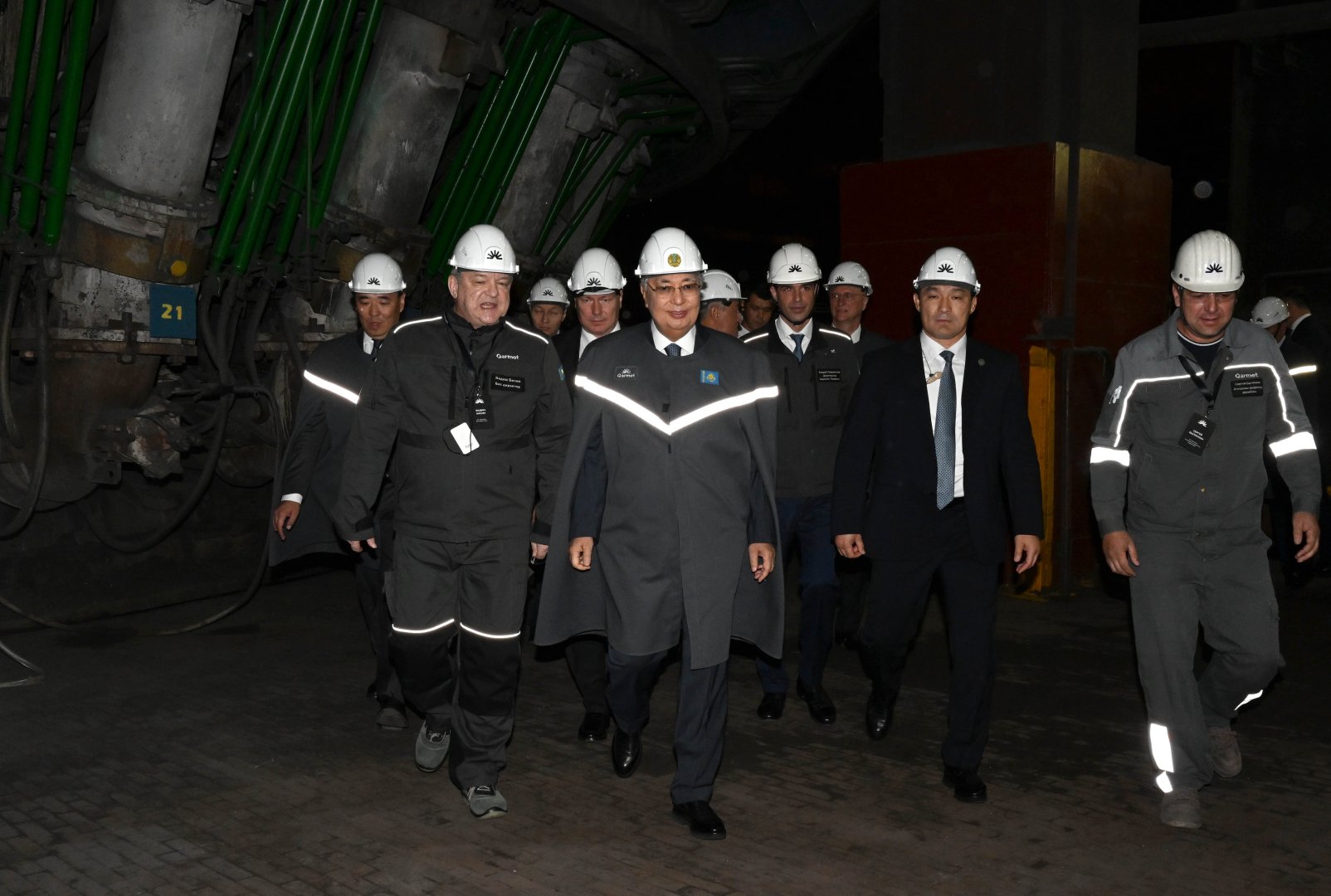
BAKU, Azerbaijan, November 2. In his annual State of the Nation Address, President of Kazakhstan Kassym-Jomart Tokayev identified large-scale infrastructure modernization and construction development as one of the priorities of economic policy. The task is to channel the resources accumulated by the state into regional development, the modernization of social infrastructure, and the creation of new production facilities.
According to the Bureau of National Statistics of Kazakhstan, the country's economy grew by 4.2% in January-September 2026. Construction was one of the fastest-growing sectors: the volume of construction work increased by 11.5%, reaching 7.812 trillion tenge (about $17.2 billion at the National Bank's exchange rate of 454 tenge per dollar). Growth was recorded in 17 regions. A total of 13.2 million square meters of housing was commissioned over the nine-month period, up 2.7% compared to the same period last year.
In his address to the people of Kazakhstan on October 28, Tokayev said that "Kazakhstan must turn into one big construction site."
According to the president, the combined volume of the country's gold and foreign exchange reserves and National Fund assets exceeded $130 billion.
"Now we must channel this powerful potential into infrastructure modernization and the development of every region of the country," Tokayev noted.
By the end of 2029, about 6.5 trillion tenge (approximately $14.3 billion) is expected to be allocated from the National Fund for the implementation of the Infrastructure Modernization Plan, of which 1.5 trillion tenge (about $3.3 billion) is planned to be directed toward social projects in the current year and the first two months of 2027.
The first stage envisages the construction of around 70 healthcare facilities and approximately 50 education, sports, and cultural facilities. Investment will also be directed toward the development of housing and utilities infrastructure, the gasification of settlements, and providing the population with drinking water.
"By the end of this year, the Government will prepare an initial list of specific projects covering every single region. We must live up to the high expectations of the people. The planned work is aimed at improving citizens' well-being and quality of life; there are no hidden pitfalls here. Therefore, I am confident that no one will object if we call this initiative the 'People's Construction.' The 'People's Construction' program will become the largest infrastructure project in the country's history, improving citizens' quality of life and giving a powerful boost to the development of entrepreneurship and the economy as a whole," Tokayev said.
It is particularly important that the program will cover all regions. Over the first nine months of the year, the most significant growth in construction work was recorded in the Ulytau, Kyzylorda, Atyrau, and Pavlodar regions, as well as in Shymkent. At the same time, construction volumes declined in the Zhetysu, Karaganda, and North Kazakhstan regions.
These differences highlight the need to take into account the specific characteristics of each territory when allocating investment. In some regions, social facilities may be the priority, while in others, the focus may be on utility networks, transport infrastructure, and industrial facilities.
Industrial construction is an important part of the country's economic agenda. Construction of the Silleno plant is ongoing in the Atyrau region. According to KazMunayGas, the plant's cost is estimated at approximately $7.6 billion, and it is designed to produce 1.25 million tonnes of polyethylene per year. The plant is scheduled to be launched in 2029. In the Pavlodar region, Xinfa Group plans to develop an industrial park with an investment of around $15 billion.
In the Zhambyl region, the Fufeng Group corn deep-processing project, with a total cost of about $1.5 billion, is being implemented in three stages. In addition, automobile plants operated by Astana Motors Manufacturing Kazakhstan and Kia Qazaqstan were launched in Almaty and Kostanay in 2025.
Among the prospective areas are the start of construction of the Balkhash nuclear power plant, which Tokayev proposed for 2027, and the construction of the Data Center Valley in Ekibastuz (investment is estimated at around $5 billion, while $10 billion had been cited previously).
The implementation of such projects will require the development of energy and engineering networks, while also creating conditions for the emergence of new technology-based industries.
At the same time, large-scale infrastructure plans involve not only attracting significant funds but also ensuring their effective use.
On October 31, Tokayev said on social media platform X that a state commission would be established to oversee the use of funds allocated to the "People's Construction" program. It will include heads of relevant government agencies, members of the Kurultai and maslikhats, members of the People's Council, public figures, activists, volunteers, and journalists.
Thus, Kazakhstan seeks to link economic growth with long-term investment in social and industrial infrastructure. The outcome of this policy will depend on the quality of project implementation, the efficiency of fund utilization, and their tangible contribution to regional development.


