


BAKU, Azerbaijan, November 10. Azerbaijan’s participation in the 31st session of the Conference of the Parties to the UN Framework Convention on Climate Change (COP31), taking place in Antalya from November 9 to 20, goes far beyond showcasing the country’s achievements in green energy. For Baku, the event represents a continuation of the diplomatic and climate legacy of COP29, as well as an opportunity to strengthen its role in shaping a regional energy architecture connecting Türkiye, the South Caucasus and Central Asia.
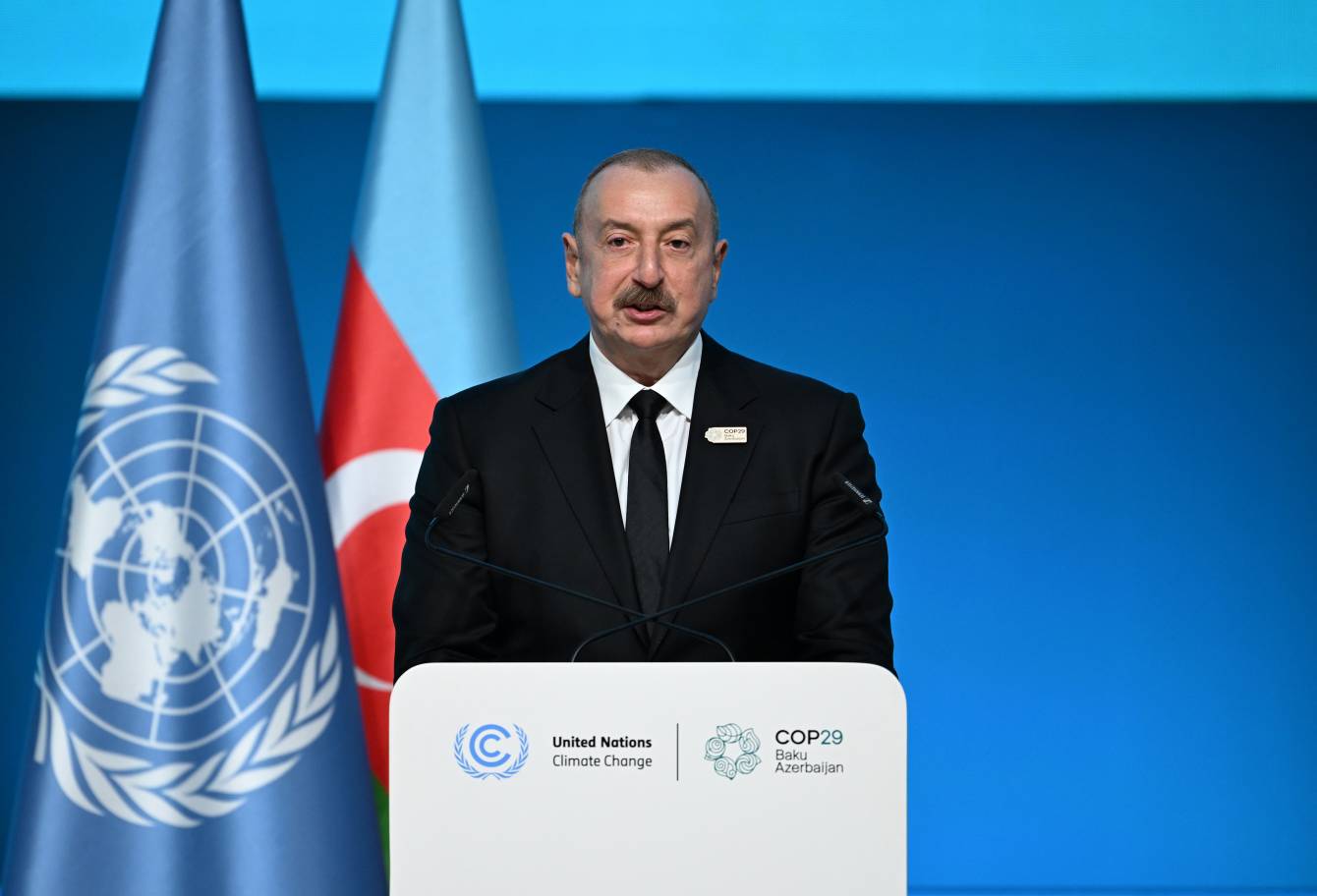
Against this backdrop, the participation of Azerbaijani President Ilham Aliyev in the COP31 Leaders’ Summit, scheduled for November 11-12 at the invitation of Turkish President Recep Tayyip Erdoğan, takes on particular significance. The Azerbaijani leader’s presence underscores the continuity between the Baku and Antalya climate summits and reaffirms Azerbaijan’s ongoing role in international climate dialogue.
In his address to participants of the Pre-COP Leaders’ Event on October 6, President Ilham Aliyev outlined precisely this vision of continuity: "We stand here today to bridge the Baku COP29 legacy with the key decisions ahead, ensuring that the momentum built in Azerbaijan directly supports the path toward a successful 31st Session of the Conference of the Parties to the United Nations Framework Convention on Climate Change (COP31)."
This statement reflects Azerbaijan’s broader ambition: not merely to preserve the symbolic significance of the conference hosted in Baku, but also to ensure that the agreements reached there translate into tangible progress.
COP29, held in November 2024, marked an important milestone in international climate negotiations. One of its key outcomes was an agreement on a new collective quantified goal for climate finance. It also secured the full operationalization of Article 6 of the Paris Agreement, which governs international carbon markets, and marked the start of the Loss and Damage Fund's full-scale operations. Particular attention was also devoted to the challenges facing small island developing states.
Thus, the Baku legacy encompasses not only the organizational experience of hosting a major international event, but also concrete institutional outcomes that continue to shape the global climate architecture.
President Ilham Aliyev also expressed Azerbaijan’s support for the incoming COP31 leadership of Türkiye and Australia, stating: "Taking this opportunity, I would like to express Azerbaijan’s full support to the incoming COP31 leadership of Türkiye and Australia and praise this unique partnership format connecting different continents."
The format of this year's conference is indeed distinct from that of previous COPs: Türkiye is responsible for the overall organization and presidency, while Australia has been entrusted with leading the negotiation process. The central concept is that of an Implementation COP - a conference focused on translating existing climate commitments into action rather than simply negotiating new targets.
Recep Tayyip Erdoğan expressed a similar position in comments to journalists on his return journey from Azerbaijan on November 9: "Our goal is to make this summit a platform that delivers tangible results, where countries turn their promises into action, because the time for making promises that remain on paper is over."
In an official statement issued on behalf of the COP31 political leadership, the Turkish president also stressed the need to move "from negotiations to implementation", calling on the parties to strengthen cooperation and turn commitments into concrete action.
For Azerbaijan, this approach provides an opportunity to present its own experience as an example of translating climate ambitions into practical projects. The country has renewable energy potential of 135 GW onshore and 157 GW in its sector of the Caspian Sea. Harnessing these resources is seen not only as a means of strengthening national energy security, but also as a foundation for future electricity exports.
In Karabakh and East Zangezur, designated as green energy zones, around 40 small hydropower plants have been built over the past five years using state funding. Azerbaijan has also commissioned the Khizi-Absheron Wind Power Plant, the Absheron Battery Energy Storage Center and the Gobustan Solar Power Plant. Construction is ongoing on the Shams 1 and Garbi Ufug solar power plants in Nakhchivan.
However, the most significant regional dimension of this policy lies in the development of cross-border energy infrastructure. Azerbaijan is advancing several interconnected initiatives: an undersea electricity cable across the Black Sea, an overland electricity transmission route linking Azerbaijan, Georgia, Türkiye and Bulgaria, and a prospective corridor designed to connect the eastern coast of the Caspian Sea with Azerbaijan, with Kazakhstan and Uzbekistan also involved.
It is here that Baku's role as a regional connector becomes particularly evident. Central Asia has substantial resources for renewable energy development, while Türkiye and the European market offer prospects for expanding electricity exports. Positioned between these regions, Azerbaijan is well placed to bring their energy interests together within a single infrastructure framework. Without Baku's full participation, the regional configuration of green energy cooperation between Central Asia, the South Caucasus, Türkiye and Europe would remain incomplete.
The participation of Central Asian countries in COP31 adds another dimension to this picture. All five republics of the region are represented at the conference, with Kazakhstan and Uzbekistan actively promoting regional climate coordination. Their priorities include water security, climate change adaptation, the restoration of the Caspian and Aral Sea ecosystems, and the mobilization of international climate finance.
Uzbekistan, in particular, has become one of the first five pilot countries under the Climate Implementation Bridge (BRIDGE) initiative launched as part of the COP31 Presidency. President Shavkat Mirziyoyev had also previously highlighted the prospect of continuing environmental cooperation in Antalya. Speaking at the summit of the Organization of Turkic States, he thanked the partners for supporting the initiative to designate 2027 as the Year of Environmental Protection within the OTS framework and expressed confidence that key environmental priorities would be discussed at a meeting of relevant ministers on the sidelines of COP31.
An important political backdrop to the current conference was Erdoğan's visit to Shusha on November 8 to mark Victory Day. Joint statements by the presidents of Azerbaijan and Türkiye once again highlighted the strategic nature of bilateral relations, which also have implications for the implementation of regional energy initiatives.
"We were together in the past, we stood together during the war, we are together today, and we will remain together in the future. I believe this is precisely the main outcome of this historic visit. Of course, when discussing bilateral relations, we can address many issues. These are all well known: political and economic ties, investment, energy, transport corridors, and the Zangezur Corridor. All these matters were discussed extensively today. However, I believe that the main outcome of the visit is precisely what I have stated: 'Türkiye-Azerbaijan unity is eternal and unshakable'," President Ilham Aliyev said.
Erdoğan, in turn, stressed that the brotherhood between the two countries extends beyond their shared language, history and culture, noting: "We consider Baku's joy to be Ankara's joy, and Shusha's pride to be the pride of our entire nation."
These statements carry significance beyond the bilateral political context. The Türkiye-Azerbaijan partnership provides an important foundation for broader engagement with Central Asian countries, including in energy, transport and environmental cooperation. The combination of close political ties, geographical positioning and infrastructure capabilities enables Azerbaijan to serve as one of the key players in this process.
Another focus of COP31 is the responsible use of artificial intelligence, including through the Antalya AI Pledge, promoted in cooperation with the International Telecommunication Union. Other priorities include the protection of marine ecosystems, food security, climate-resilient cities and the transition to clean energy. For Azerbaijan, this provides an opportunity to showcase not only its energy projects, but also its efforts to preserve the biodiversity of the Caspian Sea.
Azerbaijan's national pavilion, operating under the concept of the "Dialogue Corridor", brings these areas together. It showcases the country's renewable energy potential, green energy corridor projects, initiatives in Karabakh and East Zangezur, the Absheron energy storage system and environmental protection projects. More than 40 events and meetings are scheduled to take place at the pavilion.
Ultimately, the significance of Azerbaijan's participation in COP31 is determined not only by the scale of the projects being showcased or the country's representation at the highest level. Baku brings to the table the political legacy of COP29, practical experience in the energy transition and the capacity to bring together the climate and economic interests of several regions.
If COP29 demonstrated Azerbaijan's ability to facilitate global consensus, COP31 offers an opportunity to build on that role by focusing on the practical implementation of existing agreements. In this process, Azerbaijan remains the connecting link between Türkiye's climate ambitions, Central Asia's energy potential and the European market.


