




Interviewer: Fuad, first of all, congratulations on receiving Gulfstream’s Top Gun Award. This is a major recognition from one of the most respected names in business aviation. What did this award mean to you personally?
Fuad Shabanov: Thank you. It was a very special moment for me.
Gulfstream is not just another aircraft manufacturer. It is one of the leading American aerospace companies and one of the strongest brands in global business aviation. To receive recognition from Gulfstream means a lot, especially coming from a region like ours, where the market is smaller but very serious and relationship-driven.
For me, the Top Gun Award was not only a personal achievement. It represented years of work, trust-building, customer engagement, and support for Gulfstream’s presence in Azerbaijan and the wider region.
Interviewer: Why do you think Gulfstream recognized your work with this award?
Fuad Shabanov: I believe the recognition was connected to the overall impact of the work in the region.
Azerbaijan is not a mass-volume market, but it is a high-quality business aviation market. Customers here are serious, expectations are high, and trust is extremely important. My work was focused on representing Gulfstream at the right level, developing relationships, supporting customer confidence, and helping position Gulfstream properly in Azerbaijan and Georgia.
In this industry, you cannot build a market only with aircraft specifications or presentations. You need credibility, discretion, consistency, and a real understanding of both the customer side and the manufacturer side. I think Gulfstream recognized that this work contributed to strengthening its position in the region.
Interviewer: You are being modest, but recognition from Gulfstream is not something that happens every day. How important is this for someone from Azerbaijan and this region?
Fuad Shabanov: It is very important, and honestly, it is one of the recognitions I value most in my career.
The Gulfstream Top Gun Award is not a local award or a general appreciation certificate. It is Gulfstream’s highest internal sales recognition, given by one of the most respected American aerospace manufacturers in the world. To my knowledge, I was the first and only person from my region to receive this award, and that makes it especially meaningful.
For someone from Azerbaijan, this recognition carries a bigger message. It shows that the work done here was not only local or regional. It had real value for Gulfstream as a global brand. It means that the relationships built in Azerbaijan, the trust developed with customers, and the effort to strengthen Gulfstream’s position in the region were recognized at the highest level inside the company.
For me, this award also proves something important: regional expertise matters. In business aviation, success is not only about knowing the aircraft. You need to understand the market, the culture, the customer, the decision-making process, and the importance of confidentiality. When that local knowledge is combined with a world-class American product like Gulfstream, it can create real international value.
Interviewer: Let’s talk about Azerbaijan. How would you describe the country as a Gulfstream market?
Fuad Shabanov: Azerbaijan is a very interesting and important market for business aviation.
By population, Azerbaijan is not a large country. But business aviation is not only about population size. It is about the quality of demand, the profile of users, international travel requirements, and the level of trust in the brand.
Azerbaijan has strong international business connections, energy-sector activity, government and corporate travel needs, and a mature understanding of premium aviation. That is why Gulfstream fits the market so well.
I would say Azerbaijan is one of the strongest Gulfstream markets in the Caucasus and Caspian region. It has an established Gulfstream presence and serious users who understand the value of these aircraft.
Interviewer: People often ask how many Gulfstream aircraft are connected with Azerbaijan. How do you usually answer that?
Fuad Shabanov: I answer carefully, because business aviation is a confidential industry.
Aircraft ownership, fleet planning, movements, customer identities, and commercial details are not things that should be discussed publicly. Discretion is part of professionalism in this field.
What I can say is that Gulfstream has a strong and visible presence in Azerbaijan, and the country is one of the leading Gulfstream markets in the region. But for me, the exact number is not the main story. The real story is that Azerbaijan has become a serious Gulfstream country, with sophisticated users and long-term potential.
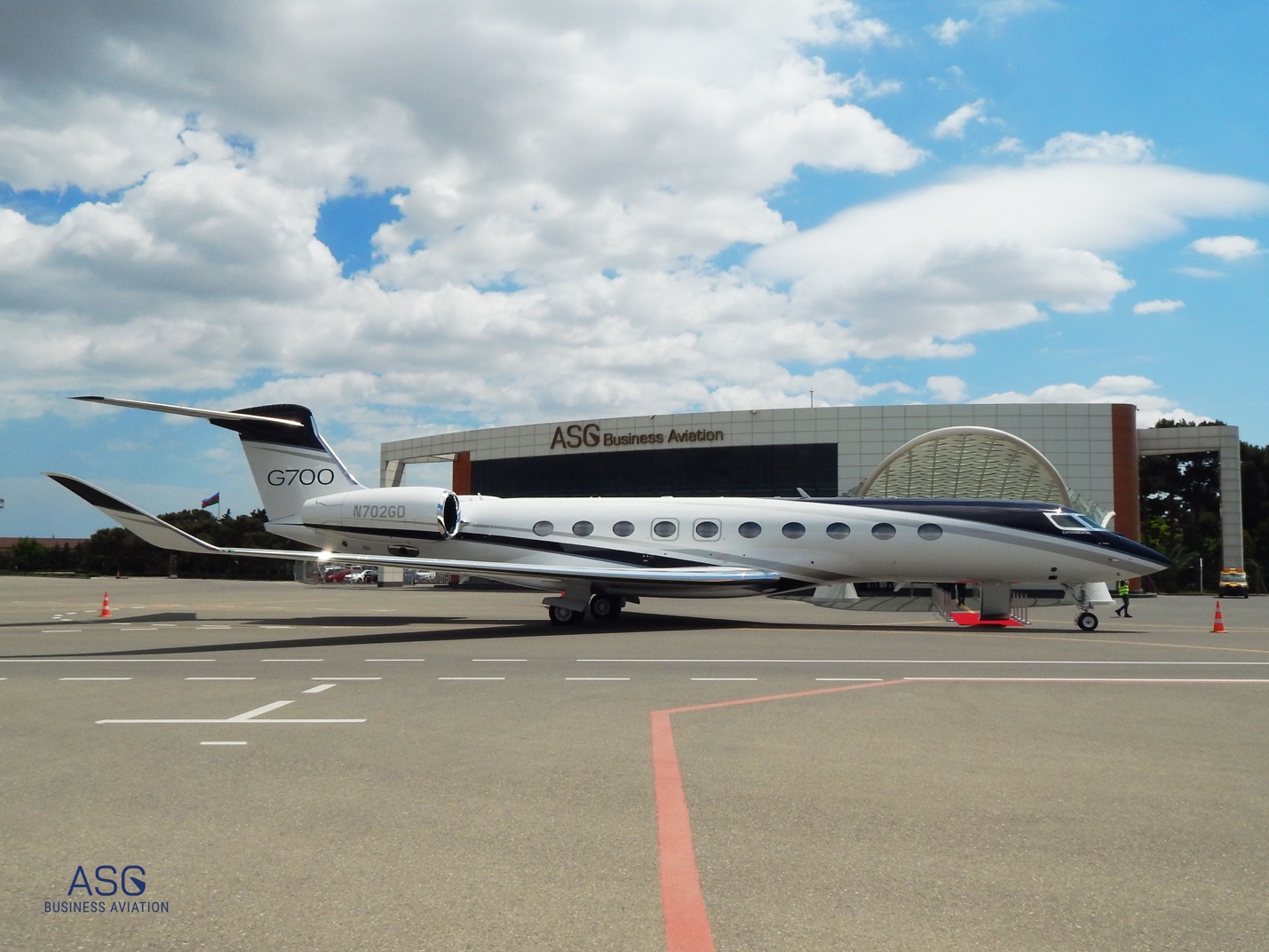
Interviewer: One of the most visible Gulfstream moments in Azerbaijan was the G700 visit to Baku during its world tour in 2023. How did that come together?
Fuad Shabanov: That was one of the most important moments for Gulfstream’s image in Azerbaijan.
When Gulfstream was presenting the G700 internationally, I strongly believed that Baku should be one of the regional stops. Azerbaijan already had a strong Gulfstream presence, the right customer base, and a business aviation environment capable of hosting an aircraft of that level.
I raised and supported the idea that Baku should be included in the G700 World Tour. I am genuinely grateful to Gulfstream for accepting that idea and for giving Azerbaijan the opportunity to host the G700 during its international tour.
For Azerbaijan, this was a strong moment of recognition. It showed that the country was not just a small point on the map, but one of the serious regional markets for Gulfstream.
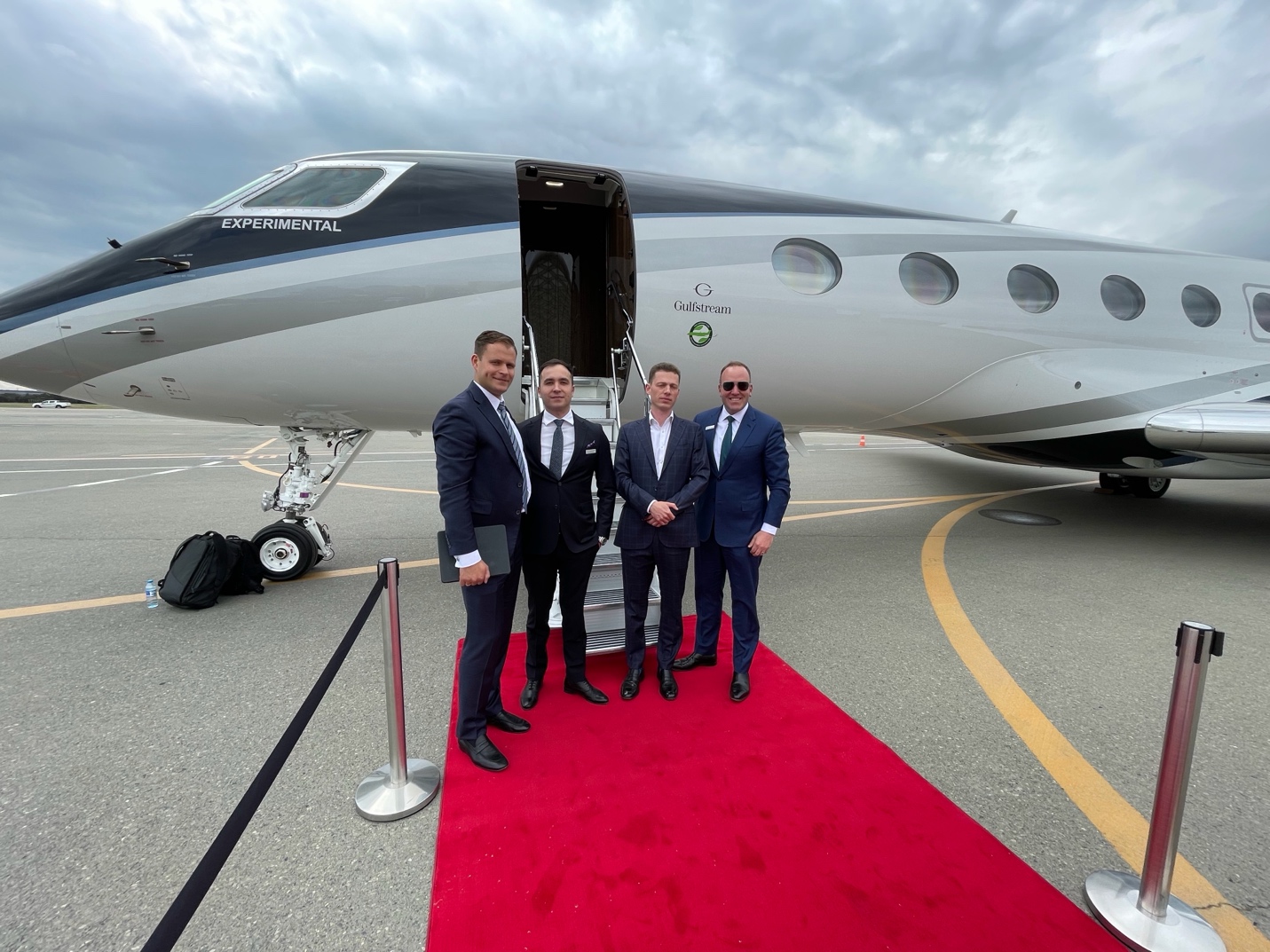
Interviewer: Why was it so important for Baku to host the G700?
Fuad Shabanov: Because the G700 was Gulfstream’s flagship aircraft and represented the newest generation of the company’s engineering, cabin design, range, speed, and technology.
For Baku to host the G700 during its world tour was a major signal. It showed that Azerbaijan was among the important markets in the region capable of receiving and presenting Gulfstream’s newest flagship aircraft.
It also gave customers and aviation stakeholders in Azerbaijan the chance to see the aircraft directly. That is very different from seeing a brochure or a technical presentation. When people enter the aircraft, see the cabin, understand the size, the comfort, and the technology, the perception becomes much stronger.
Interviewer: From what you describe, the G700 visit to Baku was not just a routine aircraft stop. How much preparation was required on your side?
Fuad Shabanov: It required serious preparation, because for me it was important that Baku would be seen not only as a technical stop, but as a meaningful Gulfstream presentation in the region.
When the G700 World Tour was being discussed, I believed Azerbaijan had a strong case to be included. The market already had a respected Gulfstream presence, the right level of customers, and a serious business aviation environment. I raised the idea, supported the communication, and worked to make sure that Baku could be positioned properly as one of the regional stops.
With an aircraft like the G700, every detail matters — timing, presentation, confidentiality, the audience, the location, and the overall impression created around the Gulfstream brand. My focus was to make sure that if the aircraft came to Azerbaijan, it would be received and presented at the level such a flagship aircraft deserved.
I am genuinely grateful to Gulfstream and my leadership for accepting the idea. That decision meant a lot, because Azerbaijan became one of the early and important markets in the region to welcome Gulfstream’s newest flagship aircraft. It was a strong sign of trust in the market and in its potential.
I also want to thank ASG Business Aviation for their help with
the organizational matters connected to the tour. Their support
with the local aviation environment, logistics, hosting, and
ground-side coordination helped make the event professional and
smooth.
Interviewer: What was the reaction when the G700
arrived in Baku?
Fuad Shabanov: The reaction was very strong.
The G700 is the type of aircraft that creates an immediate impression. Its size, cabin, windows, range, technology, and overall presence speak for themselves. But the most important part was that people in Azerbaijan could see Gulfstream’s newest flagship aircraft here in Baku, not somewhere far away.
That created confidence. It showed that Gulfstream viewed Azerbaijan as a serious market, and it also showed the local market that Gulfstream was paying attention to this region.
Interviewer: Why does Gulfstream fit Azerbaijan so well?
Fuad Shabanov: Gulfstream fits Azerbaijan because the mission profile is very clear.
From Baku, many users need direct, comfortable, reliable access to Europe, the Middle East, Asia, and sometimes the United States. Gulfstream aircraft are designed exactly for that type of long-range, high-comfort, high-reliability travel.
But it is not only about range. It is also about reputation, safety, privacy, cabin comfort, and long-term support. Gulfstream customers are not simply buying transportation. They are choosing a platform for high-level international mobility.
That is why Gulfstream has such a natural position in Azerbaijan.
Interviewer: You have mentioned trust several times. Is trust more important than technical specifications in business aviation?
Fuad Shabanov: Both are important, but trust is what allows the conversation to move forward.
Gulfstream already has the technical reputation. Customers know the aircraft are strong. But in real life, especially in our region, the person representing the brand must also be trusted. The customer must feel that the information is accurate, that the process is discreet, and that the relationship will continue after the first meeting.
Business aviation is a sensitive industry. Customers expect professionalism, confidentiality, and long-term support. One mistake can damage trust. That is why I always treated the Gulfstream role very seriously.
Interviewer: Do you see your work as aircraft sales, or something broader?
Fuad Shabanov: I see it as much broader than sales.
Of course, commercial results are important. But at this level, the real work is market development. You are building confidence in a manufacturer, creating trust around the product, supporting communication between customers and the OEM, and helping decision-makers understand complex aircraft platforms.
It requires commercial knowledge, technical awareness, patience, discretion, and relationship management. The result may be an aircraft transaction, but the real work starts much earlier.
For me, this is aerospace market development.
Interviewer: Looking back, do you see the G700 Baku visit as part of the path that led to the Top Gun Award?
Fuad Shabanov: Yes, I see it as one of the important milestones.
The Top Gun Award was not about one event only. It reflected broader work: market development, customer engagement, Gulfstream brand representation, and long-term regional activity. But the G700 visit to Baku was a very visible example of that work.
It showed initiative, regional understanding, and the ability to connect Gulfstream’s global strategy with the Azerbaijani market. For me, that is what real market development means: creating opportunities, building trust, and making sure a global manufacturer is represented properly in the local market.
Interviewer: What are you most proud of from your Gulfstream work?
Fuad Shabanov: I am proud that Gulfstream became stronger and more visible in Azerbaijan during my involvement.
I am proud that the G700 came to Baku during its world tour and that Azerbaijan became one of the early and important markets in the region to host Gulfstream’s newest flagship aircraft.
And of course, I am proud of the Top Gun Award. For me, it is not only a personal award. It reflects years of effort, trust, and the belief that Azerbaijan can be an important market for the world’s leading business aviation manufacturers.
Interviewer: What message would you give to people who underestimate Azerbaijan’s business aviation market?
Fuad Shabanov: I would tell them to look deeper.
Azerbaijan may not be the largest market by population, but it is a serious aviation market. It has sophisticated users, international travel needs, strategic importance, and a strong appreciation for high-quality aircraft.
In business aviation, quality of the market matters more than size. Azerbaijan has proven that it belongs on the regional business aviation map.
Interviewer: Finally, what comes next for you?
Fuad Shabanov: I want to continue working in aerospace market development, aircraft acquisition advisory, and international aviation projects.
My experience with Gulfstream showed me that I can help connect advanced American aerospace products with serious international customers. The G700 visit to Azerbaijan and the Top Gun Award are important milestones, but I see them as part of a bigger path.
My goal is to continue building bridges between aerospace manufacturers and international markets where trust, technical understanding, discretion, and regional experience are critical.



