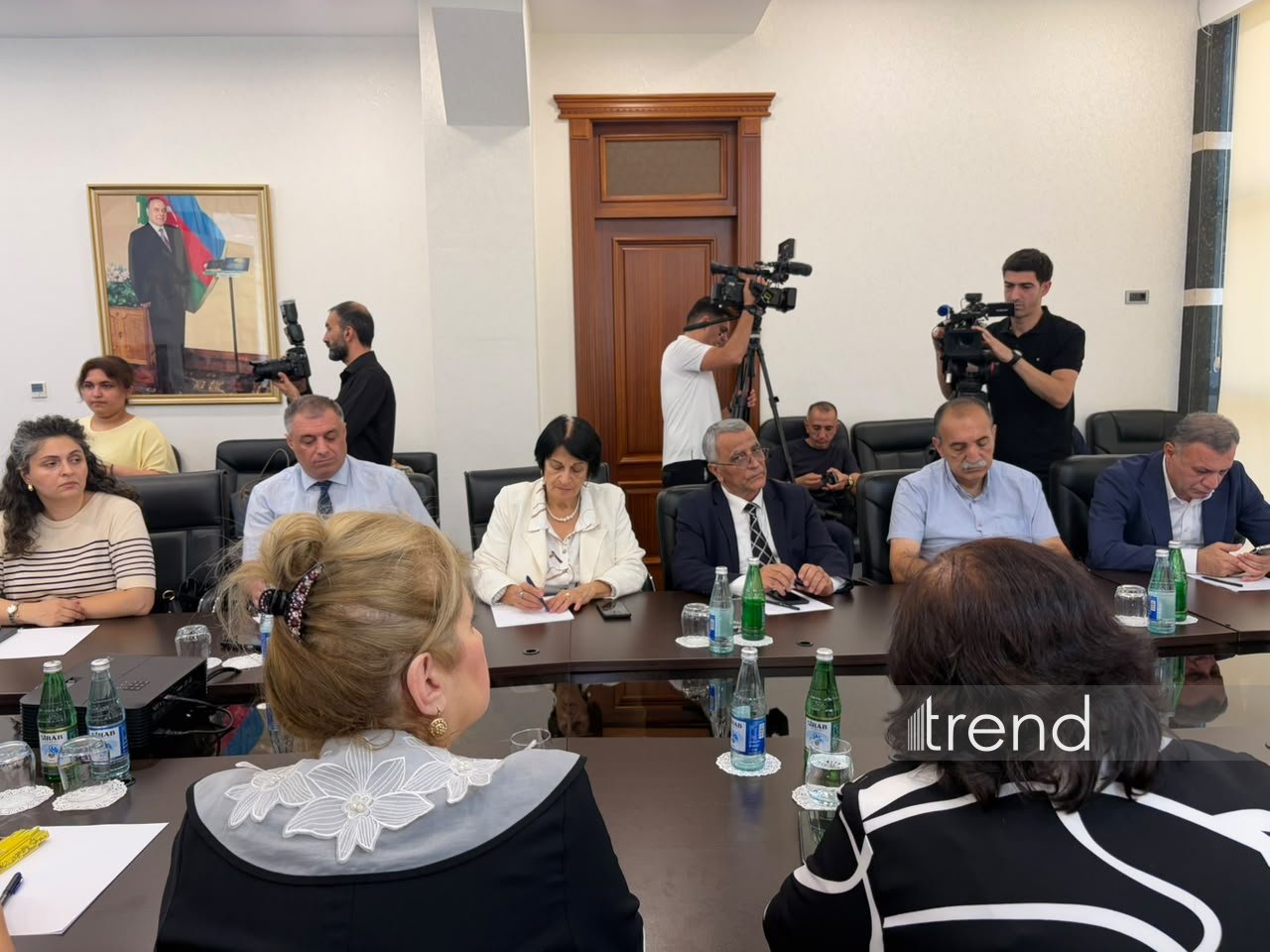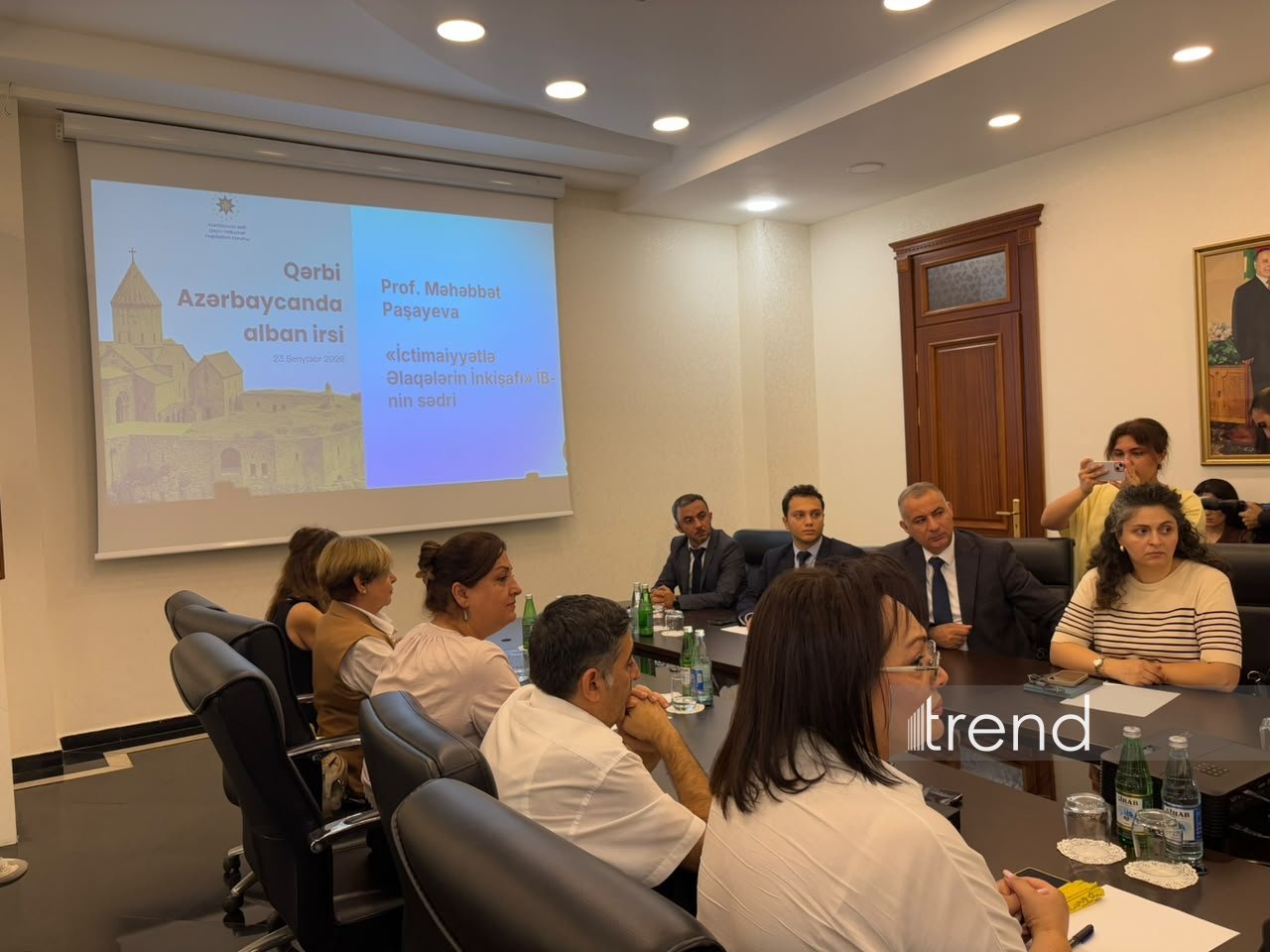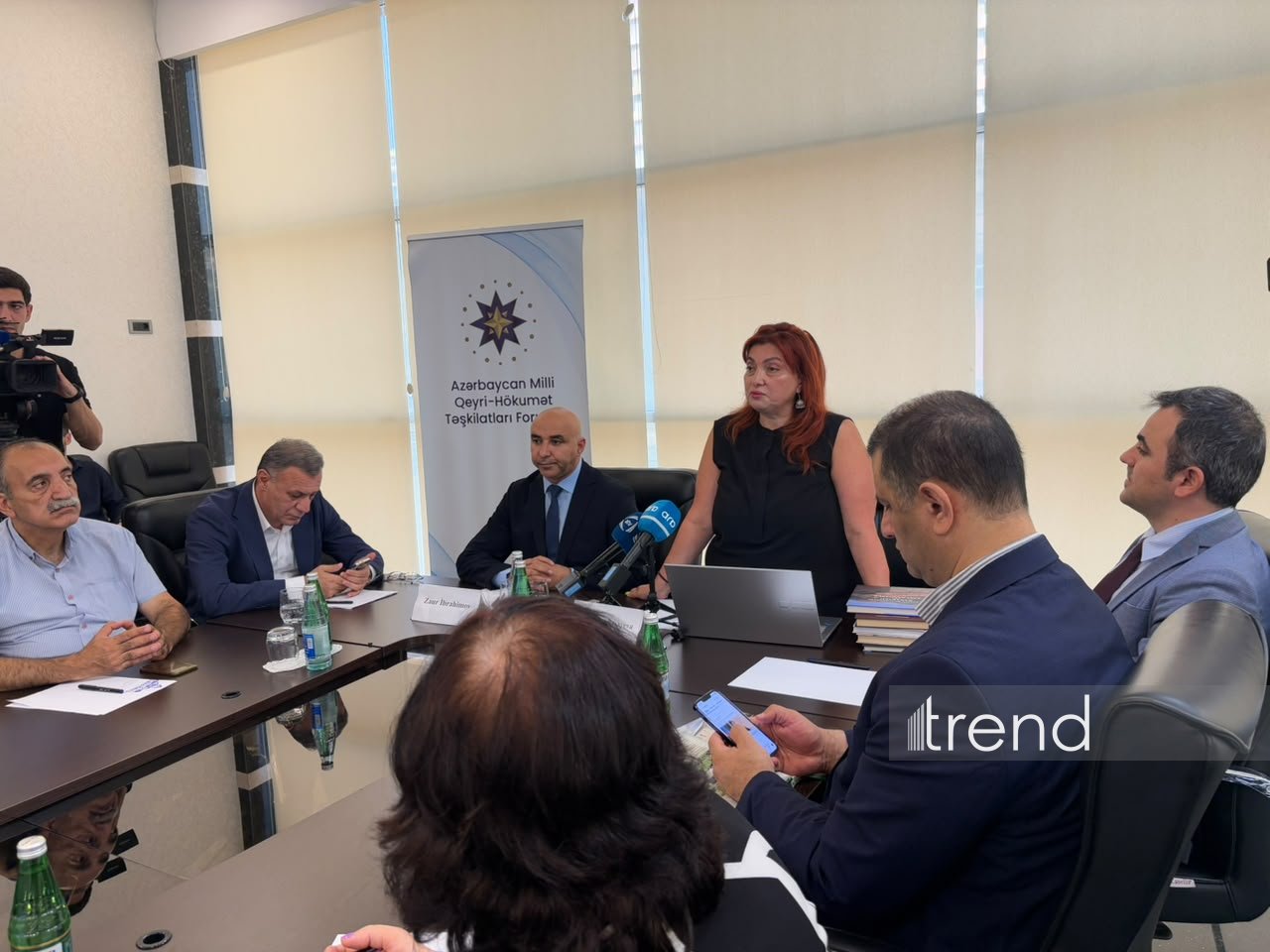

BAKU, Azerbaijan, September 23. A seminar titled “Albanian Heritage in Western Azerbaijan” was held today at the initiative of the Azerbaijan National NGO Forum (ANNF), Trend’s correspondent reports from the event.
The event was attended by representatives of civil society, historians, archaeologists, and NGO leaders.
Zaur Ibrahimli, a member of the ANNF Board, provided information on the objectives of the seminar and the participants.
He noted that the primary objective of the seminar was to examine one of the significant and strategically important chapters of history, namely the Albanian Christian heritage in Western Azerbaijan. He emphasized that the heritage of Caucasian Albania constitutes an integral part of Azerbaijan’s statehood, ethnogenesis, and cultural memory. According to him, the Albanians, described as an indigenous ethnic group of these territories and as ancestors of the Azerbaijani people, developed a rich cultural heritage over the course of centuries.
“We must note with regret that the process of systematically appropriating and altering the historical interpretation of this heritage began in 1836, when Tsarist Russia abolished the Albanian Apostolic Church and placed it under the jurisdiction of the Armenian Gregorian Church. Over the course of many years, inscriptions on hundreds of Albanian monuments, including Gipchagvang, Gulvang, and Goshavang, located in Goycha, Zangezur, Daralayaz, and other historical territories, were erased, while alterations were made to their architectural structures, and the monuments were subsequently presented to the international community as Armenian heritage.
As civil society institutions, we must contribute actively to communicating these historical issues to the international community on a scientific basis. Today's seminar serves the purpose of safeguarding these scientific findings and contributing to the preservation of tangible cultural heritage in Western Azerbaijan,” he added.
Mahabbat Pashayeva, head of the UNEC Multiculturalism Research Center and a leading researcher at the Azerbaijani National Academy of Sciences (ANAS), delivered a presentation at the seminar. She provided detailed information on Albanian Christian monuments, including the Gipchagvang Monastery in the ancient village of Gipchag, as well as Gulvang, Goshavang, and Tatev, and presented scientific arguments concerning differences between the architectural features of these monuments and Armenian religious architecture.
The speaker noted that the Albanians were among the indigenous ethnic groups that contributed to the ethnogenesis of the Azerbaijani people and stated that this Christian heritage constitutes part of the historical and cultural heritage of the Azerbaijani nation.
The event also addressed the historical territories of Azerbaijan currently located within Armenia, including Goycha, Zangezur, Daralayaz, and Iravan, noting their longstanding cultural and political links with Caucasian Albania.
During the seminar, detailed information was presented concerning the alleged policies of cultural destruction and the reinterpretation of Albanian heritage, accompanied by supporting evidence. In particular, documentary evidence was presented regarding the removal of archival materials, the erasure of stone inscriptions, and the transformation of Albanian elements following the 1836 decision of the Russian Synod to abolish the Albanian Apostolic Church and place it under the jurisdiction of the Armenian Gregorian Church. Participants were also informed of cases including the removal of an ancient Albanian stele from the Aghoghlan temple and alterations to the altar sections of monuments during the years of occupation.
At the conclusion of the event, participants emphasized the importance of preserving Albanian heritage in Western Azerbaijan, promoting its objective recognition at the international level, and ensuring opportunities for scholars to conduct scientific research in these territories without impediment. The discussion also addressed Azerbaijan’s international multiculturalism policy in this context, including the significance of international scientific conferences held at the Pontifical Gregorian University in Rome.
The seminar concluded with an extensive exchange of views and a question-and-answer session.