


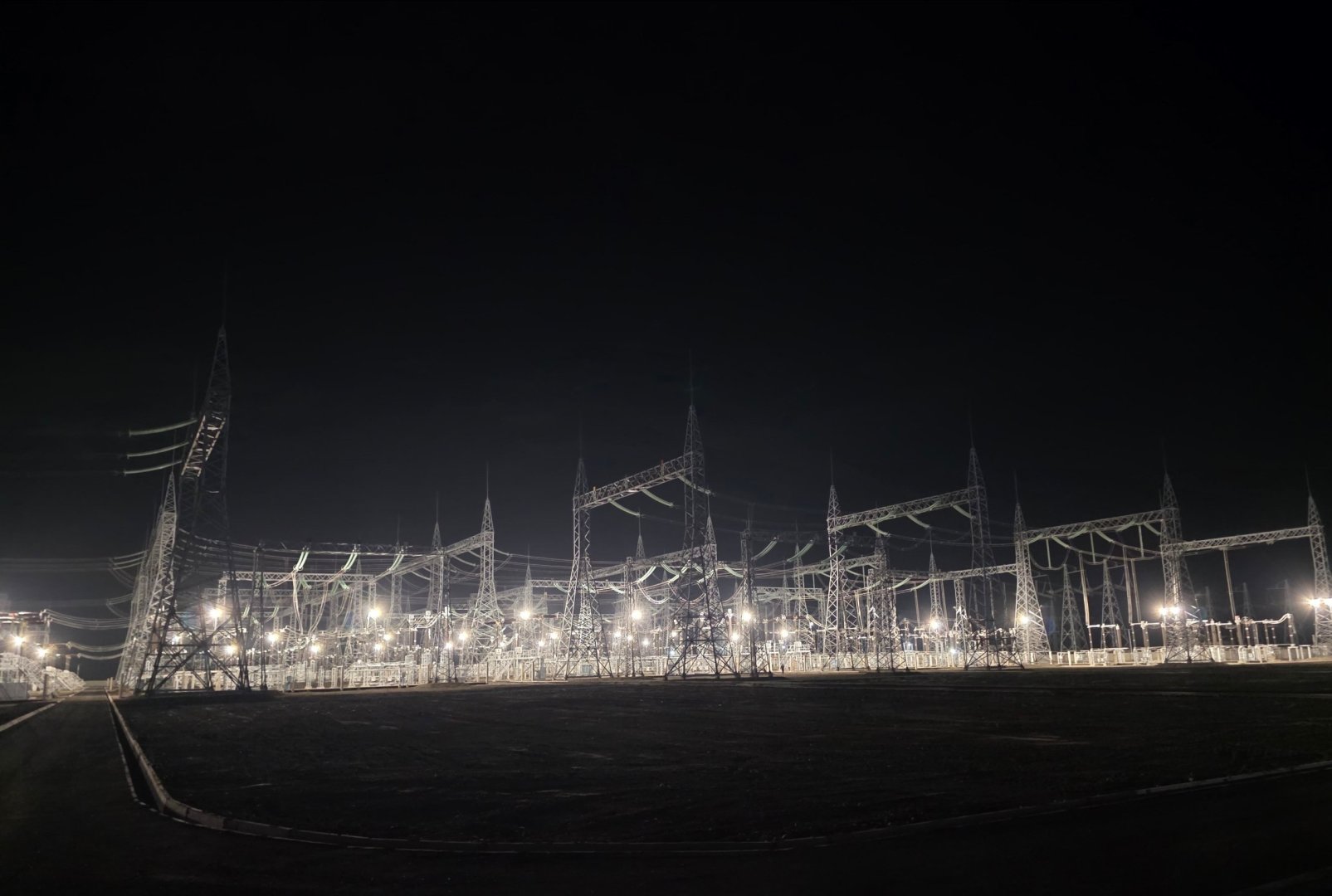

BAKU, Azerbaijan, November 8. Uzbekistan has commissioned a 500-kilovolt (kV) substation in Tashkent as part of a $171.4 million electricity infrastructure project implemented with the participation of the World Bank, according to the statement published by Uzbekistan's Ministry of Energy on November 7.
The substation was energized on November 7 and has a capacity of 1,602 megavolt-amperes (MVA), according to the ministry.
Its commissioning will help redistribute electricity loads across Tashkent and parts of Tashkent Region, reducing pressure on existing power networks and improving the reliability of electricity supplies to consumers.
The new infrastructure is also expected to reduce the load on the Tashkent TPP, making it possible to discontinue the use of fuel oil as a backup fuel. This is expected to help reduce atmospheric pollutant emissions and improve environmental conditions in the capital and surrounding areas.
The project, implemented with the participation of the World Bank, involved the construction of the Khalqa substation, 213 kilometers of 220-kV overhead transmission lines and 72 kilometers of 500-kV lines. The total length of the newly built high-voltage transmission lines is 285 kilometers.
The infrastructure is expected to expand electricity transmission capacity across Uzbekistan's unified power grid, improve the distribution of electricity flows and help meet growing demand.
Final work to fully integrate the new facilities into the country's unified power system is still underway.


