



BAKU, Azerbaijan, October 31. Kyrgyzstan has developed a program aimed at the sustainable use of pastures, restoration of degraded land, and strengthening of the livestock sector’s fodder base. The program was prepared in line with an instruction from President Sadyr Japarov.
According to the Ministry of Water Resources, Agriculture and Processing Industry of Kyrgyzstan, the country’s total pasture area is about 10 million hectares. In 2023–2025, pasture grass seeds were sown on 34,376.5 hectares of degraded pastures nationwide. This year, 186 tons of seeds have been purchased, and sowing is ongoing.
The program provides for reseeding degraded areas, controlling weeds that are inedible for livestock, introducing rotational grazing, and shifting grazing pressure from pastures near settlements to more remote ones.
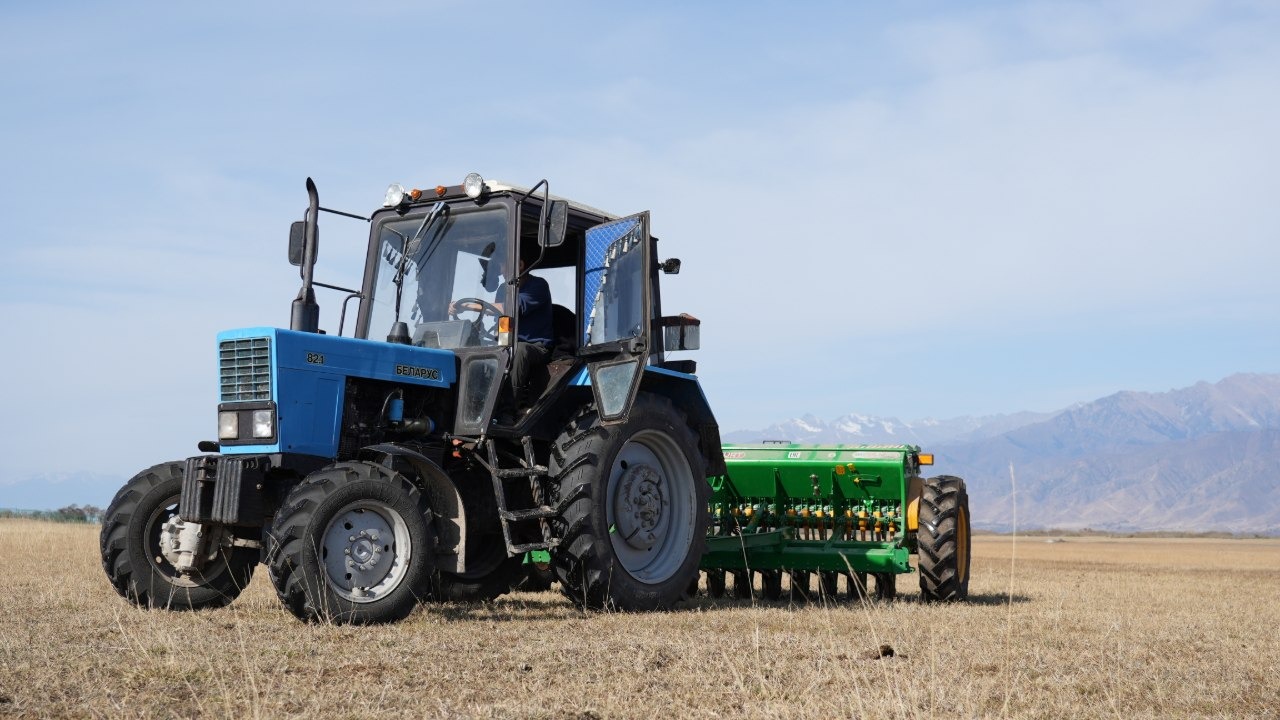
To make sowing more efficient, tractors are to be used on flat terrain and specialized drones in hard-to-reach areas. The program also places particular emphasis on developing local seed-production farms to improve the future supply of seeds.
It was noted during a meeting that 184,000 hectares of pastures near settlements have degraded, and that developing infrastructure is important for making effective use of remote pastures.
The identified needs across the country include:
- repairing and restoring 553 bridges;
- repairing and improving 7,206.3 kilometers of pasture roads;
- setting up 406 livestock watering points;
- installing 170 milk collection tanks.
These measures are intended to make remote pastures easier for livestock breeders to reach, provide water for livestock, and expand opportunities for collecting and marketing dairy products.
Relevant ministries, government agencies, and district administrations will take part in implementing the program, with each institution responsible for carrying out the assigned tasks within its area of competence.
Pasture improvement will continue under the 1,000-day reform. The main objectives are to increase pasture productivity, prevent land degradation, make remote pastures more accessible, and improve water supply. Through 2030, the country plans to keep developing pasture infrastructure, repair roads and bridges, ensure access to remote grazing areas, and create the necessary conditions for livestock breeders.
The rational use of pastures and the development of infrastructure are expected to increase agricultural output, raise livestock breeders’ incomes, and support the sustainable development of rural areas.
Trend estimates that Kyrgyzstan’s pasture restoration program reflects an effort to address structural challenges in the livestock sector, particularly land degradation, uneven grazing pressure, and limited access to remote grazing areas. Developing pasture infrastructure, together with better seed production and modern sowing technologies, could help improve the productivity of agricultural land and strengthen the sector’s fodder supply.
According to Trend’s calculations, the degraded pasture area identified near settlements accounts for about 1.84% of the country’s total pasture area. Meanwhile, the area reseeded in 2023–2025 equals about 0.34% of the national pasture area, or an annual average of about 0.11%. Expanding access to remote pastures and improving water and transport infrastructure could also help distribute grazing pressure more evenly and reduce the risk of further land degradation.


