


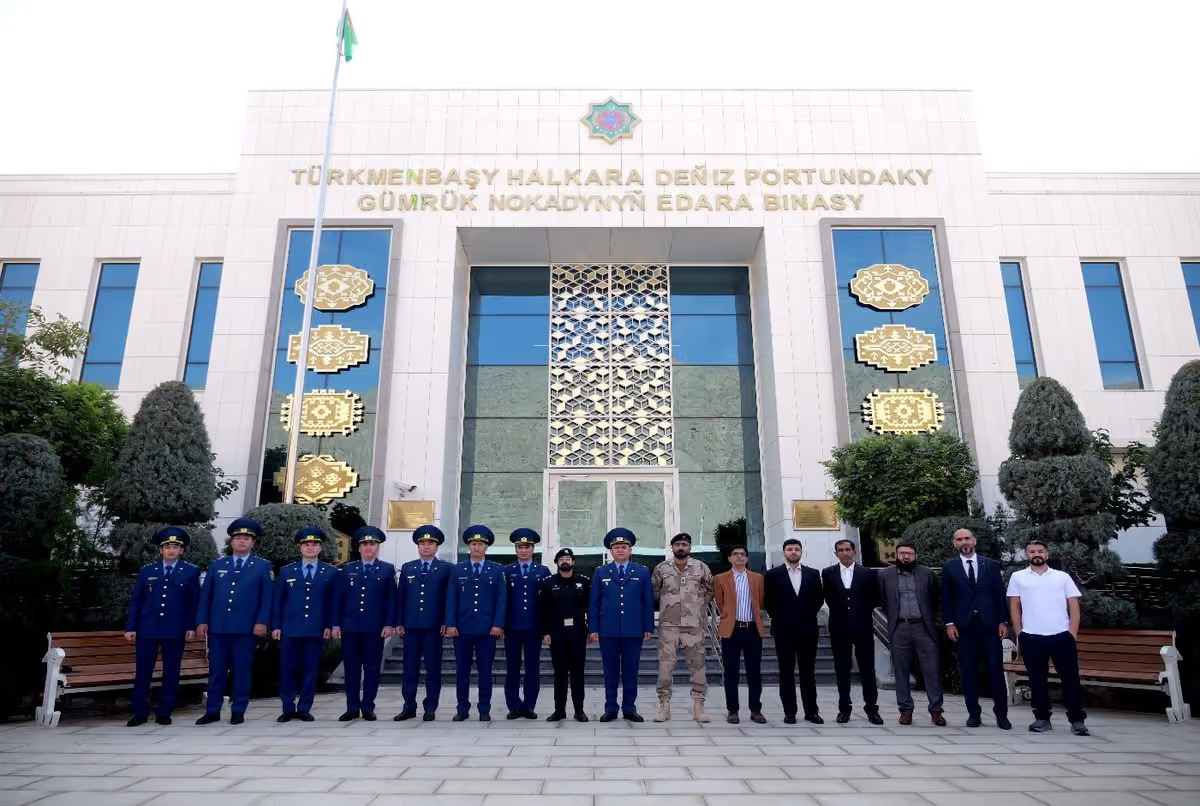

BAKU, Azerbaijan, November 8. Pakistani customs officials have reviewed the operational capabilities of Turkmenbashi International Seaport as part of a bilateral exchange of experience with their Turkmen counterparts, the press service of the Turkmen government reports.
The seminar brought together representatives of the State Customs Service of Turkmenistan and Pakistan's customs authorities.
During the event, the Pakistani delegation examined the port's infrastructure, technological capabilities and digital solutions used at its customs checkpoint to facilitate the control of transit cargo and vehicles.
The discussions also focused on implementing joint initiatives under the World Customs Organization (WCO) Programme for the Control of Passenger and Cargo Traffic, as well as activities within the Interregional Network of Customs Services and Port Control Units (IREN).
Specialists from both countries exchanged practical experience and identified areas for further cooperation in customs administration at international seaports and the use of digital technologies to improve the security of transit cargo flows.
The interest in expanding cooperation with Turkmenistan is part of Pakistan's broader efforts to strengthen its role as a maritime gateway for landlocked Central Asian countries. Islamabad has been promoting the use of its seaports, including Karachi, Port Qasim and Gwadar, and developing multimodal transport links to facilitate cargo movement between Central Asia and international markets. Islamabad has highlighted the potential of multimodal transport corridors combining road, rail and maritime links to facilitate cargo movement between Central Asia and international markets.
Cooperation with Turkmenistan in this area has also been on the bilateral agenda. In September 2025, Turkmen Ambassador to Pakistan Atadjan Movlamov and Pakistan's Federal Minister for Maritime Affairs Muhammad Junaid Anwar discussed the transit and logistics potential of the ports of Turkmenbashi, Karachi and Gwadar, as well as prospects for developing railway infrastructure to improve regional transport links.
The two countries have also been working to advance the legal framework for transit cooperation. At a meeting in Islamabad on October 28, 2026, the Pakistan-Turkmenistan Parliamentary Friendship Group stressed the importance of finalizing and implementing the bilateral Transit Trade Agreement, highlighting the need for reliable routes and stronger regional connectivity. The sides also discussed expanding business contacts and facilitating trade delegations.


