


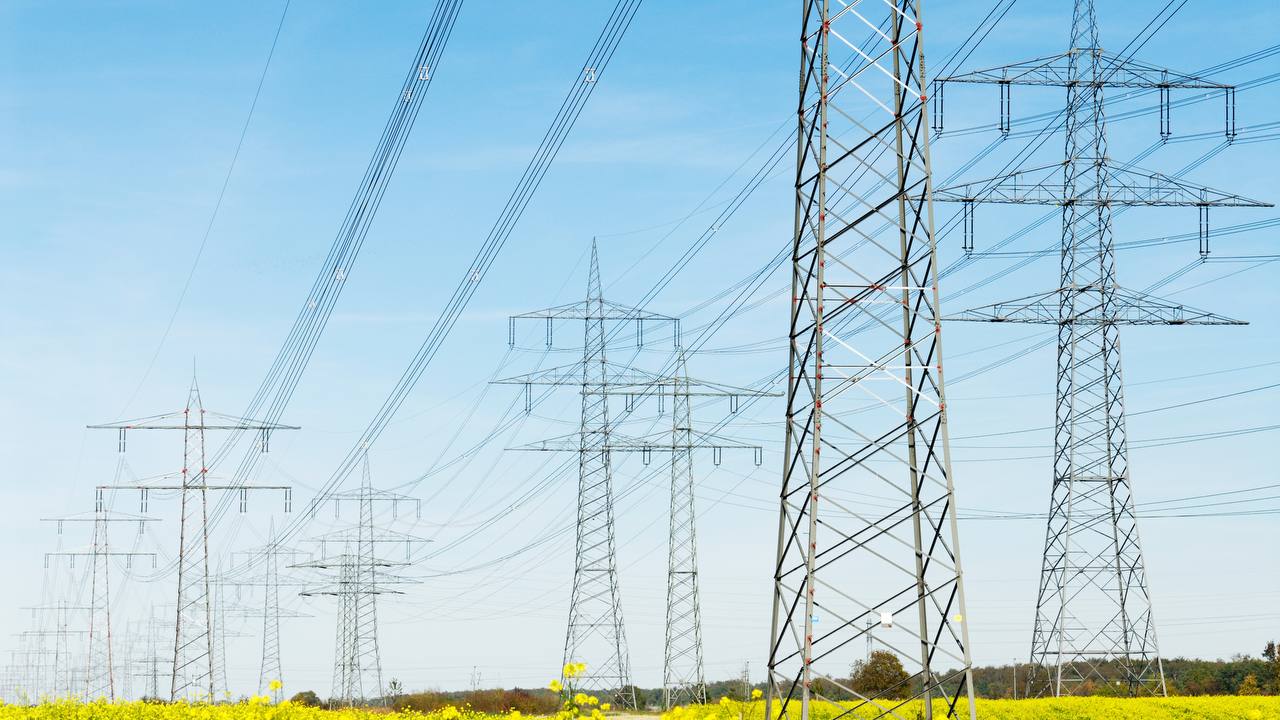
BAKU, Azerbaijan, August 11. The electricity output potential of the Isfahan Thermal Power Plant (TPP) in central Iran's Isfahan Province has increased to 250 megawatts.
This was announced by the Iranian Ministry of Energy, citing remarks by the Deputy of Production Operation of the Thermal Power Plant Holding Company, Masoud Moradi.
"With the construction and commissioning of the cooling tower in Unit 4 of the Isfahan Power Plant, the electricity generation capacity of this plant has increased to 250 megawatts. Thus, the plant has the ability to produce 2 billion kilowatt hours of electricity per year," he said.
Moradi noted that a total of 4 trillion rials (about $2.7 million) were spent on the construction and commissioning of this system. The cooling tower is made of heat-resistant, very light polymer and high-strength materials. The construction cost was 50% less than the cost of a concrete and wooden cooling tower.
The company official pointed out that the water for the cooling tower, which was built in 8 months, is provided under an agreement with Iran's Mobarakeh Steel Company. The technology used in this tower resulted in a 20% reduction in water consumption compared to other cooling systems.
The electricity output potential of Iran's Isfahan Power Plant is 835 megawatts. This plant operates 5 steam units.
According to Trend's analysis, the commissioning of a new cooling tower in Unit 4 of the Isfahan TPP can be considered an important step towards the modernization of Iran's electricity generation infrastructure. One of the striking features of the project is the 50% reduction in construction costs compared to traditional concrete and wooden structures due to the use of modern polymer materials. This approach both increases investment efficiency and can create conditions for the implementation of similar projects at lower costs in the future. In addition, the 20% reduction in water consumption of the technology applied in the cooling tower is considered an important advantage for Iran, where water resources are limited. The organization of water supply within the framework of cooperation with Mobarakeh Steel Company allows for more efficient use of resources by strengthening the integration of industrial enterprises with the energy sector. Overall, the project can be seen as a positive step towards the sustainable development of Iran's energy sector in terms of increasing electricity generation capacity, improving energy efficiency, reducing water consumption, and optimizing production costs. Continuing such modernization projects can contribute to meeting the country's growing electricity demand and further strengthening the reliability of the energy system.
Earlier, Iranian Ambassador to Azerbaijan, Mojtaba Demirchilou, told Trend that the details of synchronizing the electrical grids of Iran, Azerbaijan, and Russia are currently being worked out.
According to him, the leadership level in the three countries has an agreement on the exchange of electricity.
Demirchilou said that the Iranian Monenco company has completed research work on this exchange of electricity and has prepared and submitted its reports to the parties.



