


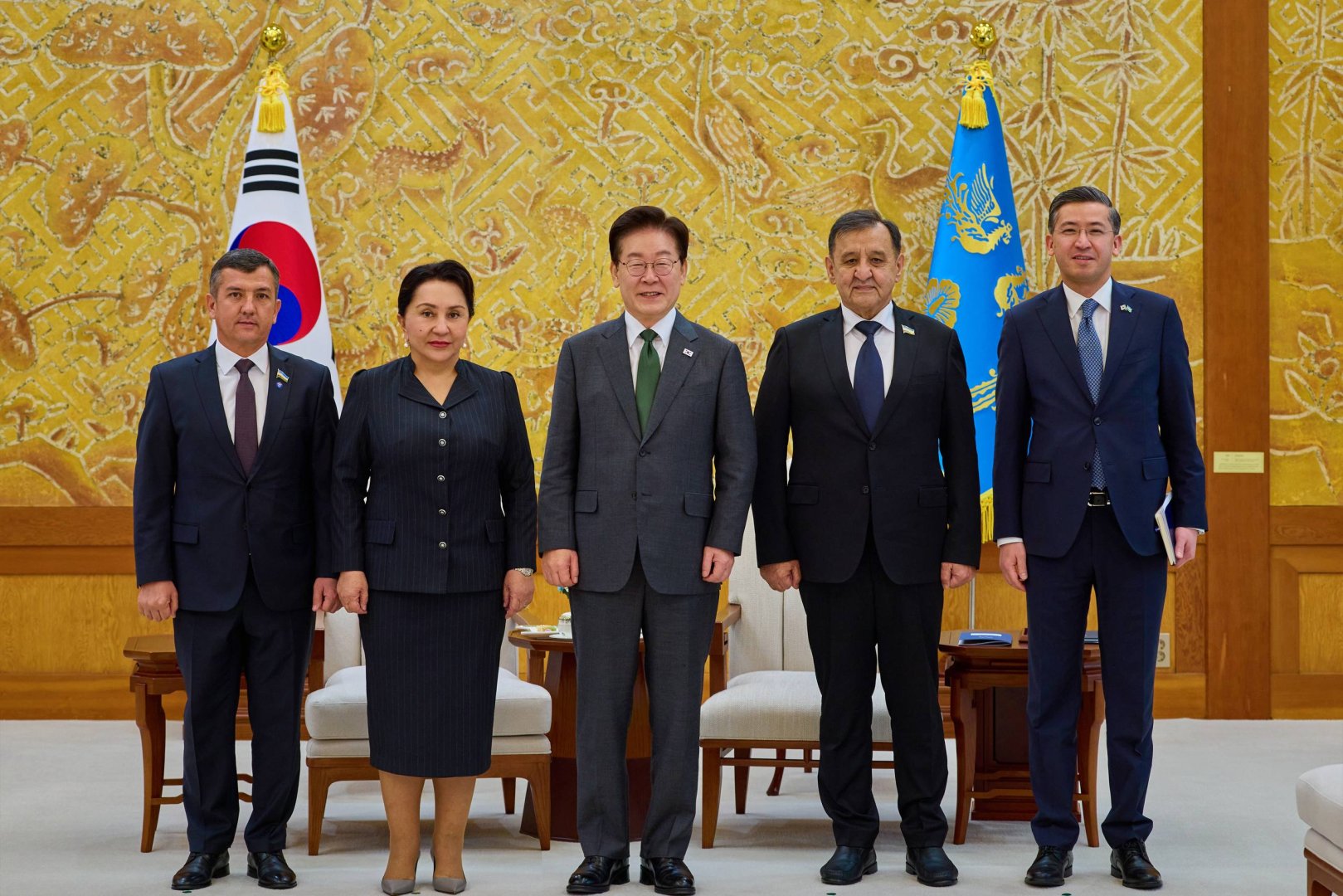

BAKU, Azerbaijan, November 11. Uzbekistan and South Korea discussed strengthening their strategic partnership, expanding parliamentary cooperation and advancing investment projects worth approximately $12 billion during a meeting between South Korean President Lee Jae-myung and Uzbek Senate Chairperson Tanzila Narbayeva on November 10.
According to Uzbekistan's Senate of Oliy Majlis, the meeting took place during an official visit to South Korea by an Uzbek parliamentary delegation led by Narbayeva. She conveyed greetings and best wishes from Uzbek President Shavkat Mirziyoyev to his South Korean counterpart.
The sides discussed ways to deepen interparliamentary ties, including strengthening legislative support for agreements reached at the highest level and enhancing parliamentary oversight of their implementation.
Moreover, they exchanged views on expanding trade, economic, investment and technological cooperation. Particular attention was paid to implementing prospective projects worth around $12 billion, developing industrial cooperation, introducing advanced technologies and expanding ties between regions.
In addition, the discussions covered cooperation in education, healthcare, science, workforce training and cultural and humanitarian exchanges. The sides emphasized the importance of ensuring favorable conditions for Uzbek citizens working and studying in South Korea.
During the visit, Narbayeva also met with South Korean National Assembly Speaker Cho Jung-sik to discuss expanding interparliamentary cooperation and strengthening regional ties. The sides highlighted the growing frequency of parliamentary exchanges, welcomed the third meeting of the speakers of the Central Asian and South Korean parliaments, held in Tashkent in December 2025, and proposed including mechanisms for implementing agreements reached at the presidential level on the agenda of future parliamentary meetings. They also discussed involving local council members in interparliamentary cooperation groups and expanding collaboration in artificial intelligence, critical minerals, the digital economy, advanced technologies, education, healthcare and cultural affairs.


