


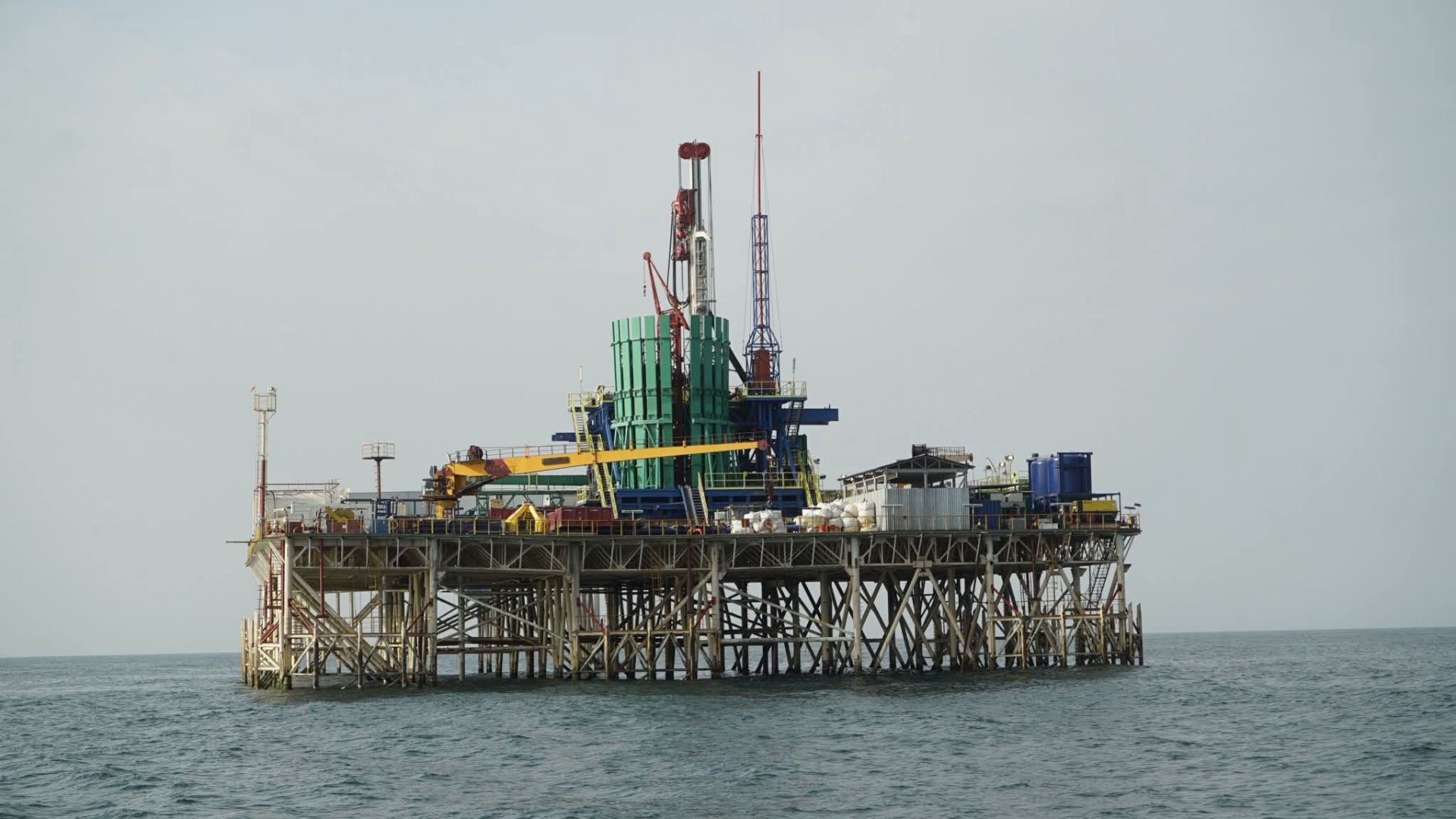

BAKU, Azerbaijan, November 11. SOCAR AQS has successfully handed over the first well drilled from Platform No. 50 at the West Absheron field to the client.
According to SOCAR AQS ‘s report, the well, with a planned depth of 1,192 metres, reached an actual depth of 1,200 metres. As part of the drilling operations, geological and geophysical studies were conducted, including formation pressure measurements in the QD-3 and QAD productive horizons.
The data obtained will play an important role in assessing the geological characteristics of the formations and supporting more efficient planning of future drilling operations.
As part of the project, the well's production casing diameter was increased to 9⅝ inches, and a Single Annulus Sand Screen (SASS) system was installed in the open-hole section. This technological solution is designed to limit the entry of sand and mechanical particles into the well, prevent potential operational complications, and create conditions for reliable, long-term production.
The report noted that the successful drilling and handover of Well No. 83 to the client, Azneft Production Union (PU), marks an important milestone in realising the operational potential of Platform No. 50.
According to SOCAR AQS’s assessment, this achievement once again demonstrates the professionalism and engineering expertise of the company’s team, as well as the importance of effective collaboration and teamwork with the client and contractor companies in successfully delivering complex offshore drilling projects.
The West Absheron field is located in the northwestern part of the Absheron Archipelago in the Caspian Sea, north of the Absheron Peninsula, at a distance of 65 km from Baku. The field was discovered in 1958, and the area is characterized by harsh climatic and meteorological conditions. The oil saturation of the structure is associated with the Kirmaki and Lower Kirmaki formations within the productive zone, and production from these formations began in 1996.


