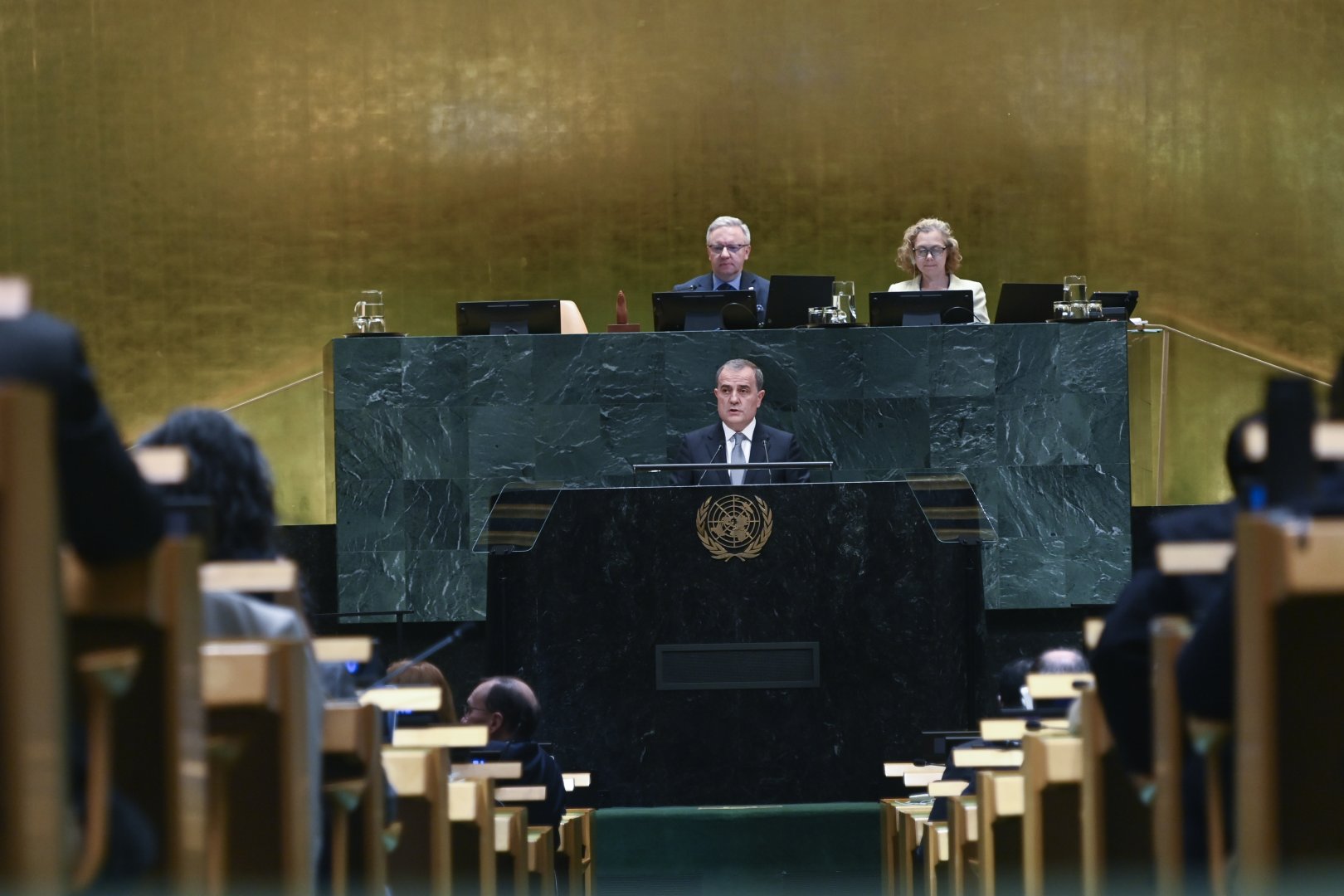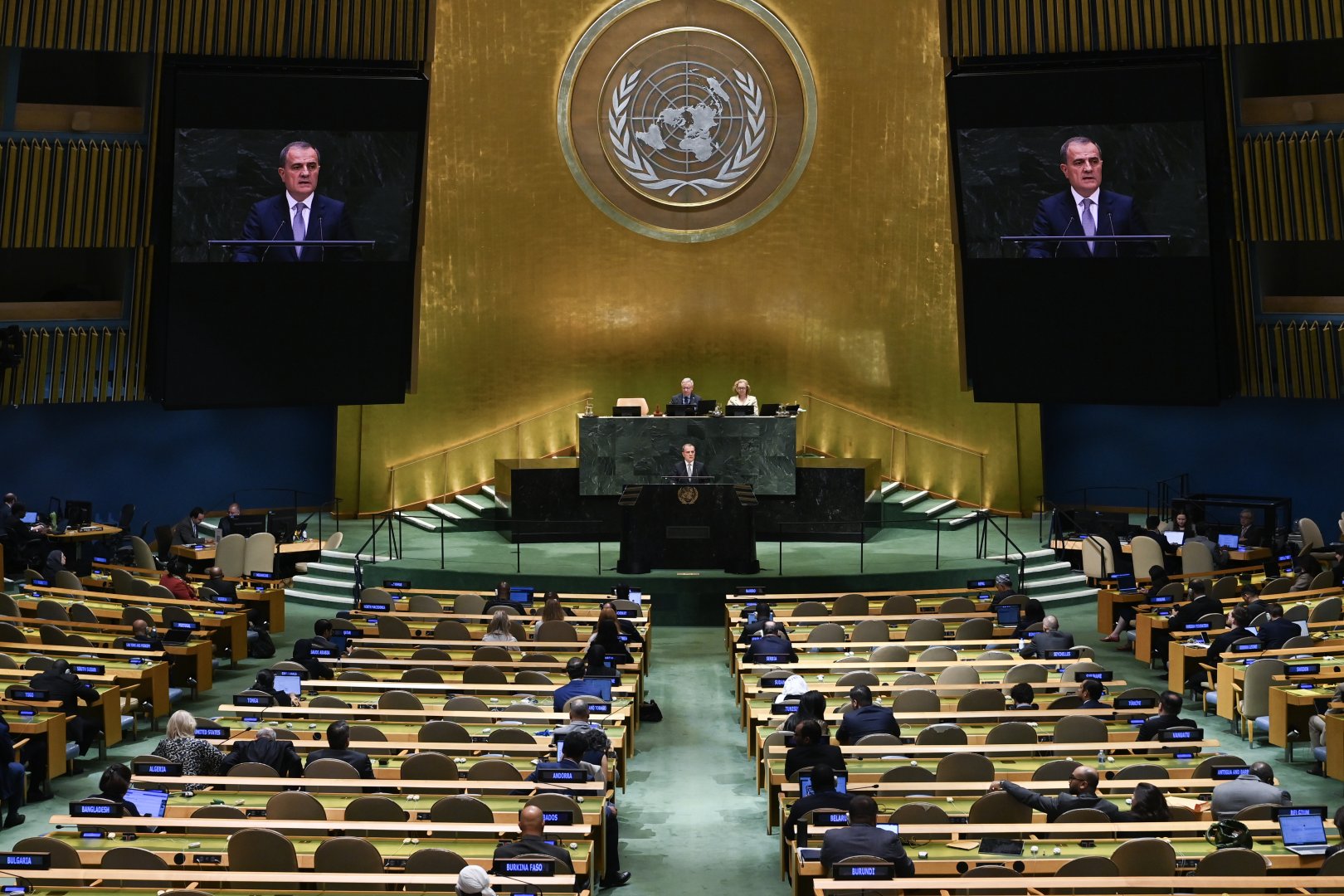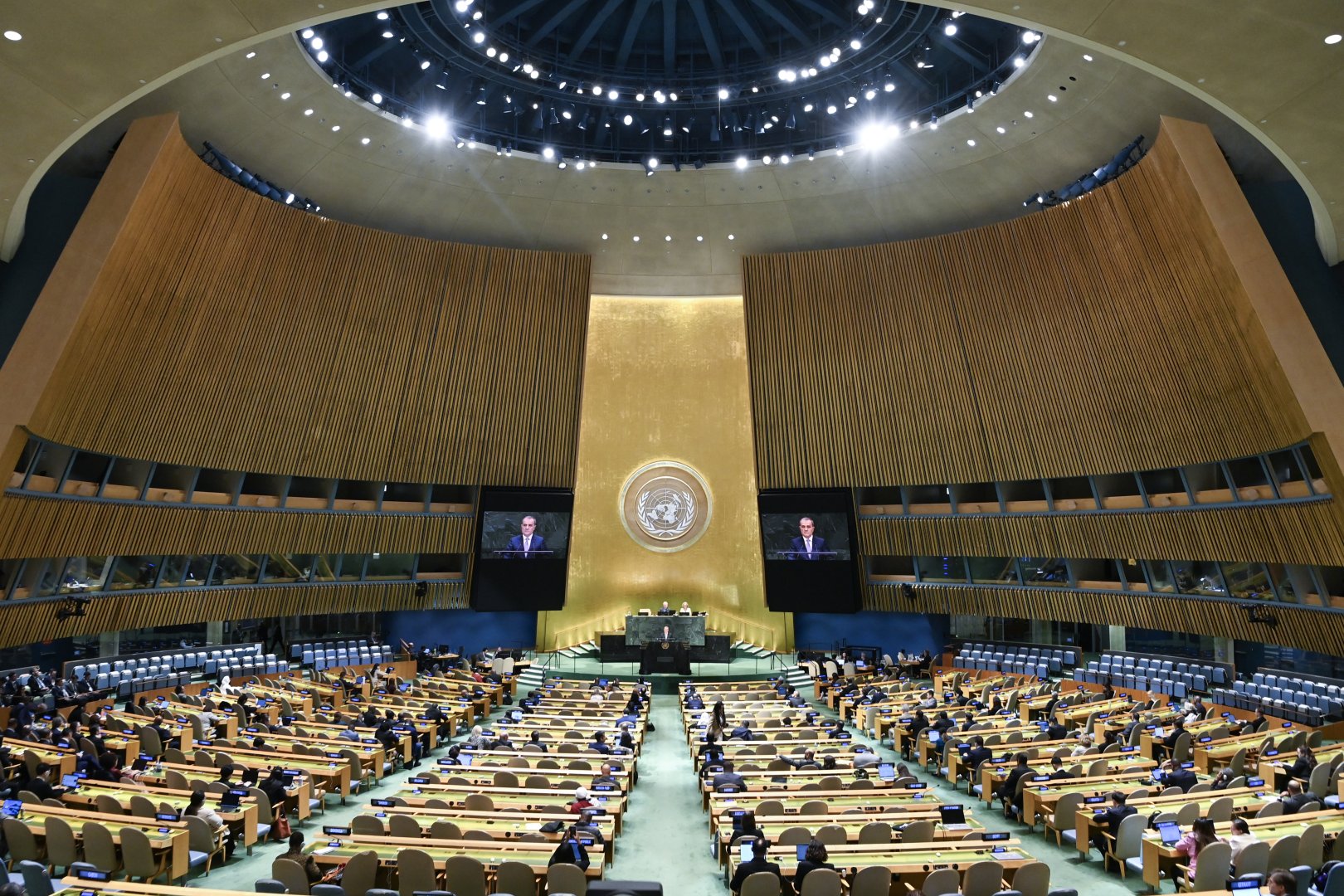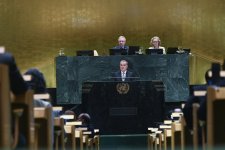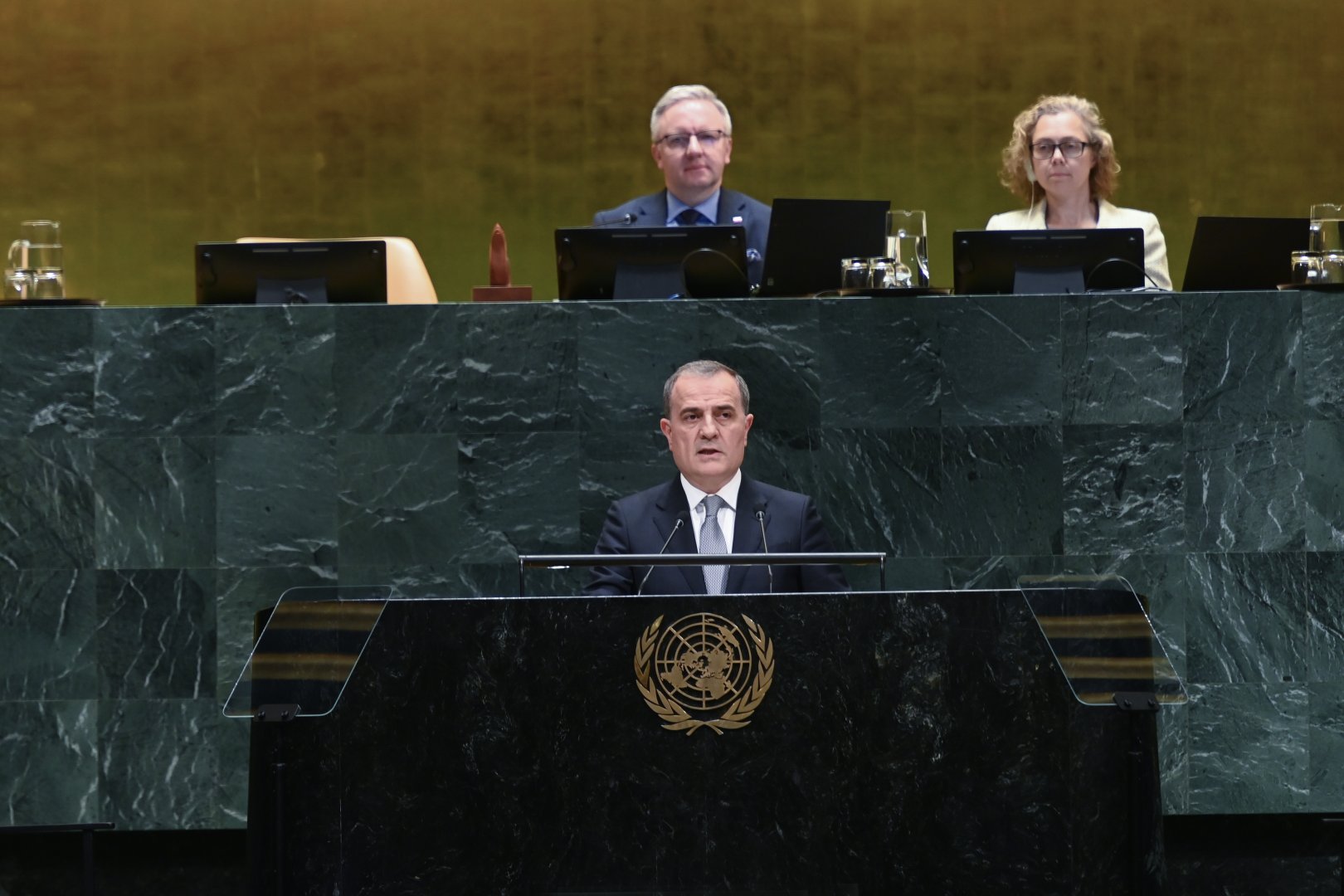

BAKU, Azerbaijan, September 26. Azerbaijani Foreign Minister Jeyhun Bayramov outlined Azerbaijan’s position on strengthening multilateralism, regional peace, sustainable development, energy security and international cooperation in his statement at the general debate of the 81st session of the UN General Assembly on September 25.
This is reflected in a statement by the Azerbaijani Foreign Ministry.
Bayramov congratulated Khalilur Rahman on assuming the presidency of the 81st session of the General Assembly and expressed appreciation to UN Secretary-General António Guterres for his efforts.
Addressing global challenges, Bayramov stressed the need for joint action and said that restoring trust in the international order was essential for making multilateralism more effective.
According to the minister, Azerbaijan advocates a reinvigorated and reformed multilateral system based on the consistent and non-selective application of universally accepted norms and principles of international law.
He also stressed the importance of reforming the UN Security Council to make it more representative, effective and responsive, and said all states, including developing countries, should have an equal opportunity to participate in global decision-making.
Speaking about the South Caucasus, Bayramov said Azerbaijan’s efforts to establish peace and stability in the region are based on respect for sovereignty, territorial integrity and international law.
He noted that the normalization process between Azerbaijan and Armenia had produced what he described as historic results at the Washington Peace Summit in August, where the leaders of the two countries signed a Joint Declaration witnessed by US President Donald Trump and initialed an agreement on the establishment of peace and inter-state relations.
“Today, we have achieved de facto peace,” Bayramov said, adding that Azerbaijan had unilaterally lifted transit restrictions and was facilitating the transportation of goods to and from Armenia. He also noted that bilateral trade had been established and that Azerbaijan regularly supplies strategically important oil products to Armenia.
The minister stressed that the remaining obstacle to finalizing the normalization process should be eliminated through the signing of the already initialed bilateral agreement.
Bayramov also addressed post-conflict reconstruction and the return of former internally displaced persons to their homes in Azerbaijan’s liberated territories.
He said large-scale reconstruction projects were underway, including the development of “smart cities” and “smart villages” using green technologies. According to him, more than 90,000 people currently live, study and work in the liberated territories.
At the same time, Bayramov highlighted landmine contamination as a major obstacle to reconstruction and the return of residents. He said more than 400 people, including women and children, had fallen victim to landmines since 2020, while the cumulative number of landmine victims over the past 30 years had exceeded 3,500.
He also emphasized the importance of clarifying the fate and whereabouts of nearly 4,000 Azerbaijanis who went missing as a result of the conflict.
Addressing Azerbaijan’s international initiatives, Bayramov highlighted the country’s contribution to intercultural dialogue, international solidarity and multilateral cooperation.
He noted Azerbaijan’s hosting of major international events, including COP29 and the 13th session of the World Urban Forum, as well as its chairmanship of the Non-Aligned Movement, the Organization of Turkic States and the Conference on Interaction and Confidence-Building Measures in Asia.
Speaking about COP29, Bayramov said the conference resulted in several agreements, including the tripling of the global climate finance goal and the full operationalization of Article 6 carbon-market mechanisms.
He also noted that Baku hosted UNFCCC Climate Week for the first time in September, bringing together governments, international organizations, the private sector and other stakeholders to advance practical climate solutions.
According to Bayramov, Azerbaijan has provided humanitarian, economic and technical assistance worth approximately $400 million to more than 140 countries since 2020, with particular attention to Small Island Developing States and African partner countries.
The minister also highlighted Azerbaijan’s commitment to the UN 2030 Agenda for Sustainable Development. He said the country had integrated the Sustainable Development Goals into its national development strategies and institutional frameworks.
Bayramov noted that Azerbaijan’s GDP had tripled in less than two decades, while the poverty rate had declined from 49 percent to around 5 percent.
He also highlighted Azerbaijan’s ASAN and DOST models of transparent and citizen-centered public services, saying they had gained international recognition and were increasingly being adopted by partner countries.
Addressing environmental issues, Bayramov expressed concern over the continuing decline of the Caspian Sea, noting its implications for biodiversity, livelihoods and economic activity across the region.
On energy security, Bayramov said traditional energy sources would remain important for development in the immediate term, while Azerbaijan was simultaneously expanding its renewable energy capacity.
He noted that Azerbaijan is a reliable natural gas supplier to 16 countries and plays a role in diversifying energy supplies to Europe and beyond.
According to the minister, agreements already signed envisage around 6 gigawatts of additional solar and wind capacity by 2030, while renewable energy is expected to account for almost 40 percent of Azerbaijan’s electricity generation by that year.