


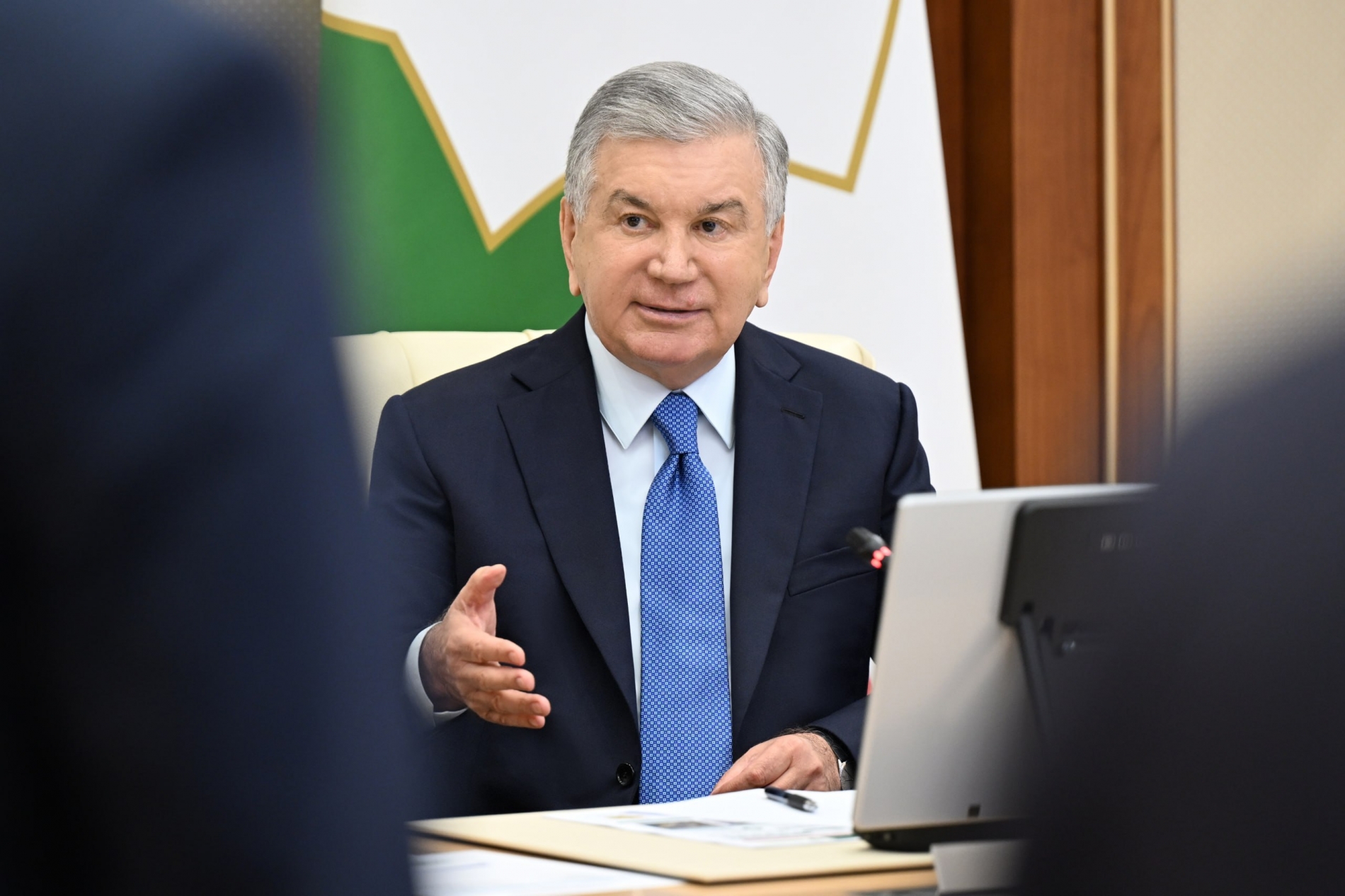

BAKU, Azerbaijan, July 22. President Shavkat Mirziyoyev launched construction of a new highway linking Tashkent and Samarkand, describing the project as a key component of the country's strategy to strengthen its role as a regional transport and logistics hub.
This was reflected in the statement by the official channel of the Press Secretary to the Uzbek President.
Speaking at the groundbreaking ceremony in the Tashkent region's O'rta Chirchiq district, Mirziyoyev said Uzbekistan's economy has tripled in size in recent years and reiterated the government's goal of increasing gross domestic product to $240 billion by 2030.
The president said expanding transport infrastructure would be critical to supporting economic growth and accommodating rising volumes of international trade.
"Today, 4,000 kilometers of international transit routes pass through Uzbekistan," Mirziyoyev said. "At the same time, 30% of international highways are already operating at full capacity, while another 25% are carrying traffic beyond their designed capacity."
He said the new highway would improve connectivity on one of the country's busiest transport corridors while helping ease congestion and facilitate faster movement of passengers and freight.
Mirziyoyev also highlighted the strategic importance of major regional transport projects, including the planned China-Kyrgyzstan-Uzbekistan railway and the Trans-Afghan railway, saying they would significantly expand Uzbekistan's access to global markets.
"Once the China-Kyrgyzstan-Uzbekistan and Trans-Afghan railways become operational, Uzbekistan will become a key link in the shortest overland corridor connecting the Pacific Ocean with Europe," he said.
The projects are also expected to provide the country with access to Pakistan's seaports and, through them, to the Indian Ocean and South Asian markets with a combined population of nearly 2 billion people.
Mirziyoyev said government estimates show Uzbekistan could handle an additional 15 million to 20 million metric tons of international transit cargo annually once the country's transport network is expanded.
According to the projections, the increased transit volumes could generate between $400 million and $600 million in annual revenue, attract around $3 billion in investment for the construction of logistics centers and cargo terminals, and create at least 50,000 permanent jobs.
The highway project forms part of Uzbekistan's broader effort to modernize its transport infrastructure as the country seeks to capitalize on growing trade flows across Central Asia. With regional rail and road corridors linking East Asia, Europe and South Asia gaining momentum, Tashkent is positioning itself as a major transit gateway capable of generating new investment, logistics capacity and export opportunities.



