


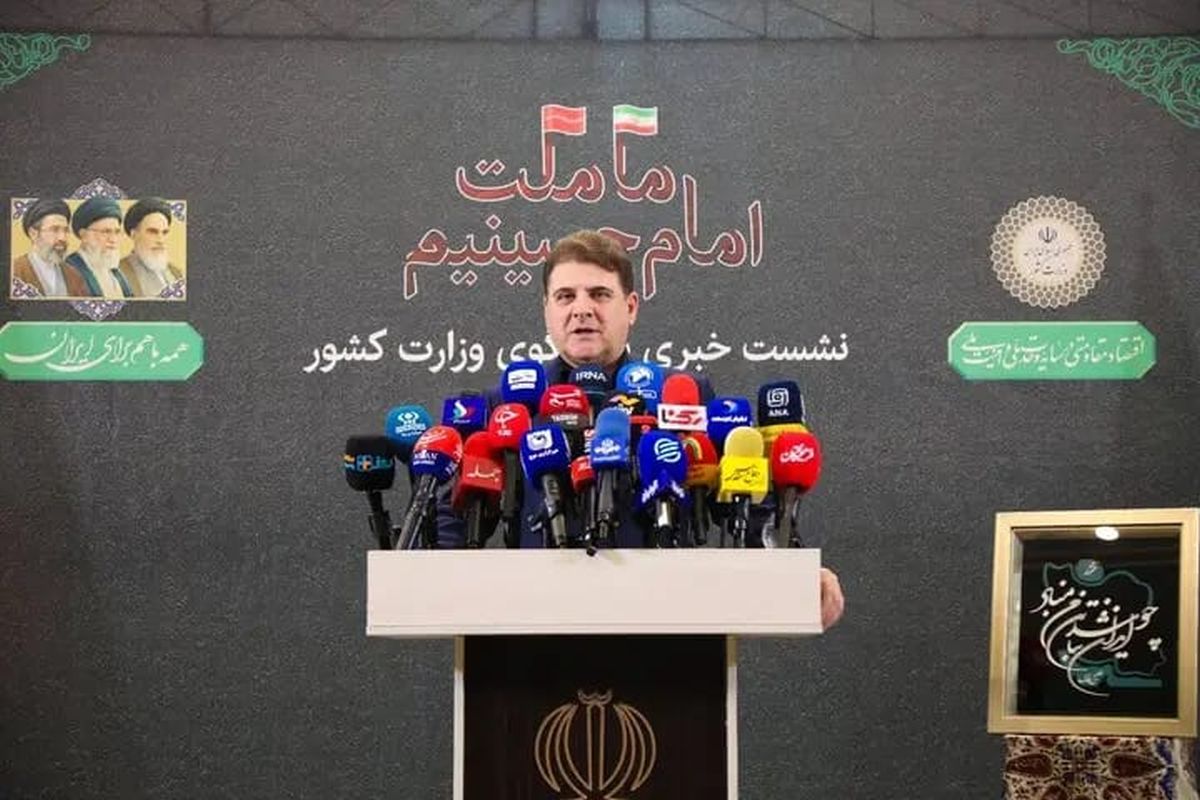

BAKU, Azerbaijan, September 19. Iran wants the other side to return to the memorandum of understanding signed in Islamabad.
This was stated by Iran’s Ministry of Internal Affairs (MIA), citing remarks by Ministry Spokesperson Ali Zeinivand at a press conference in Tehran today.
“Diplomatic efforts are underway to ensure that the other party returns to the Islamabad Memorandum of Understanding,” he said.
Zeinivand added that various countries are working to facilitate diplomatic efforts between Iran and the United States.
“The Iranian side has clearly stated that the other party should return to the memorandum of understanding it signed itself. Although there have been various disagreements within Iran regarding the Islamabad Memorandum, it represents a decision adopted by the Iranian state, and Iran’s Supreme Leader Seyyed Mojtaba Khamenei and the Supreme National Security Council have endorsed this memorandum,” he noted.
Since no concrete results had been achieved between the U.S. and Iran regarding Iran’s nuclear program, on February 28, the U.S. and Israel carried out military airstrikes against Iran, and since that day, Iran has been firing missiles and drones at Israeli and U.S. targets in the region. On April 7, a ceasefire agreement between the parties was reached through Pakistan’s mediation.
On June 18, a peace memorandum was signed between Iran and the United States. The memorandum was signed by Iranian President Masoud Pezeshkian and U.S. President Donald Trump. The memorandum entered into force on June 19.
Meanwhile, the next escalation in U.S.-Iranian relations began on July 8. On that day, for the first time since the signing of the memorandum between Washington and Tehran, U.S. forces launched a series of strikes on Iranian territory, allegedly in response to an attack on a merchant ship in the Strait of Hormuz. On the same day, U.S. President Donald Trump announced the suspension of the ceasefire with Iran. In response, Tehran began striking U.S. targets located in Bahrain, Jordan, Qatar, Kuwait, the UAE, and Oman. Iran claims that the Strait of Hormuz is currently closed.



