


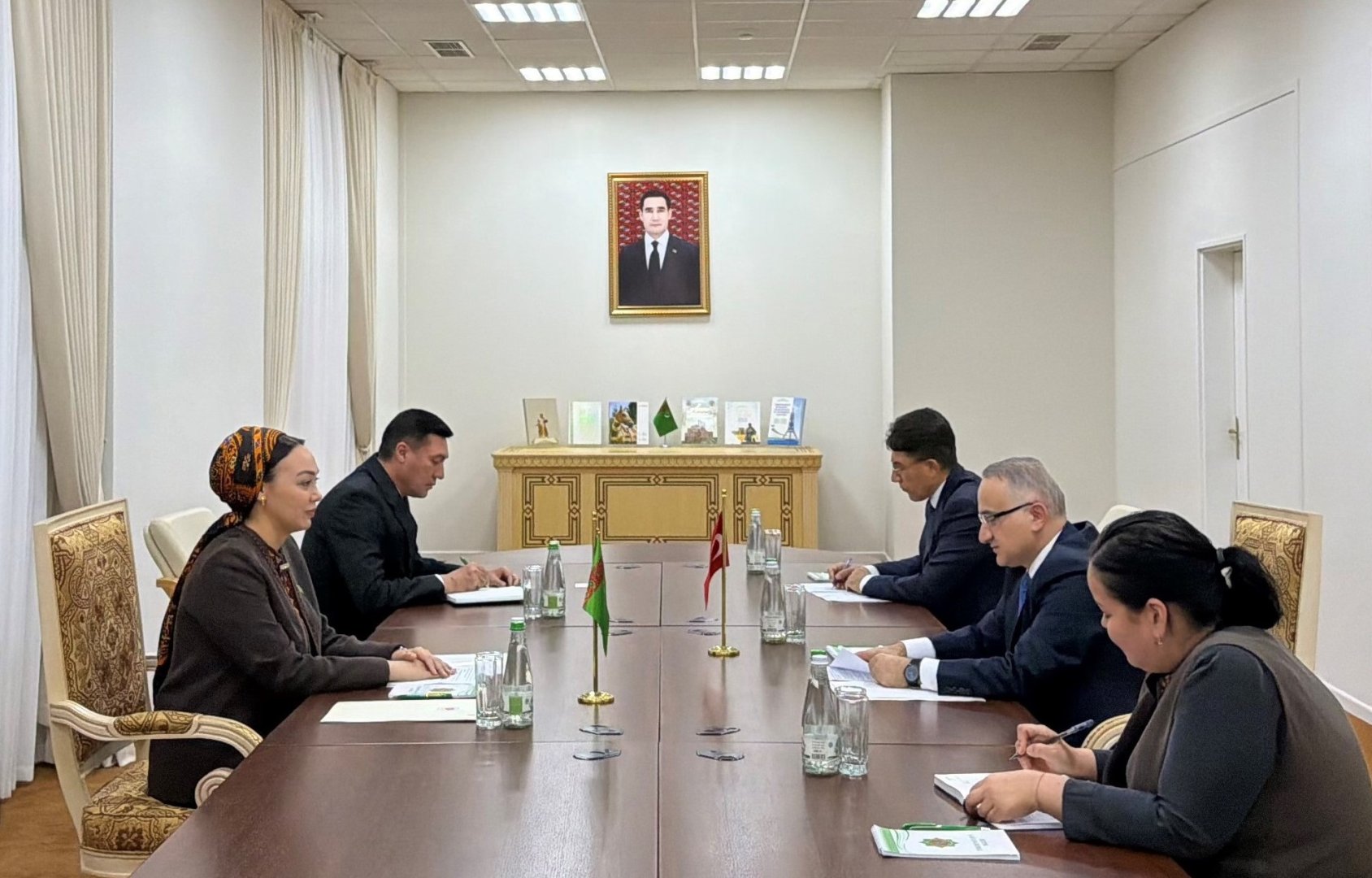

BAKU, Azerbaijan, September 26. Turkmenistan and Türkiye discussed bilateral cooperation and parliamentary ties during a meeting in Ashgabat on September 25.
According to the press service of the Mejlis (Parliament) of Turkmenistan, Chairwoman Dunyagozel Gulmanova met with newly appointed Turkish Ambassador to Turkmenistan Şener Cebeci.
The sides discussed the development of bilateral relations and the role of parliamentary cooperation in supporting intergovernmental ties.
They also emphasized the importance of strengthening contacts between parliamentary friendship groups and relevant committees, as well as holding consultations at the parliamentary level.
The meeting also covered Türkiye's participation in two international events scheduled to take place in Turkmenistan's Avaza National Tourism Zone in October. The events include the International Dialogue on Women and the International Conference on Demography.
Turkmenistan and Türkiye established diplomatic relations shortly after Turkmenistan gained independence. Türkiye was the first country to recognize Turkmenistan on October 27, 1991, and opened its embassy in Ashgabat in February 1992. The two countries cooperate in political, economic, cultural and educational areas, while Türkiye supports Turkmenistan's policy of permanent neutrality.
Economic ties are an important part of the bilateral relationship. According to Türkiye's Foreign Ministry, bilateral trade reached $2.2 billion in 2025, including $1.3 billion in Turkish exports to Turkmenistan and $860 million in imports. The two countries’ presidents have set a goal to bolster the bilateral trade value to $5 billion in near term. Turkish companies have also been active in Turkmenistan's construction and industrial sectors, with more than 1,000 projects worth over $54 billion completed since the country's independence.
Energy and transport have become increasingly important areas of cooperation. In June 2026, the ninth meeting of the Intergovernmental Turkmen-Turkish Commission on Economic Cooperation identified transport and logistics as a key area, with discussions focusing on infrastructure connecting Central Asia and Europe. Energy cooperation was also discussed, alongside construction, building materials, food production and agriculture.



