


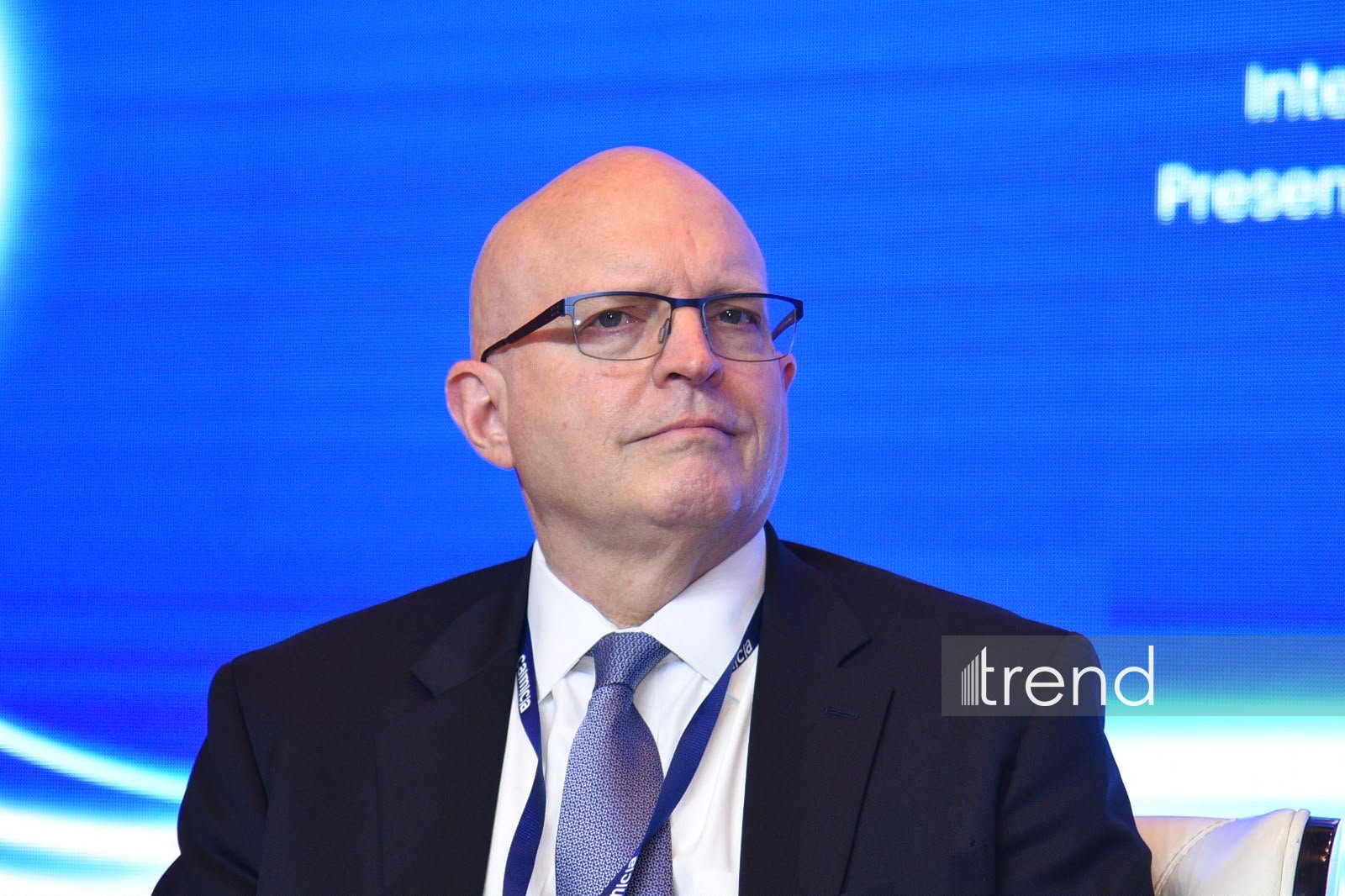

BAKU, Azerbaijan, October 1. The countries of the South Caucasus can achieve great results, either individually or collectively, by identifying their existing capabilities and potential, a partner and head of the Europe and Eurasia practice at the U.S. firm DGA-Albright Stonebridge Group, Philip Reeker, said at the CAMCA regional forum held in Baku on Thursday, Trend's correspondent reports from the event.
He noted that one of the main priorities for the countries in the region should be to accurately identify existing opportunities and assess the potential for joint action.
“When it comes to competitiveness and transport accessibility, including the Middle Corridor, I think first and foremost we need to determine: what else can be done individually or as a group, that is, together, by the three countries of the South Caucasus, in addition to the resources we can offer today, such as rare earth elements, metals, hydrocarbons, and gold?” Philip Reeker said.
According to him, although in the long term it may be possible to unite Central Asia and the Caucasus within the framework of a broader infrastructure and a larger economic space, at this stage it makes sense to start with cooperation on a smaller scale.
“We can think big, talk about Central Asia and the Caucasus, about larger-scale infrastructure and a broader context. But I think that’s too ambitious right now. So we can start on a smaller scale,” he said.
Philip T. Reeker emphasized that another important priority is mutual learning among countries and strengthening their capacity.
“First and foremost, we need to identify our needs and our own capabilities. The second priority is how we can learn from one another and how we can strengthen one another. To do this, we need to come together, develop an appropriate mechanism, bring it up for discussion at the forum, and then make decisions and take action. Discussions alone are not enough,” Reeker said.
He noted that the factors of sovereignty, transportation accessibility, and prosperity are of particular importance for the region’s future development.
“I want to return to three words: sovereignty, the connections it creates, and the prosperity it generates. I think three points are fundamental for all governments. First and foremost, we must accept geography. This is directly linked to sovereignty and territorial integrity,” Philip Reeker noted.
According to him, each country in the region possesses sovereignty and territorial integrity and must make decisions based on national interests, rather than relying solely on the positions of major powers.
“Each of you possesses your own sovereignty and territorial integrity. You are recognized by the world, and you make your own choices. These choices should not be based solely on the perceptions of capitals such as Beijing, Moscow, and Washington, or even Brussels, but should first and foremost take into account your own interests and perspectives,” he emphasized.
P. Reeker stated that countries should have greater confidence in these opportunities, turning their geographic location into the development of ties, and those ties into economic prosperity.
“We need to further strengthen this confidence, be confident in what you have achieved, and turn geography into connections, and connections into prosperity. It is important to think more broadly. This requires time and letting go of some outdated notions, as well as thinking in line with the new situation you have created,” Reeker added.
He highlighted the importance of the peace process between Armenia and Azerbaijan in terms of regional development and the creation of new economic opportunities.
“The peace process is crucial to this. During my work on the peace process between Armenia and Azerbaijan, we clearly saw these opportunities. There was leadership willing to achieve peace. For many years, many people said it was impossible. Attempts were made to resolve the issue through various frameworks and international organizations, but no results were achieved. Instead, we saw two leaders who, in our view, could work together,” Philip T. Reeker said.
According to him, the peace ceremony held at the White House on August 8, 2025, with the participation of the leaders of Azerbaijan and Armenia, had great symbolic significance for the region.
“Frankly speaking, the signing ceremony held at the White House on August 8, 2025, had great symbolic significance not only for Azerbaijan and Armenia and their peoples, but also for the region as a whole,” Reeker noted.
Reeker stated that the countries of the region must take advantage of the new opportunities that have opened up for them, and to do so, they must demonstrate political will and confidence.
“I think people need to pay attention to these opportunities for progress. These opportunities must be seized. It’s a matter of leadership and confidence in the ability to move forward. And when you unite, you create synergy that will lead you to a bright future,” he added.



