


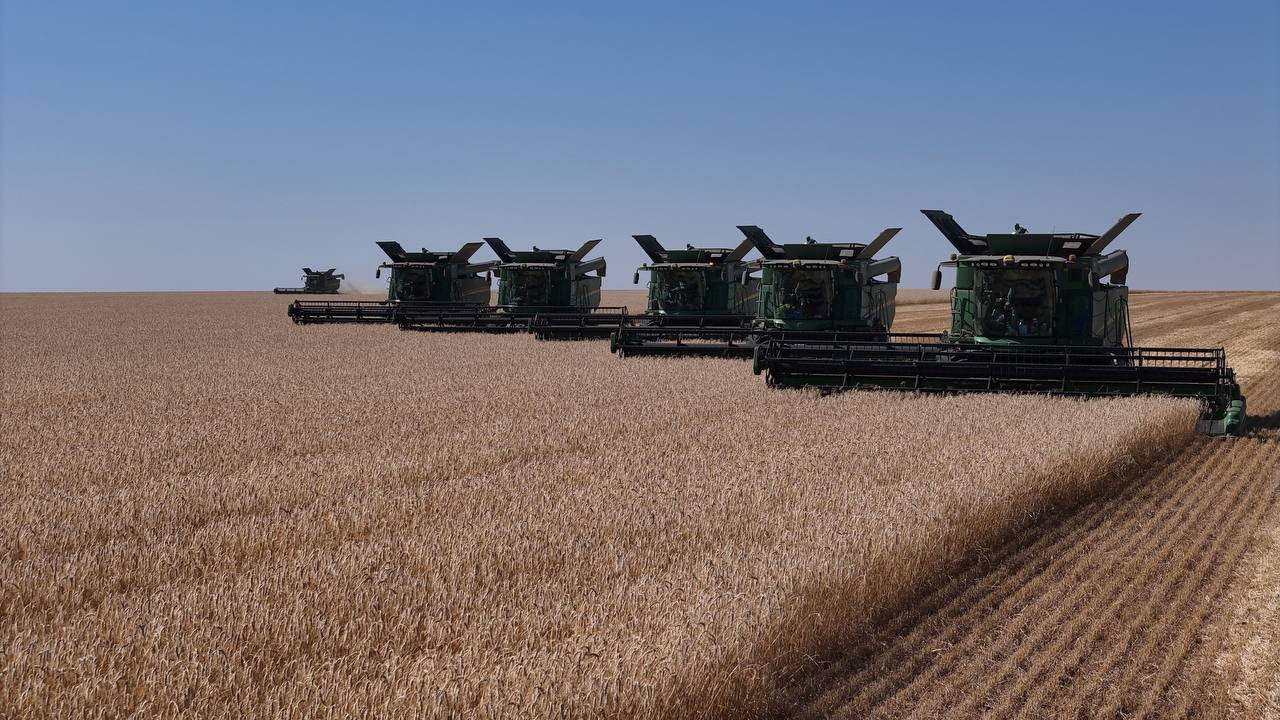

BAKU, Azerbaijan, September 30. Kazakhstan’s government sets procurement prices for 2026 harvest wheat at 92,000-115,000 tenge ($209-$262) per ton, depending on quality, Deputy Prime Minister and Minister of National Economy Serik Zhumangarin said at a meeting with farmers in Arkalyk, Kostanay Region.
This was announced by the press service of the Kazakh government.
“Taking into account market conditions, as well as proposals from market participants, the government has determined procurement prices for grain from the 2026 harvest. In particular, the price for Class 3 wheat is planned to be set at 92,000-115,000 tenge depending on quality indicators. Thus, the price remains at last year’s level,” Zhumangarin said.
The procurement prices of the Food Contract Corporation serve as a market benchmark. Financial support for farmers is provided through forward and direct grain procurement mechanisms, allowing agricultural producers to cover production costs and prepare for the next season.
He noted that another support measure will be the refund of value-added tax to grain traders. The relevant decision was made at a meeting of the Project Office for the implementation of the Tax Code.
For agricultural exporters, the adjustment of the amount of value-added tax claimed for credit will not apply. The validity of value-added tax refund claims will be confirmed through a tax audit using the so-called “pyramid method,” which makes it possible to trace the entire chain of goods movement and tax payments from the agricultural producer to the exporter. If the audit produces positive results, the exporter will be able to receive a full refund of the previously paid value-added tax.
Zhumangarin also said that the state program to compensate grain exporters for transportation costs will be extended for the 2026-2027 marketing year.
He added that subsidizing transportation costs for grain shippers in previous years helped expand the geography of Kazakhstan’s grain exports. In addition to traditional markets, Kazakh wheat was purchased for the first time by Belgium, Poland, Portugal, Norway and the United Kingdom, as well as North African countries, including Morocco, Algeria and Egypt.
The Food Contract Corporation also tested grain supplies to Vietnam via a multimodal route through China.
The implementation of these measures helped stabilize grain prices and reduce dumping risks, while also benefiting related sectors, including logistics, processing, machinery manufacturing and services.



