


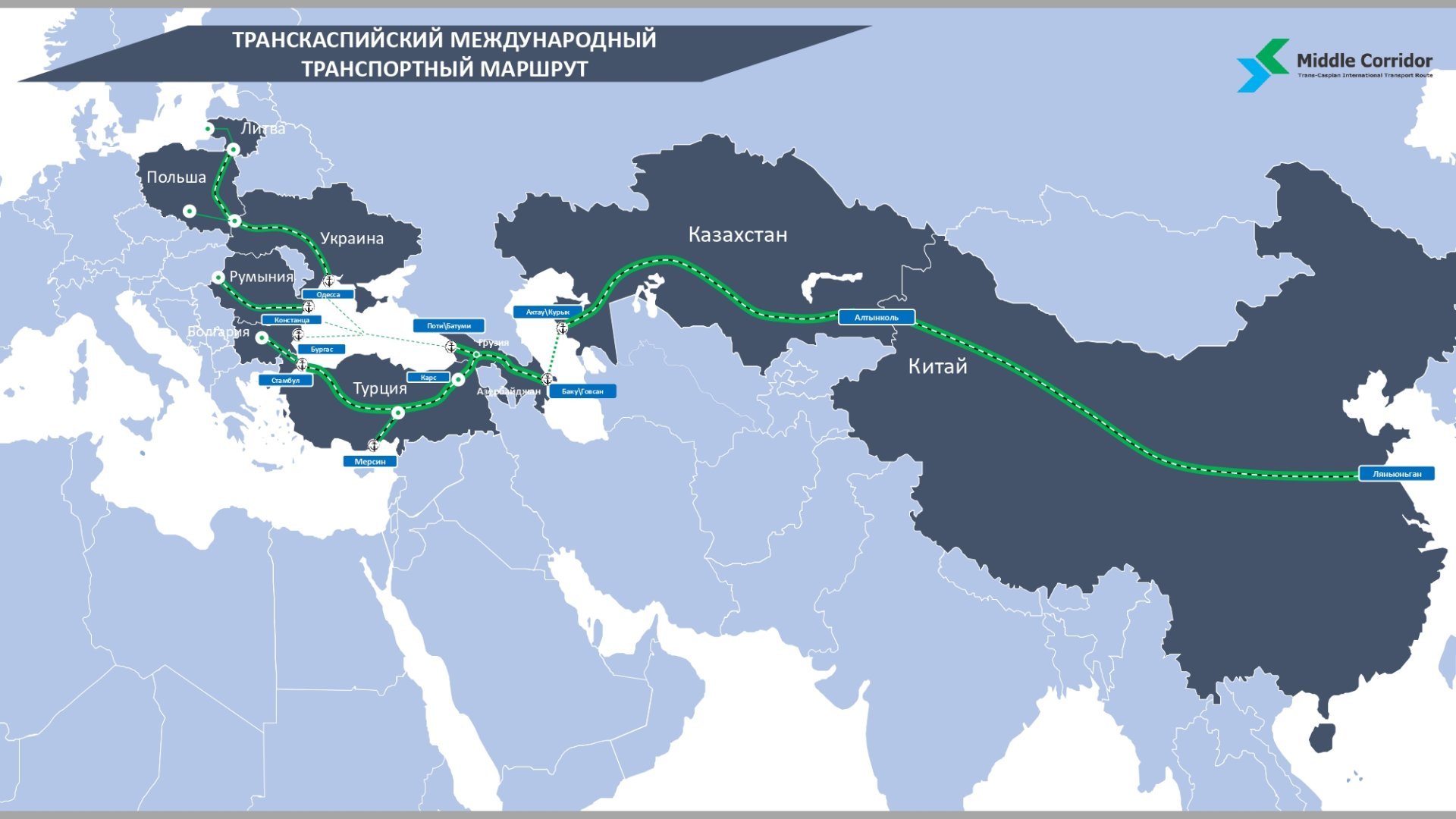

BAKU, Azerbaijan, September 30. Under the leadership of President Shavkat Mirziyoyev, Uzbekistan is steadily pursuing a policy aimed at strengthening its role as a regional transport and logistics hub, with the Trans-Caspian Transport Corridor emerging as a key link connecting Central Asia with the South Caucasus, Türkiye and Europe.
“Trans-Caspian routes linking the region with European countries offer huge opportunities,” President Mirziyoyev noted at the Seventh Consultative Meeting of the Heads of State of Central Asia.
The development of the Trans-Caspian Transport Corridor has become one of the key items on the agenda of the second National Conference on the Trans-Caspian Transport Corridor, being held in Tashkent on September 30. The conference brings together representatives of Uzbekistan’s Ministry of Transport, the European Commission, international financial institutions, development partners and the private sector.
The conference takes place at a significant stage in the corridor’s development. A World Bank assessment published on September 28 found that targeted investments and reforms could more than triple trade volumes along the Trans-Caspian route, halve travel times, and increase the combined GDP of countries along the corridor by 3.3% by 2040. With additional reforms, corridor volumes could potentially quadruple, while travel times could fall by two-thirds.
For Uzbekistan, the corridor is becoming increasingly important as the country seeks to diversify access to international markets and strengthen its role in regional trade. Uzbekistan has a particular interest in reliable multimodal routes that facilitate the movement of export and import cargo to the Caspian Sea, the South Caucasus, Türkiye and European markets.
Uzbekistan's role in the corridor expands
Uzbekistan's role in the Trans-Caspian network has expanded alongside growing trade and transport cooperation with countries along the route.
International freight traffic between Uzbekistan and European countries reached 1.5 million tons in 2025, up 29% from 2024, according to Uzbekistan's Embassy. Cargo transported by Uzbekistan via the Middle Corridor doubled over the five years to reach 1.2 million tons in 2025, while the share of Uzbekistan's cargo turnover with EU countries moving through the corridor increased from 12% in 2021 to 28% by the end of 2025.
The country's cooperation with Azerbaijan is particularly important in this process, as Azerbaijan provides a key Caspian-to-Caucasus link for Uzbek cargo moving westward.
International freight traffic between Uzbekistan and Azerbaijan reached 28,300 tons in January-March 2026, 2.9 times higher than in the same period of 2025. Meanwhile, container traffic under the CASCA+ multimodal route connecting China, Central Asia, Azerbaijan, Türkiye and Europe reached 6,722 TEUs in 2025, up 47% year-on-year.
These figures point to the growing use of the Trans-Caspian network as a practical trade route for Uzbekistan and highlight opportunities for deeper regional integration.
Mirziyoyev's transport strategy expands connectivity
The development of the Trans-Caspian Corridor forms part of Mirziyoyev's broader strategy to modernize Uzbekistan's transport sector and strengthen its position in international logistics.
In September 2026, Mirziyoyev reviewed major transport and logistics projects and set a goal of transforming Uzbekistan into a major hub along the shortest land route connecting the Pacific Ocean with Europe. By 2030, Uzbekistan plans to double the volume of transport services, attract $9.1 billion in investment into the sector and increase transport-service exports to $5.7 billion.
"Creating and integrating digital logistics platforms to improve transport connectivity is important," President Mirziyoyev said following the informal summit of the Organisation of Turkic States.
The strategy combines domestic infrastructure modernization with the development of international transport links. Uzbekistan is modernizing and electrifying railway sections, renewing its freight wagon fleet and developing the China-Kyrgyzstan-Uzbekistan railway.
"Given the strategic role of the Middle Corridor, we are paying great attention to integrating it with the China-Kyrgyzstan-Uzbekistan railway, which is currently under construction," Mirziyoyev said at the informal summit of the Organisation of Turkic States.
At the same time, the country is expanding its logistics presence around key international routes. Uzbekistan is developing logistics infrastructure involving the Aktau, Turkmenbashi and Baku ports on the Caspian Sea and advancing cooperation involving the Black Sea ports of Poti ans Anaklia. Plans to participate in the construction of the Nakhchivan railway are also being considered, potentially creating additional access toward Turkish ports.
Digitalization is another element of the strategy. Uzbekistan is working to develop digital logistics platforms, expand electronic permitting, and improve data exchange and cargo tracking, supporting more efficient cross-border transport.
Together, these initiatives indicate that Uzbekistan's approach to the Trans-Caspian Corridor extends beyond individual railway or road projects, with the broader objective of developing an interconnected transport and logistics ecosystem.
Growing investment supports corridor development
The expansion of the Trans-Caspian network is creating a significant pipeline of investment opportunities in railways, ports, logistics hubs, inland terminals, rolling stock and digital transport systems.
The World Bank estimates that at least $25 billion in physical infrastructure investment could be required along the corridor through 2040, while another $30 billion could support connecting infrastructure and enabling systems, including roads and railways, logistics hubs, inland terminals, rolling stock and digital solutions.
European financial institutions are already supporting Uzbekistan's transport modernization. The European Bank for Reconstruction and Development (EBRD), for example, is providing up to €38.4 million for the digital transformation of Uzbekistan Railways, including traffic and transport management systems and cybersecurity. The project is expected to support more efficient cargo and passenger flows along the Trans-Caspian Corridor.
The EBRD has also indicated its readiness to invest around €1.5 billion in Trans-Caspian Corridor-related infrastructure and transport solutions over a two-to-three-year period.
For Uzbekistan, this growing investment ecosystem creates opportunities to combine domestic transport priorities with international financing and expertise, accelerating the modernization of its logistics infrastructure and strengthening its position within the wider corridor.
Azerbaijan becomes a key western gateway
The development of the Trans-Caspian route is also reinforcing the economic importance of Uzbekistan-Azerbaijan relations.
Bilateral trade reached $307.3 million in 2025, up 14.6%, while trade between the two countries totaled $170.3 million in January-June 2026, an increase of 30.8%, according to Uzbekistan's government. The two countries have set a target of increasing bilateral trade to $1 billion by 2030. Transport connectivity can support this broader economic relationship by facilitating trade and creating new opportunities for businesses in both countries.
Azerbaijan's location on the western shore of the Caspian Sea provides Uzbek exporters with access to the South Caucasus, Türkiye and European markets, while Uzbekistan represents an important Central Asian origin and destination market for cargo moving along the corridor.
Regional cooperation is expanding beyond bilateral ties. In February 2026, railway officials from Azerbaijan, Georgia, Uzbekistan and Turkmenistan discussed expanding freight transportation and digitalization along the Middle Corridor and signed a protocol covering digitalization, freight development and corridor diagnostics.
From transport route to economic platform
The development of the Trans-Caspian Transport Corridor is increasingly creating opportunities that extend beyond the movement of goods. A more integrated corridor can support investment, logistics, industrial development and employment while strengthening trade links between Central Asia and European markets.
For Uzbekistan, this aligns closely with Mirziyoyev's broader transport strategy, which combines railway modernization, logistics infrastructure, digitalization and international connectivity.
The September 30 conference provides another platform for turning these priorities into concrete investment projects and reforms. With the participation of the EU, international financial institutions and private-sector representatives, discussions on infrastructure, logistics, digital documentation, border procedures and investment can contribute to the further development of the corridor.
For Uzbekistan, the Trans-Caspian route is becoming more than just an alternative trade corridor. It is gradually emerging as part of the country’s broader strategy to diversify access to international markets, attract investment and strengthen economic ties with Azerbaijan, which plays a key role in facilitating Uzbekistan’s access to European markets.



