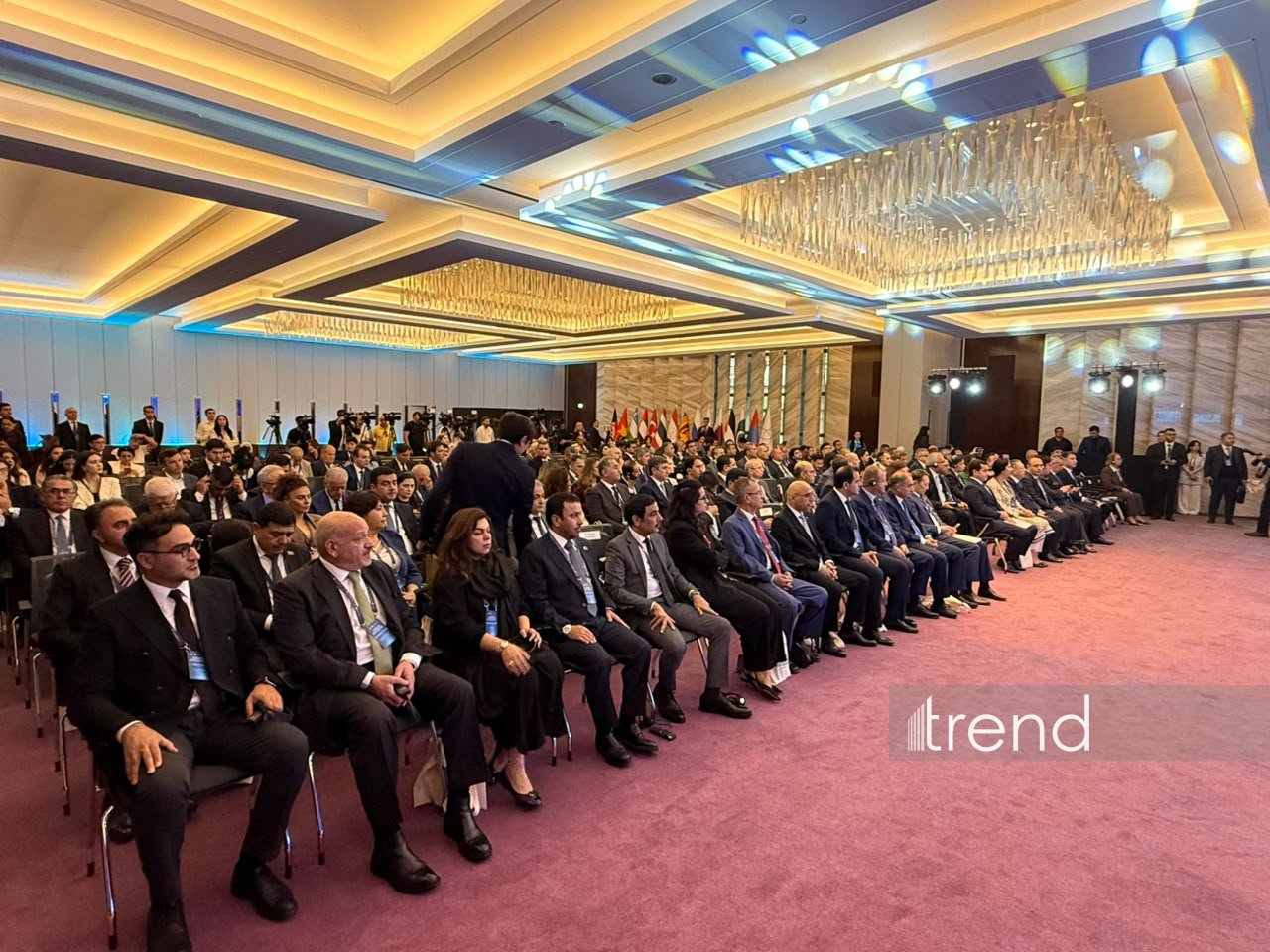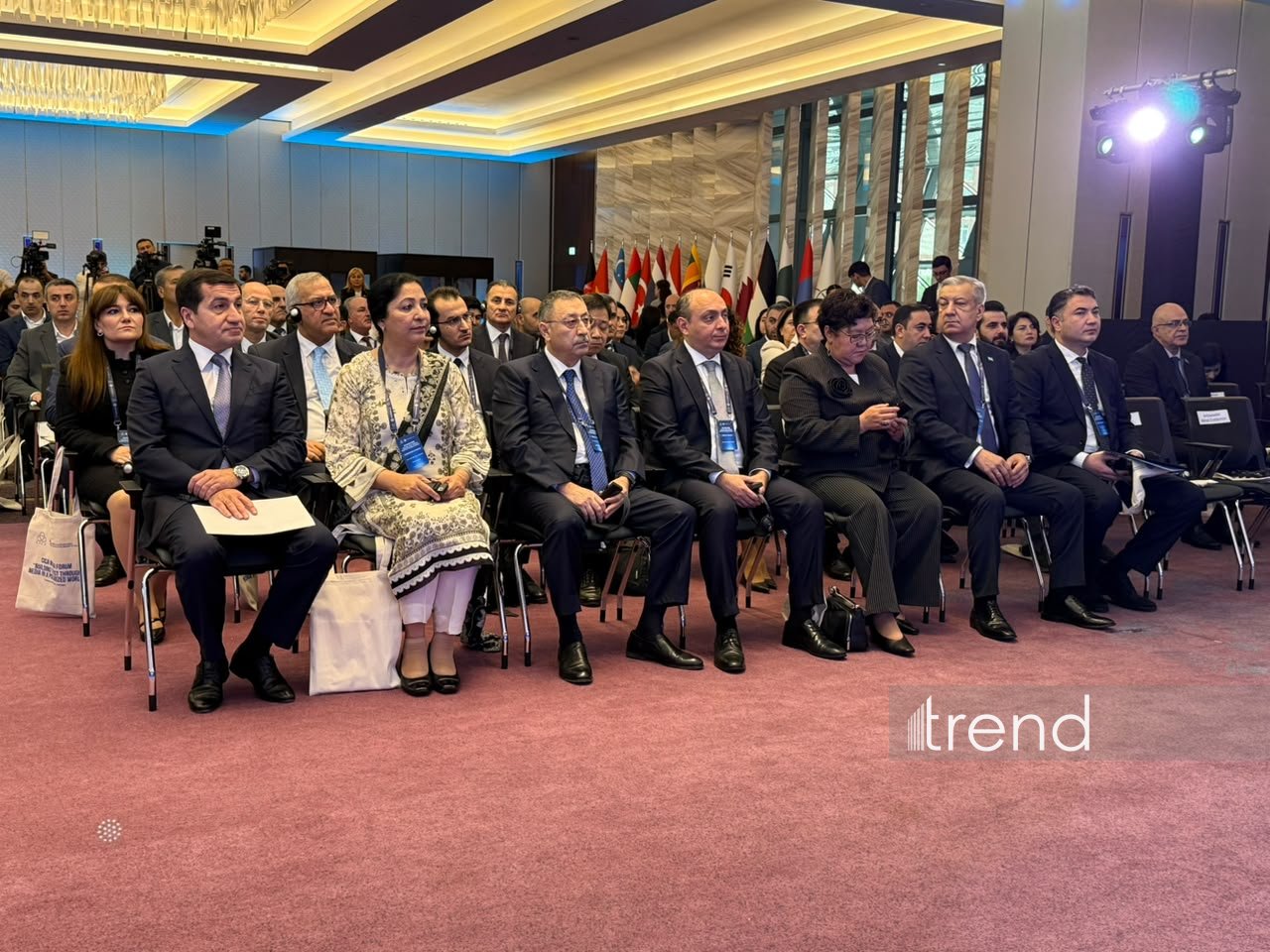

BAKU, Azerbaijan, October 1. The first Media Forum of the Conference on Interaction and Confidence-Building Measures in Asia (CICA) was held in Baku on October 1, Trend's correspondent reports from the event.
The event was organized by the Media and Broadcasting Council of the Republic of Azerbaijan.
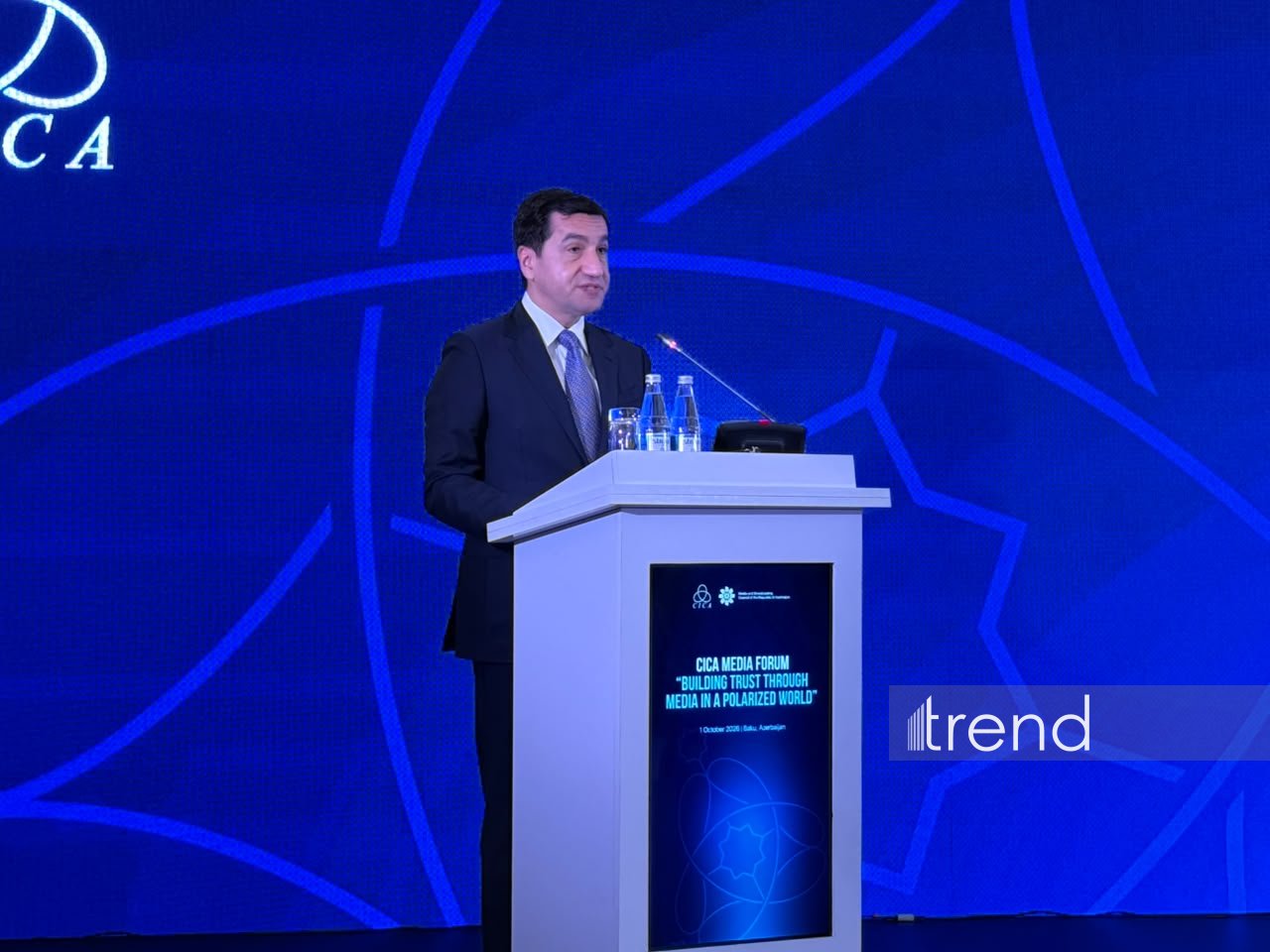
Azerbaijani Presidential Aide and Head of the Foreign Policy Affairs Department of the Presidential Administration Hikmet Hajiyev read out President Ilham Aliyev's address to the forum participants.
The forum, themed “Building Trust through Media in a Polarized World,” brought together representatives of the governments of CICA member states, heads of government bodies responsible for media and communications, media managers and other specialists.
The discussions focused on issues including the responsibility of modern media to provide accurate, reliable and impartial information. Amid the rapidly growing influence of artificial intelligence and social media on the information landscape, the role of media in building trust and the challenges emerging in the information environment were among the key topics.
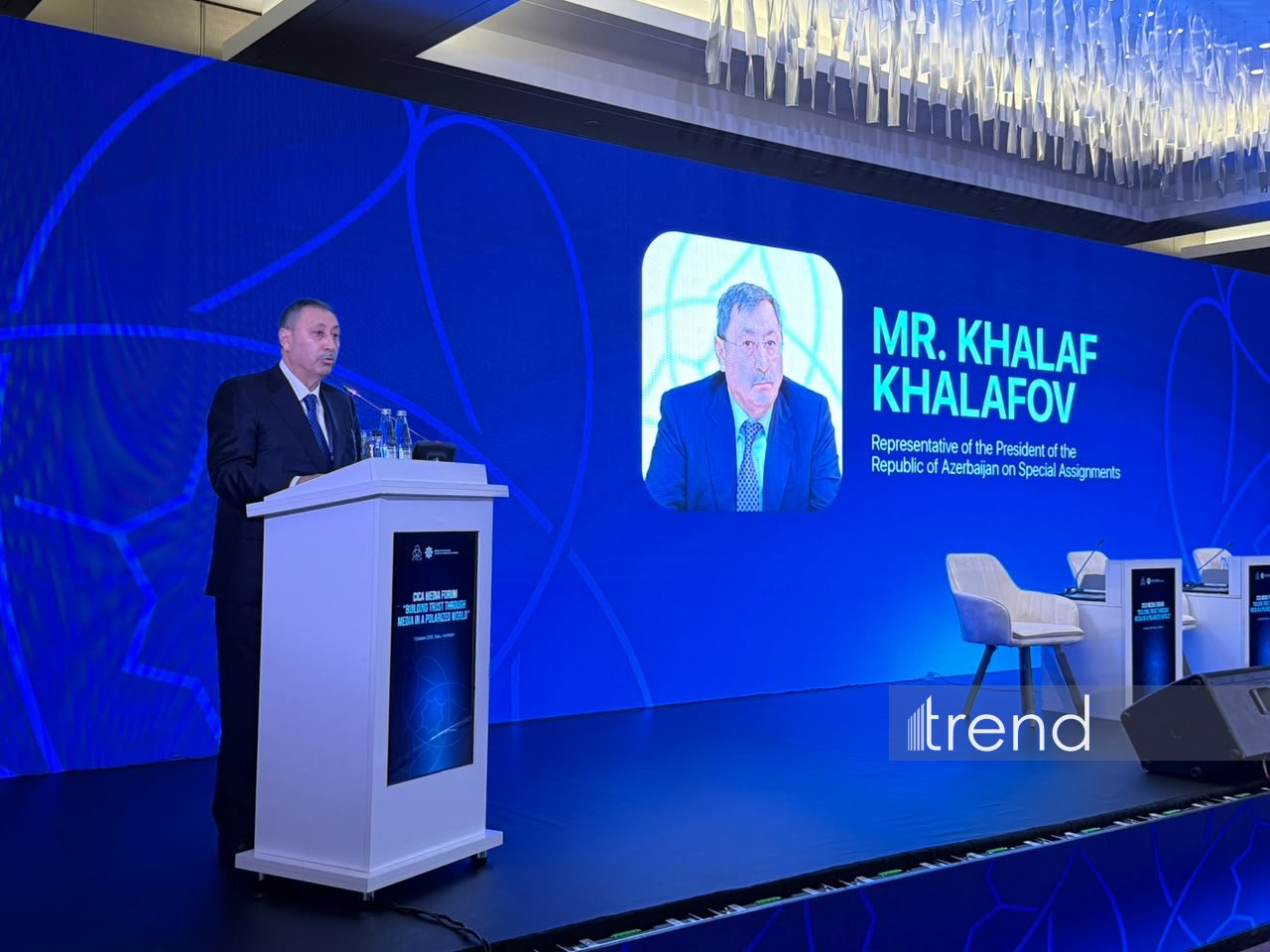
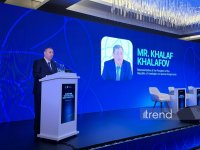
Speaking at the event, Khalaf Khalafov, Special Representative of the President of Azerbaijan, said that signing of the Joint Declaration in Washington on August 8, 2025, and the initialing of the peace agreement demonstrated that, after decades of conflict, it is possible to build trust.
He noted that the system of international relations is currently undergoing a profound transformation. Rising geopolitical tensions and violations of fundamental principles of international law, including sovereignty and territorial integrity, are seriously straining the global security system.
Khalaf Khalafov noted that in addition to terrorism, separatism, extremism, cyber threats, and disinformation, risks related to food, energy, water, and climate security are also global in nature.
“At present, joint efforts aimed at strengthening mutual trust among states, the peaceful resolution of conflicts based on international law, and the cessation of bloody wars ongoing in various regions of the world serve as extremely important goals,” Khalafov said.
He emphasized the need to take joint steps, based on the central role of the UN, to prevent threats aimed at violating the norms and principles of the world order and international law.
“International law remains the only reliable guarantee for establishing and developing a just world order,” Khalaf Khalafov stated.
The presidential representative noted that Azerbaijan had suffered the serious consequences of Armenia’s military aggression for more than 30 years but had restored the country’s territorial integrity and sovereignty based on the norms and principles of international law.
According to him, Azerbaijan thereby ensured compliance with the UN Security Council resolutions on the military conflict.
Khalaf Khalafov noted that, following the Second Karabakh War, the President of Azerbaijan, Ilham Aliyev, proposed to the Republic of Armenia that a lasting peace be established in the region and took all practical steps to advance the peace process.
“Today, it is extremely important that the Republic of Armenia and the Armenian people properly assess their responsibility for this history and take all necessary steps to establish peace based on legal obligations,” he added.
Khalafov noted that CICA is an important platform that promotes open dialogue in Asia based on the principles of consensus and the sovereign equality of states, and that strengthens trust among countries and fosters multilateral cooperation.
He noted that during its chairmanship of CICA, Azerbaijan made a significant contribution to human capacity development, the transformation of the forum into an international organization, and the expansion of sectoral cooperation, as well as to strengthening trust and cooperation within the CICA region.
Khalaf Khalafov noted that during his chairmanship, the CICA Women’s Council and the CICA Finance Committee were established, and a partnership network of leading universities from CICA member states began operating.
According to him, discussions were held on the updated draft text of the CICA Charter, and high-level consultations are continuing as part of the organization’s transformation into an international body.
The Special Representative of the President of Azerbaijan noted that during this period, large-scale events were held in the areas of economic cooperation, climate and water security, empowering women and youth, education, media, tourism, transportation, logistics, and analytical dialogue.
“These events have created the conditions for fostering a more dynamic, inclusive, and results-oriented environment for cooperation within the CICA framework,” said Khalaf Khalafov.
He emphasized that Azerbaijan will continue its efforts to strengthen mutual trust and multilateral cooperation within the CICA framework.
Khalaf Khalafov noted that the 7th CICA Summit will take place on October 15 in Baku.
“I am confident that today’s discussions will enrich our common agenda with new ideas ahead of the summit and will also contribute to further strengthening relations between media organizations of member states,” he said.
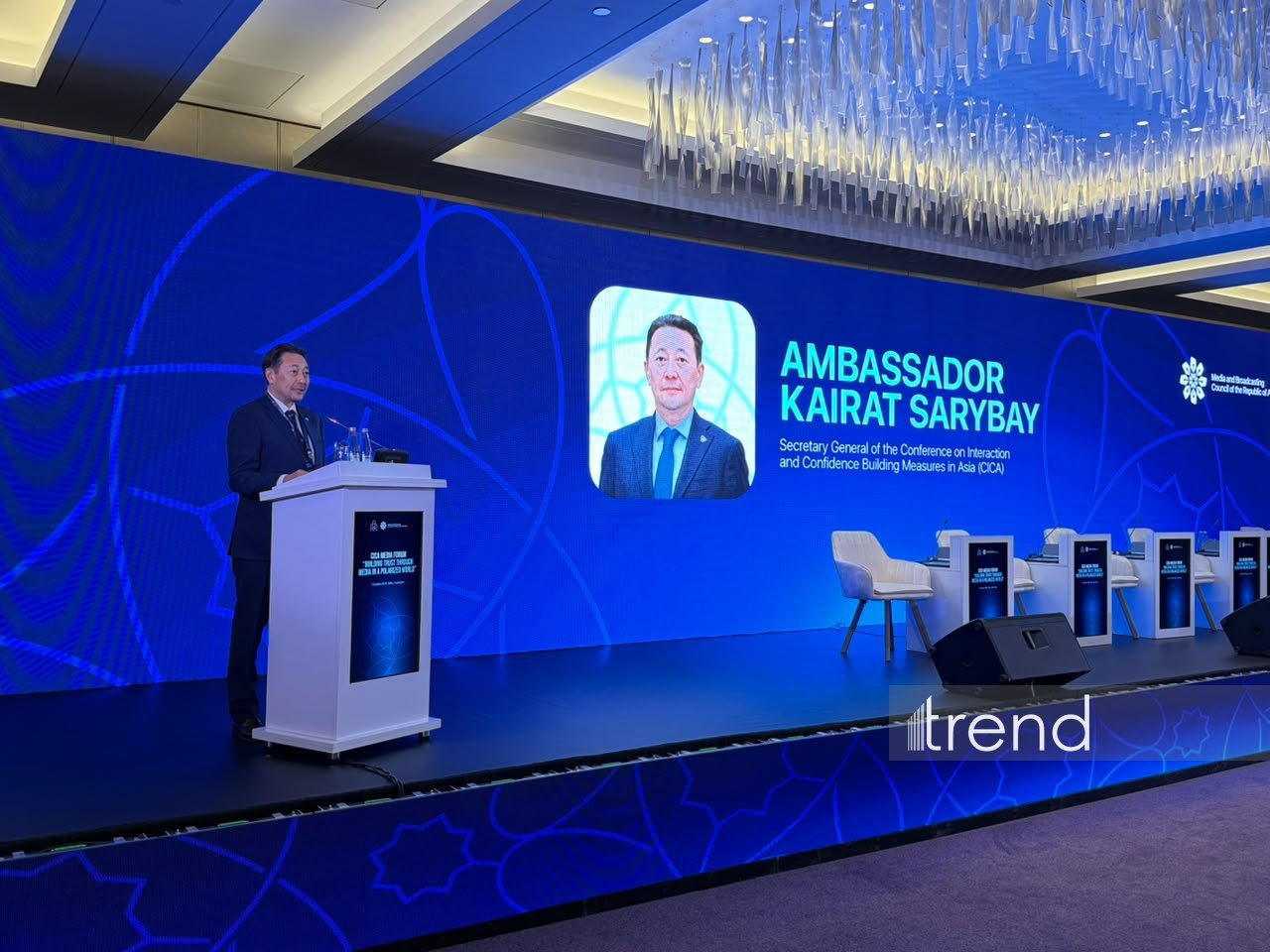
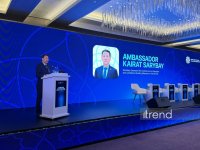
In turn, Secretary General of the Conference on Interaction and Confidence-Building Measures in Asia (CICA) Kairat Sarybay said that rapid information flows amid digital transformation can bridge differences between societies or deepen misunderstandings.
He said changes in the information sphere have a direct impact on international relations.
“In a world increasingly shaped by geopolitical tensions, economic uncertainty and climate pressures, digital transformation is rapidly changing how societies access and interpret information,” the CICA Secretary General said.
According to Sarybay, promoting constructive and fact-based dialogue is becoming a global priority under these circumstances.
He emphasized that a sustainable world can be built on a foundation of trust and cooperation.
“Global goals require regional action. Regional efforts show their true value when they deliver practical and coordinated solutions that reinforce the broader UN system. Implementing regional solutions is precisely the work that CICA does,” he said.
The CICA Secretary General noted that the organization, which brings together 28 member states, serves as an inclusive platform for dialogue across Asia. According to him, the principles of sovereign equality and consensus enable countries with diverse national experiences to find common ground.
“Finding common ground and building partnerships starts with trust. Trust turns dialogue into practical cooperation. Trust is built through consistent engagement and the experience of working together,” Sarybay said.
He said CICA strengthens trust through concrete confidence-building measures in the military-political, new challenges and threats, economic, environmental and humanitarian dimensions.
Sarybay noted that important results had been achieved in expanding practical cooperation within CICA during Azerbaijan's chairmanship.
According to him, CICA has evolved from a dialogue platform into an institutional mechanism for practical cooperation in Asia, with hundreds of initiatives implemented and a broad network of professional ties established across the region.
The CICA Secretary General also emphasized that cooperation across different areas complements one another. He noted that education increases economic participation, digital connectivity expands access to knowledge, while environmental cooperation contributes to protecting people's health and social well-being.
He said the CICA Women’s Council, established at Azerbaijan's initiative during its chairmanship, has contributed to expanding women's participation in public life, professional development and entrepreneurship opportunities.
The Secretary General also highlighted the important role of young people in regional cooperation. He cited an event held in Baku at the initiative of ADA University focused on digitalization and strengthening research capacity as an example in this regard.
Sarybay noted that CICA's advisory platforms, including the Business Council, Finance Summit, CICA Fund, Think Tank Forum and Council of Eminent Persons, also contribute to developing cooperation across various areas.
He emphasized the importance of expanding ties between the media and various CICA institutions to help bring the organization's activities to wider audiences.
“Bringing media representatives and CICA institutions together creates a unique opportunity to turn experience into clear news content relevant to the region,” the Secretary General said.
Sarybay also said cultural understanding and direct people-to-people contacts play an important role in building sustainable trust.
He cited the “Tales of Asia” collection, which brings together stories and folklore from CICA member states, as an example. He said the collection, published in Arabic and Kazakh in 2025, is being presented this year in Azerbaijani and Chinese.
The Secretary General noted that each new edition provides children and young people with an opportunity to learn about the traditions and values of neighboring societies.
“This is a practical contribution to cultural understanding,” he added.
Sarybay said deeper cooperation among CICA member states should be accompanied by expanded ties among media professionals.
According to him, the Media Forum's agenda includes such important issues as the responsibility of the media in the age of artificial intelligence and the role of journalism in social solidarity and cultural understanding.
Deputy Minister of Digital Development and Transport Sameddin Asadov said that Azerbaijan is preparing specialized training programs on personal data protection for member states of the Conference on Interaction and Confidence-Building Measures in Asia (CICA), as well as initiatives on sustainable transportation infrastructure and eco-friendly mobility.
He noted that during Azerbaijan’s chairmanship of the CICA, special attention was paid to developing cross-sectoral cooperation in the areas of economic development, digital systems, transportation networks, and environmental sustainability.
Sameddin Asadov emphasized that communication development and digitalization are among the main priorities of Azerbaijan’s chairmanship of the ACGEM.
According to him, Azerbaijan, as the lead coordinator of the CICA
initiative to build trust in the development of safe and efficient
transport corridors, believes that sustainable, modern, and
environmentally friendly corridors are vital for economic
integration in Asia and for deepening ties among nations.
The Deputy Minister stated that throughout 2025, the Ministry of Digital Development and Transport brought together CICA member states in four key areas.
He noted that these areas include the development of a data protection system, the exchange of operational expertise in cybersecurity, the expansion of knowledge sharing on the digitalization of transport corridors, and the acceleration of digital transformation and innovation.
According to Sameddin Asadov, forums, seminars, and conferences were held in CICA member states on these topics, focusing on strengthening data protection, exchanging cybersecurity expertise, the digitalization of transport corridors, and digital transformation and innovation.
He noted that these events were attended by representatives of government agencies, regulatory bodies, logistics operators, and the technology sector, which created opportunities for direct dialogue and practical partnerships.
The Deputy Minister emphasized that work in this area will continue in 2026.
Sameddin Asadov stated that work in this area is planned to continue until the end of the year.
“The Ministry of Digital Development and Transportation is developing initiatives aimed at sustainable transportation infrastructure and eco-friendly mobility, as well as specialized training programs on personal data protection,” he noted.
The deputy minister emphasized that these measures are not isolated events. According to him, they are steps leading to the creation of a long-term institutional mechanism for developing national capacity.
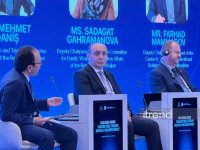
Chairman of Türkiye's Radio and Television Supreme Council (RTÜK), Mehmet Daniş, said measures to build trust among CICA member states form the basis of cooperation within the organization.
According to him, mutual trust and dialogue can guide member states in addressing existing challenges. The discussions in Baku also highlight the responsibility of the media in creating an environment of trust.
Daniş said Türkiye's cooperation within CICA is also aligned with the country's “Asia Anew” initiative. According to him, the approach is aimed at deepening cooperation with regional partners based on mutual benefit and common priorities.
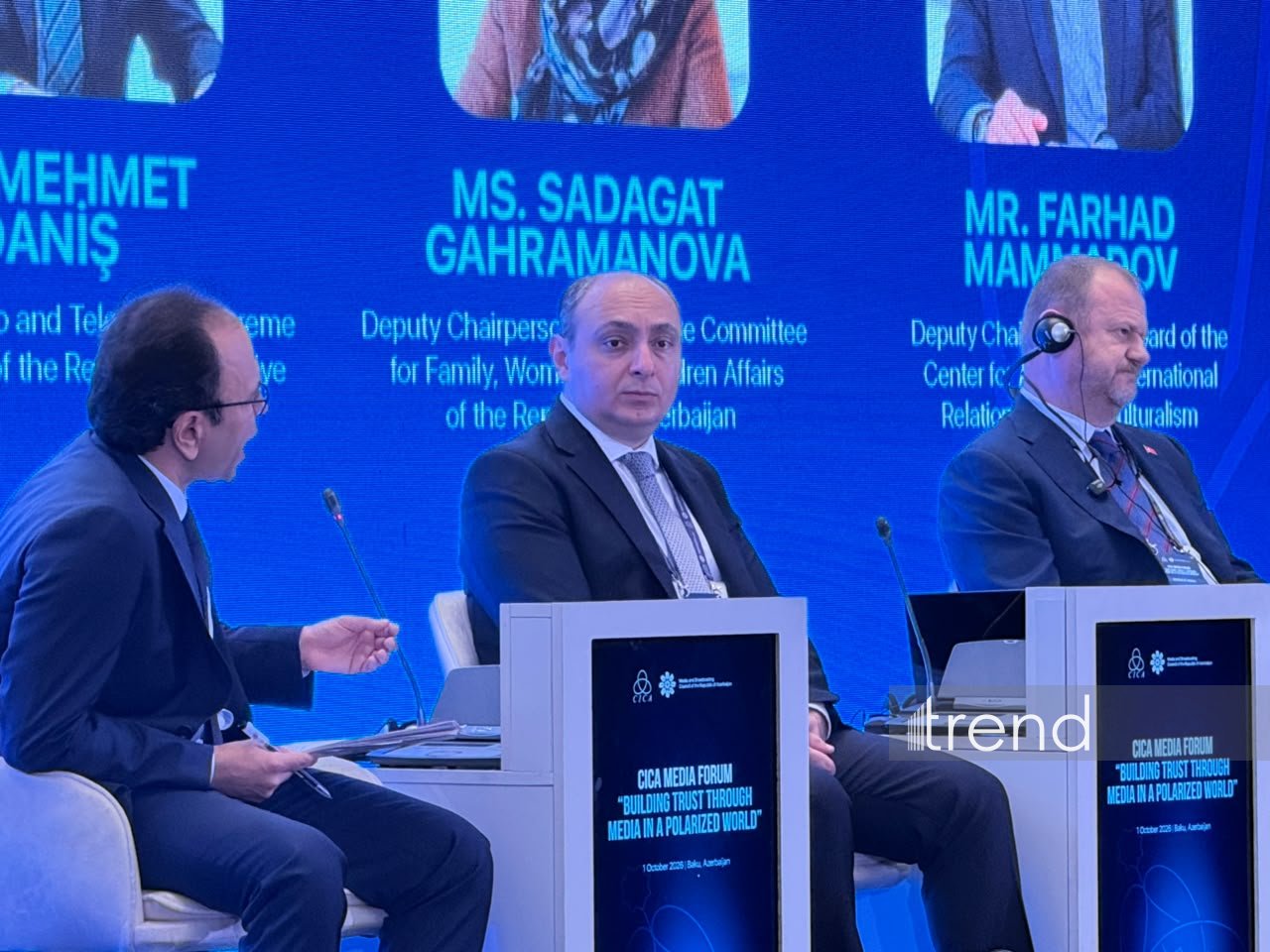
Deputy Chairperson of the State Committee for Family, Women and Children Affairs Sadagat Gahramanova emphasized that modern technologies, social networks and artificial intelligence have significantly changed the role of the media.
She said that while the rapid spread of information in the digital environment creates opportunities for new connections, it also increases the responsibility of the media and information sources. According to her, building trust requires not only providing reliable information but also creating a safe, inclusive and responsible digital environment.
Gahramanova noted that digitalization creates new opportunities for women and girls in education, employment, entrepreneurship and public participation. She stressed the importance of eliminating disparities in access to digital opportunities and skills and enabling women to become active participants in the digital economy, innovation and information environment.
The deputy chairwoman also emphasized the importance of combating online gender-based violence and discrimination and ensuring digital security. She said that during Azerbaijan's CICA chairmanship, important initiatives were put forward to increase the role of women in sustainable development and public life, with the establishment of the CICA Women's Council being an important step in this regard.
Deputy Chairman of the Boards of the Center for Analysis of International Relations and the Baku International Multiculturalism Centre, Farhad Mammadov, said the importance of regional organizations is growing amid global instability and a crisis in the international security system.
According to him, the increase in wars and the deepening of unresolved conflicts are affecting trade routes and increasing the risks of confrontation. As sanctions and other geopolitical factors also affect global trade, countries are seeking to make greater use of regional organizations to create a safer and more predictable regional environment.
Mammadov noted that the Asian direction holds a special place in Azerbaijan's foreign policy. According to him, Azerbaijan's restoration of its territorial integrity and sovereignty has created new opportunities for expanding the country's participation in regional cooperation formats in Asia.
He said Azerbaijan's CICA chairmanship for 2024–2026 demonstrates the country's responsible approach to regional cooperation. During its chairmanship, initiatives have been put forward to strengthen CICA's institutional development and connectivity, promote environmental sustainability, establish permanent institutions and increase the organization's international visibility.