


BAKU, Azerbaijan, November 28. Iranian official representatives have recently made serious statements regarding the country's economic challenges. This implies that the situation in Iran has reached a somewhat critical stage, necessitating the population's adaptation to the current circumstances.
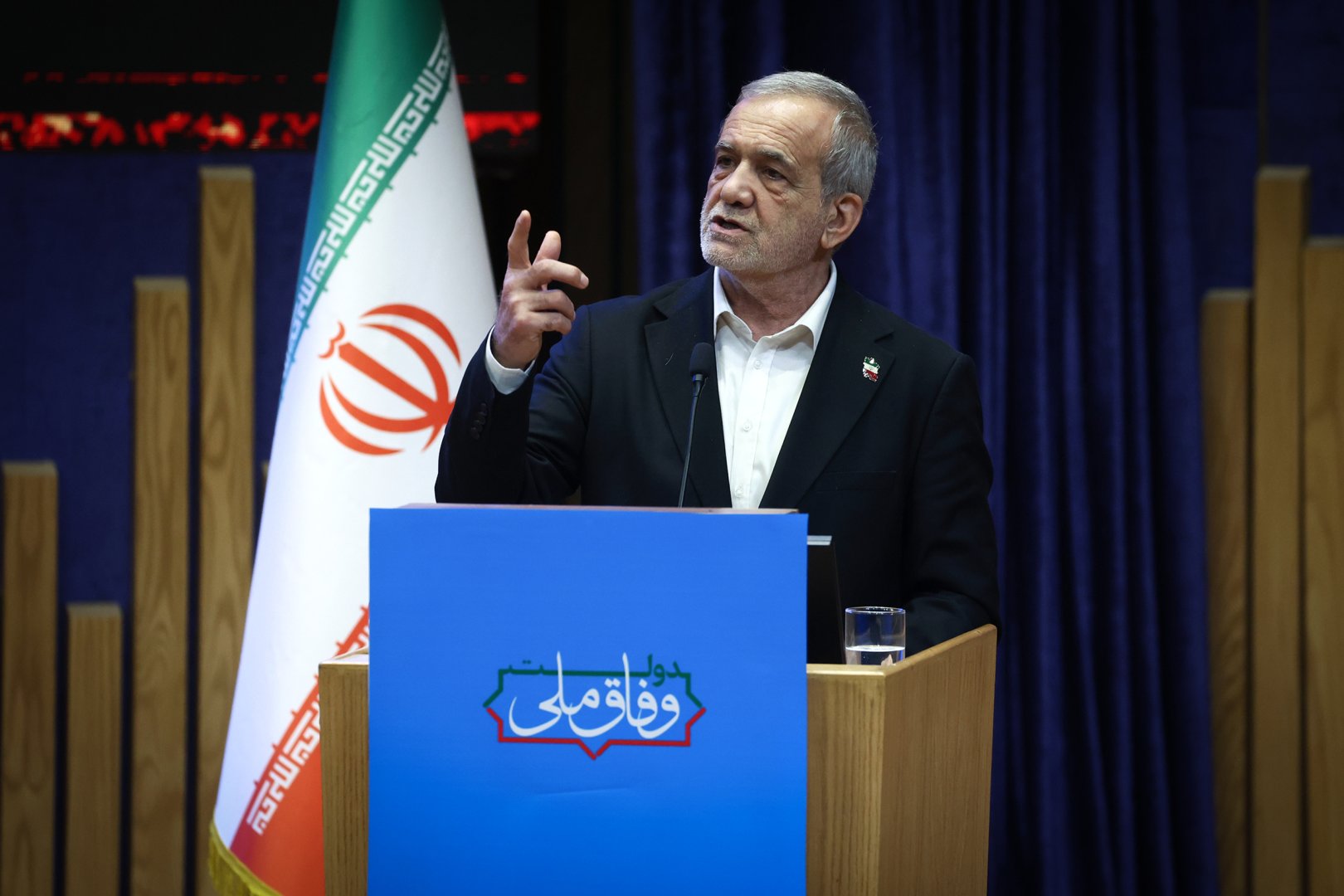
Over the past few days, while visiting the Razavi Khorasan Province in northeastern Iran, President Masoud Pezeshkian has, in several speeches, drawn attention to these economic issues, calling for national unity and urging the public to practice frugality.
For example, in a televised address to the public from Razavi Khorasan Province yesterday, the Iranian President noted that the options available to compensate for disruptions in the country's maritime trade are limited.
Pezeshkian stated that 75–80% of Iran's trade is conducted via maritime routes, emphasizing that shifting such a volume of trade to alternative channels is no easy task.
He pointed out, however, that nearly 50% of the lost capacity has already been recovered through alternative means, and that efforts to identify further alternatives to restore the remaining lost capacity are ongoing.
The President of Iran noted the necessity of strengthening the country's capacity to sustain trade and meet its needs by leveraging the potential of neighboring countries and developing railway and road infrastructure.
“Supporting low-income families in the face of rising living costs is of great importance. To date, the government has allocated 8.5 quadrillion rials (approximately $4.34 billion) through the implementation of a commodity voucher scheme, intended to help offset the price increases of essential goods, such as wheat, barley, rice, tea, and cooking oil. This support covers both the provision of essential goods and access to healthcare services, as the government strives to improve the situation of low-income families. Despite these measures, the country’s revenues have declined; existing restrictions on oil sales and foreign trade have contributed to a reduction in government income,” he stated.
Spokesperson for the Iranian government, Fatemeh Mohajerani, noted during a press conference in Tehran that wartime conditions have led to an increase in inflation and production costs within the country. She noted that the war carries two clear implications: inflation and economic stagnation. The country is currently embroiled in a full-scale war. Wartime conditions, trade restrictions, and rising logistics costs are exerting significant pressure on the national economy.
The severity of the economic situation is further underscored by data from the Statistical Center of Iran, which indicates that the annual inflation rate, measured up to October 22, 2026, reached 76.8% compared to the same prior period.
Overall, it cannot be said that there is a clear outlook for the development of Iran’s economy and trade at present. Supporting domestic production requires the import of goods, strengthening imports requires the export of goods, and boosting exports requires access to various markets. Currently, the naval blockade imposed on Iran in the south, around the Strait of Hormuz, is dealing a severe blow to the country’s exports. Having robust infrastructure at the country’s border crossing points is considered a fundamental prerequisite for increasing trade, specifically the import and export of goods, with countries that share land borders. The lack of substantial infrastructure at the border crossings with neighboring countries acts as a barrier to the growth of trade.


