


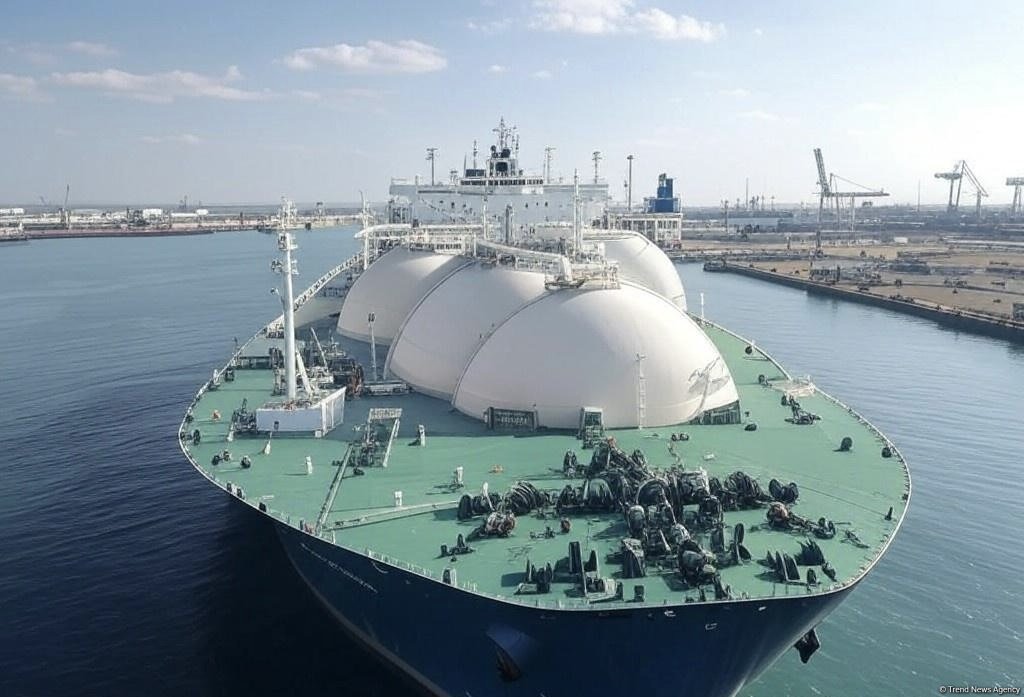

BAKU, Azerbaijan, June 23. A new analysis by the Oxford Institute for Energy Studies (OIES) outlines the potential global consequences of a sustained closure of the Strait of Hormuz on LNG supply and pricing, warning of significant disruptions across Asia and Europe, Trend reports.
According to the report, a full-year disruption would reduce global LNG supply by approximately 86 billion cubic meters (bcm), or 15% of projected 2024 levels. The Middle East alone would see a 110 bcm drop in exports, with limited volumes from Qatar still assumed to reach Kuwait.
Europe would bear the brunt of the supply loss, with 30 bcm of LNG displaced. Asia — including China, India, Japan, South Korea, and Taiwan — would also face major shortfalls. While new capacity from Australia and North America could offset some of the lost supply, the diversion of U.S. LNG to Asia would further tighten the European market.
Gas demand is forecast to fall by just 43 bcm globally, only half the decline in LNG supply. The shortfall in Europe and China would be partially covered by storage withdrawals and, in Europe’s case, potentially increased pipeline flows from Russia and Azerbaijan via Türkiye. The report notes that this scenario could force the EU to reconsider planned restrictions on Russian energy imports.
A sustained disruption would also trigger sharp price spikes. Under OIES’s modeled scenario, spot LNG prices would surge to nearly $29 per MMBTU in Europe and Japan, up 170% from the baseline of $11 per MMBTU. Prices in Central and Eastern Europe could exceed $30 per MMBTU due to restricted supply reaching landlocked markets.
While the Strait’s closure remains unlikely, OIES warns that the scenario underscores the vulnerability of global LNG markets to geopolitical shocks in the Gulf.


