


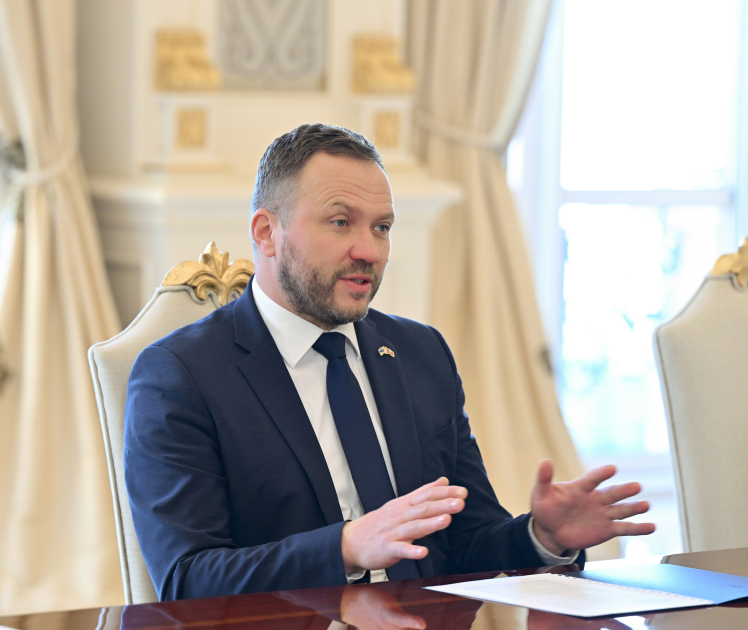

BAKU, Azerbaijan, November 28. The development of the Middle Corridor has the potential to create new economic opportunities for businesses, Estonian Minister of Foreign Affairs Margus Tsahkna said in an exclusive interview with Trend, as he visited Baku on November 27.
The foreign minister noted that Azerbaijan is a strategically important partner for Estonia and for Europe more broadly.
“Due to its geographic location, Azerbaijan plays a key role in
strengthening connectivity between Europe, the South Caucasus and
Central Asia.
The development of the Middle Corridor has the potential to
diversify trade routes, improve supply-chain resilience and create
new economic opportunities for businesses across our regions. As a
member of the European Union, Estonia welcomes initiatives that
strengthen cooperation between the EU and Azerbaijan and enhance
regional connectivity,” Tsahkna added.
The Middle Corridor, also known as the Trans-Caspian International Transport Route, is a transport and trade route connecting Asia and Europe through Central Asian countries, the Caspian Sea, Azerbaijan, Georgia, and Türkiye.
The route begins in China and passes through the countries of Central Asia, then crosses the Caspian Sea and, via Azerbaijan, Georgia, and Türkiye, reaches Europe. The Middle Corridor is viewed as an alternative route to the traditional Northern and Southern transport corridors, providing a link between the eastern regions of Asia, including China, and European markets.


