


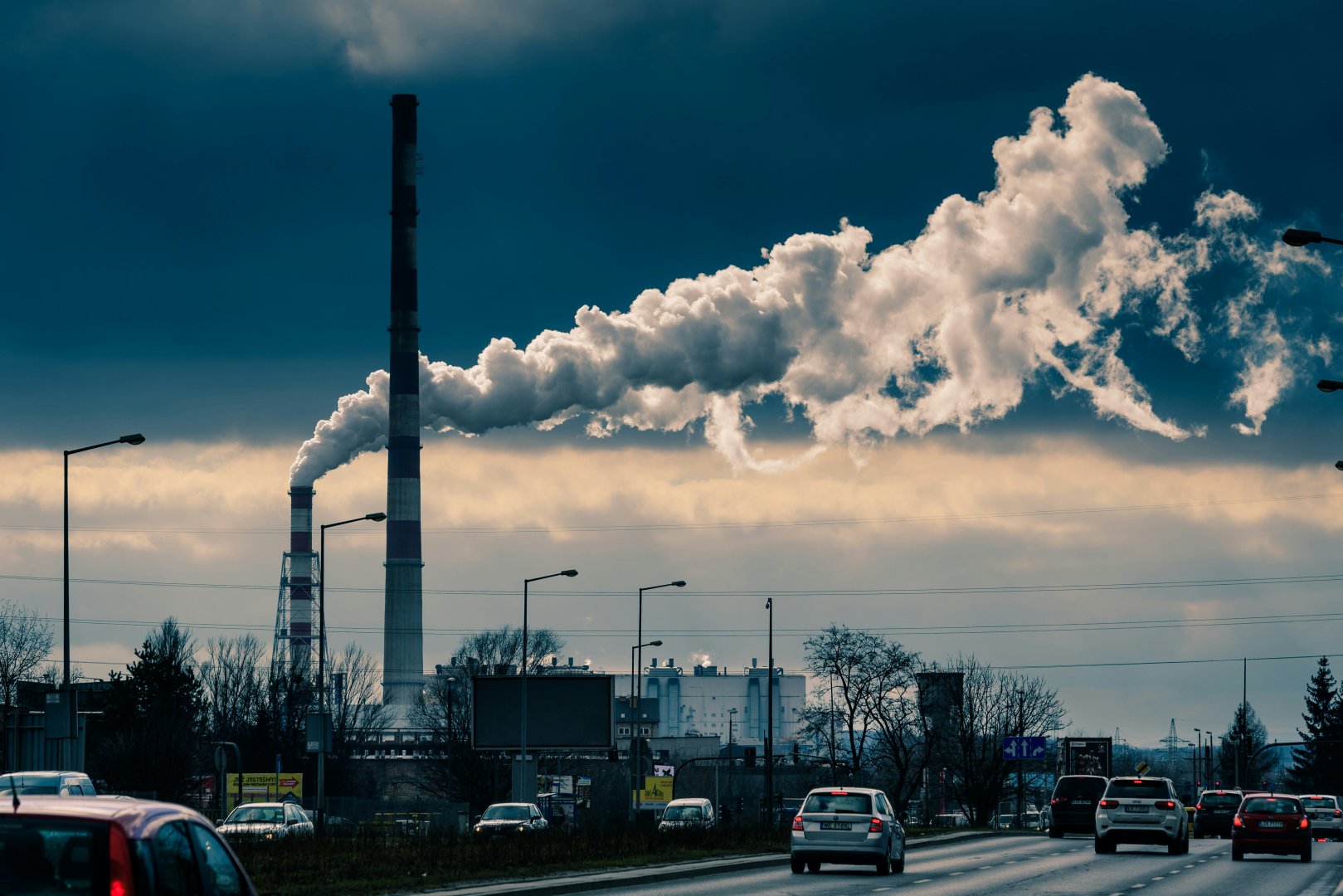

BAKU, Azerbaijan, October 2. Reducing methane emissions in Turkmenistan is gradually becoming part of the practical work carried out across the country's oil and gas infrastructure. The latest results of the country's cooperation with the UN Environment Programme (UNEP) show how this work is moving from identifying individual emission sources to actually eliminating them and keeping them under subsequent monitoring.
As UNEP told Trend in an exclusive interview, Turkmenistan has already eliminated emissions at eight sources located on pipelines, wells and flares. According to the organization's estimates, before the work was carried out, these sources had emitted a combined total of more than 27,000 tons of methane - an environmental impact comparable to that of more than 500,000 passenger cars driven for a year.
The causes varied: leaks stemmed from corrosion in sections of gas flowlines, unlit flares at gas wells, and issues related to well integrity and equipment. After the emissions were eliminated, UNEP carried out follow-up verification using high-resolution satellite data, which found no recurrence of the previously recorded emissions.
It is precisely this sequence - detection, mitigation, verification of results and continued monitoring - that turns methane management into a measurable process. A source is considered mitigated only once subsequent satellite observations confirm that the previously detected emissions are no longer occurring.
For the gas industry, this approach carries clear practical weight. As production and infrastructure expand, controlling leaks becomes a matter of how precisely the industry is able to manage its own production processes and confirm the results it achieves.
Turkmenistan's efforts to curb methane emissions are unfolding against another important backdrop: the country is simultaneously expanding its engagements tied to future growth in natural gas production and exports. Against this background, emissions control is gradually taking on added significance for the infrastructure meant to support additional supply volumes.
One of the most concrete tracks in this respect remains the Turkmenistan-Afghanistan-Pakistan-India (TAPI) gas pipeline project. In September, Turkmenistan's Ambassador to Pakistan, Atajan Movlamov, said Ashgabat expects to create the conditions for gas supplies to Pakistan via the pipeline to begin in 2027. According to him, construction of the Turkmen-Afghan section between Serhetabat and Herat is scheduled for completion by the end of 2026.
TAPI, however, is not being considered in isolation from the expansion of the resource base. In late September, it was announced in Turkmenistan that the fourth phase of development at the Galkynysh field envisages building capacity to process an additional 10 billion cubic meters of marketable gas per year. Official materials directly link the project to the expansion of the country's export potential.
Another existing export channel is also being prepared for increased volumes. In March, the chairman of Turkmenistan's Halk Maslahaty (Parliament), Gurbanguly Berdimuhamedov, said that as of March 1, 2026, approximately 460 billion cubic meters of gas had been supplied to China via the Turkmenistan-China pipeline. "We are currently working together to increase gas export volumes to 65 billion cubic meters per year," he said.
Finally, Ashgabat continues to reaffirm its interest in the western direction as well. In April, Turkmenistan's Foreign Minister Rashid Meredov said that natural gas supplies to Europe are among the key priorities of the country's energy policy. He recalled that work had previously been carried out on delivering Turkmen gas to Europe across the Caspian Sea.
Practical interest in this direction has also surfaced in contacts with Azerbaijan. Earlier, the editor-in-chief of the newspaper Türkmen Dünýäsi, Batyr Muradov, told Trend in an interview that Turkmenistan is considering the possibility of exporting gas to Europe via Azerbaijan.
At the same time, the work on methane emissions fits within the broader principles that Turkmenistan has been articulating in recent years with regard to the development of its economy and energy sector - namely, the rational use of resources, the adoption of modern technologies and a gradual transition toward a "green" economy.
The technical dimension here is of fundamental importance. The eight sources identified by UNEP were tied to specific elements of gas infrastructure - pipelines, wells and flares. Eliminating them means not merely cutting emissions into the atmosphere, but achieving more precise management of gas at production facilities.
This approach aligns well with the circular-economy course that Turkmenistan has declared. In 2024, President Serdar Berdimuhamedov proposed developing a Global Framework Program for the transition to a circular economy. In July 2026, the Turkmen side once again identified the shift toward a closed-loop economy as one of the directions of sustainable development, linking it to the rational use and renewal of resources, the adoption of "green" technologies and the reduction of emissions.
In this sense, reducing methane emissions can be seen as one of the applied elements of this same logic. The less gas that is lost during production, treatment and transportation, the greater the share of the resource produced that remains available for further use or export. For a major gas industry, this is simultaneously a matter of environmental control and of using raw materials efficiently.
It is notable that this environmental agenda is developing in parallel with the expansion of gas infrastructure. In his address to participants of Turkmenistan's Investment Forum on October 1, Serdar Berdimuhamedov noted that construction of the Turkmen-Afghan section of the TAPI pipeline is continuing. The president described the Serhetabat-Herat section as "a key link in one of the largest and most significant projects for the region."
In the same address, the head of state also linked investment policy to the adoption of modern technologies and the principles of a "green" economy. This approach shows that, in the official agenda, the development of export-oriented gas infrastructure and environmental objectives are treated as running in parallel, rather than as mutually exclusive directions.
Overall, reducing methane emissions in Turkmenistan is becoming one of the elements of President Serdar Berdimuhamedov's course toward improving the efficiency of the country's gas resource use - and, according to UNEP, this work is already delivering concrete results.



