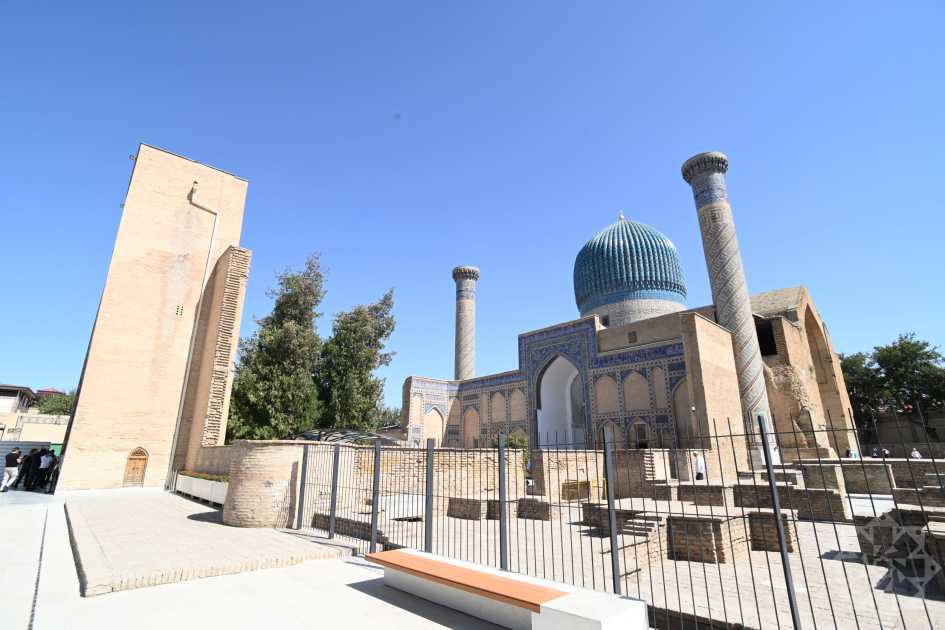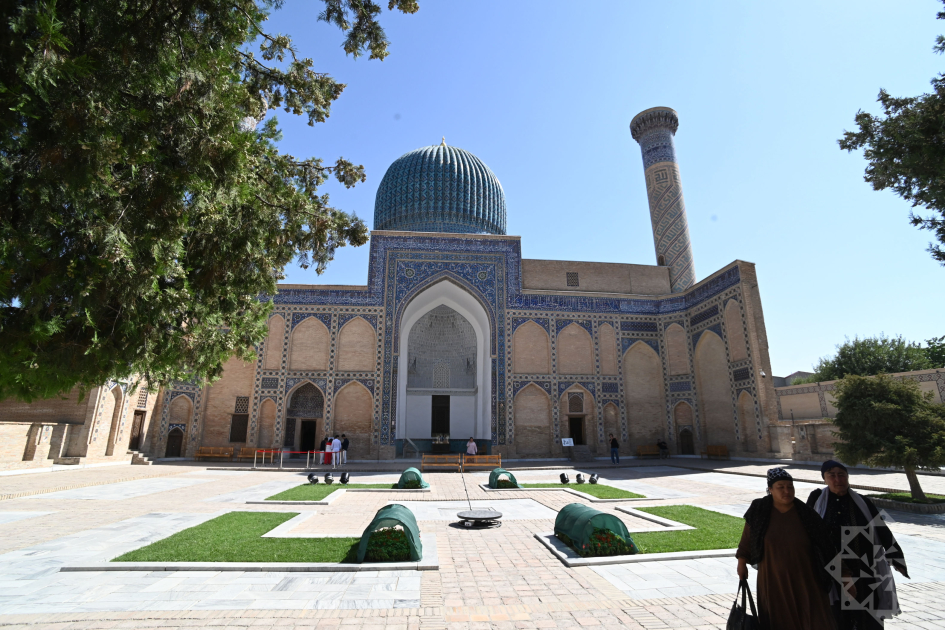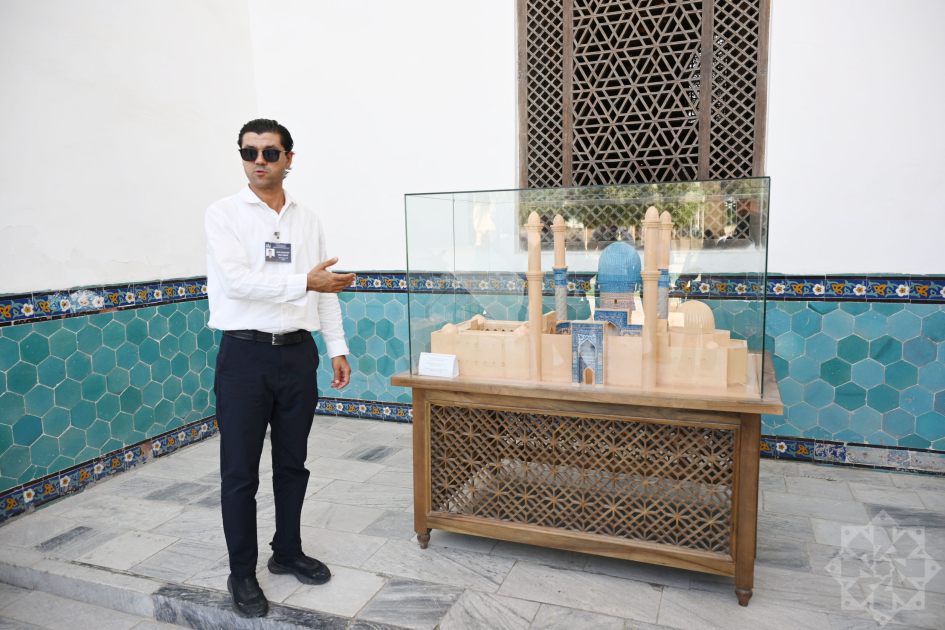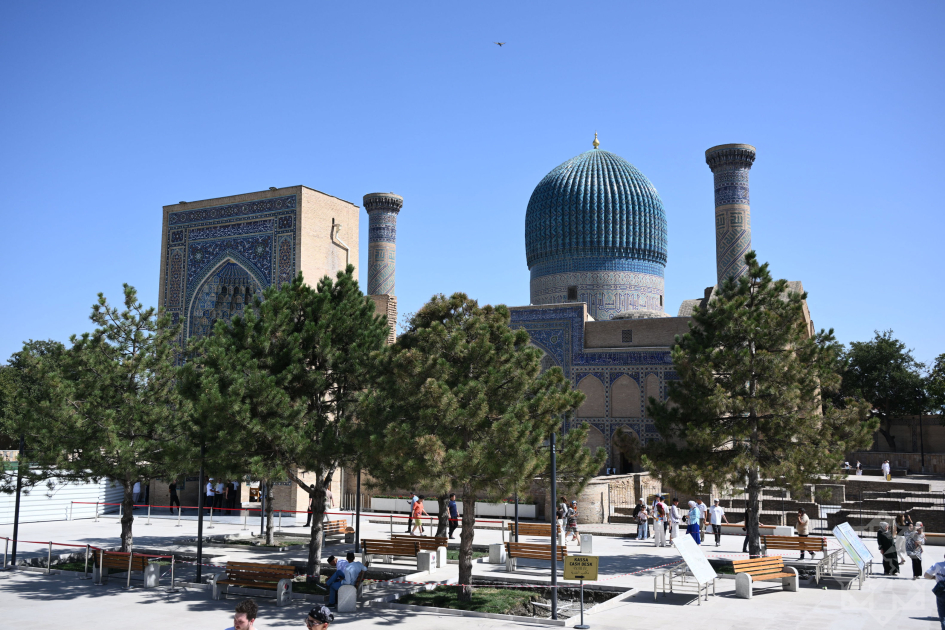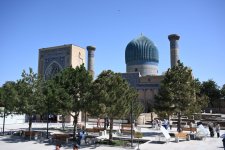
BAKU, Azerbaijan, August 20. The Gur-e-Amir Mausoleum in Samarkand is one of the city’s most renowned architectural landmarks. It houses the tomb of Amir Timur (Tamerlane) and members of the Timurid dynasty.
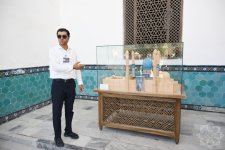
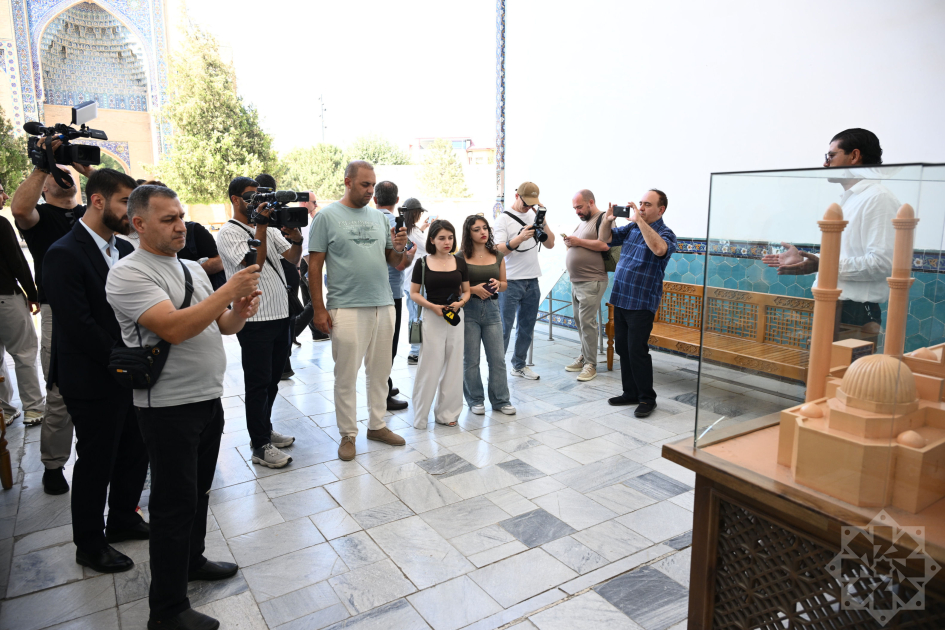
Azerbaijani journalists visiting the mausoleum as part of a press tour were told that the name Gur-e-Amir translates from Persian as “Tomb of the Emir.”
Twenty representatives from Azerbaijan’s leading media outlets are participating in the press tour. Among the participants is Emin Aliyev, editor-in-chief of the Trend International News Agency.
The architectural complex began taking shape in the early 15th century at the initiative of Amir Timur’s grandson Muhammad Sultan. Initially, the site included a madrasa and a khanqah (a Sufi spiritual retreat — ed.), but after Muhammad Sultan’s sudden death in 1403, the complex acquired a new purpose.
Amir Timur ordered the construction of a mausoleum in memory of his beloved grandson. However, he did not live to see its completion, as Timur died in 1405 while on his way to China. The construction was completed under his other grandson, Mirzo Ulugbek.
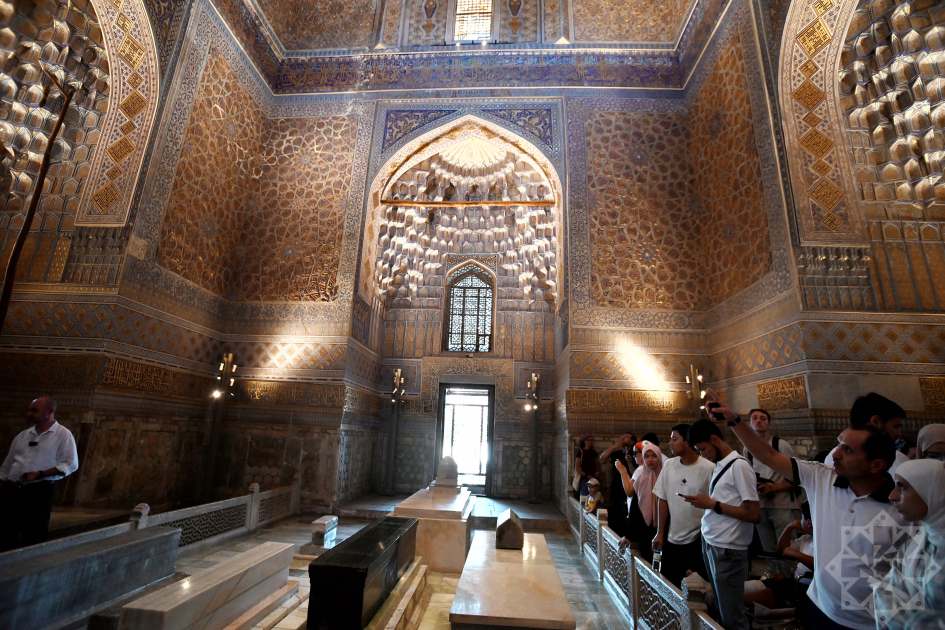
Gur-e-Amir later became the family mausoleum of the Timurids. Amir Timur, his sons Shah Rukh and Miran Shah, his grandsons Muhammad Sultan and Ulugbek, as well as Timur’s spiritual mentor Mir Sayyid Baraka, are buried here.
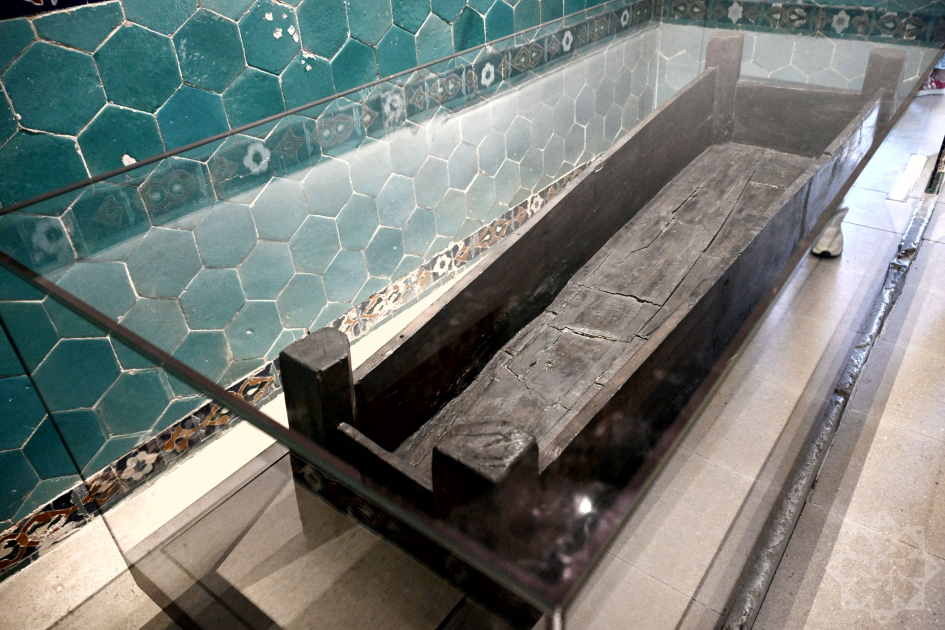
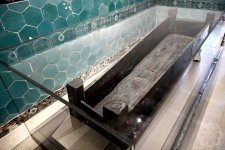
One of the mausoleum’s most recognizable features is Amir Timur’s tombstone, carved from a single piece of dark green jade. The actual burial sites, however, are located in an underground crypt directly beneath the main hall of the mausoleum.
The history of the opening of the Timurid tombs in 1941 remains a subject of particular interest. Archaeological excavations were conducted by a Soviet expedition led by anthropologist Mikhail Gerasimov. Based on the remains, scientists reconstructed the appearance of several members of the dynasty. These events later became associated with the widely known legend of the “curse of Tamerlane.”
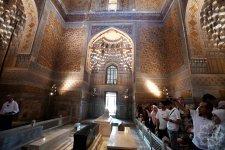
Gur-e-Amir is considered a masterpiece of Timurid-era architecture. Its interior is decorated with mosaics, glazed bricks, gilding and ornamental paintings. The ribbed dome is adorned from the inside with patterns resembling a starry sky, while the walls and decorative panels feature marble, onyx, carved elements and inlays.
The mausoleum played an important role in shaping the architectural traditions of the Timurid era. Its compositional and decorative solutions later influenced the design of other major monuments across Central Asia.
Today, Gur-e-Amir remains one of Samarkand’s key symbols, allowing visitors to explore the architectural and cultural heritage of an era that played a significant role in the history of Central Asia.