


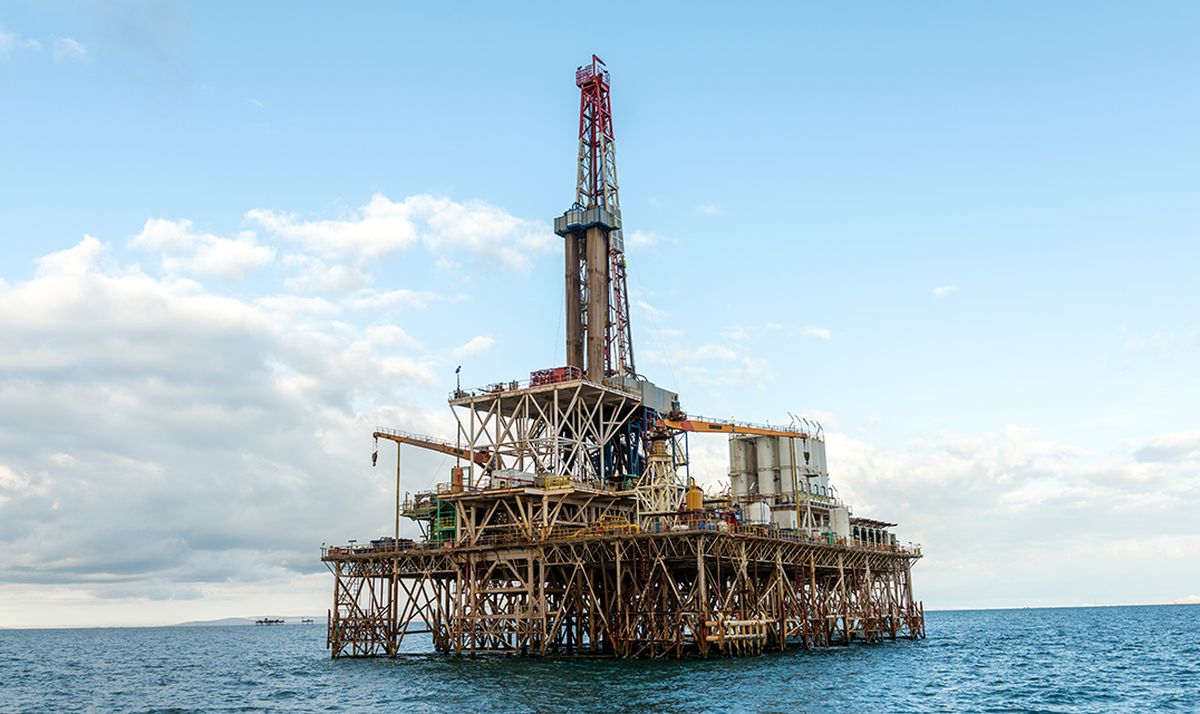

BAKU, Azerbaijan, November 11. Azerbaijan's average daily oil output amounted to 447,000 barrels in October this year, down 4,000 barrels from September.
This was reflected in the monthly report of the Organization of the Petroleum Exporting Countries (OPEC).
According to the report, Azerbaijan's daily oil production quota under the OPEC+ agreement was set at 551,000 barrels for 2026. Thus, the country's actual average daily oil production in October was 104,000 barrels below the established quota.
According to OPEC, Azerbaijan's oil price differential in the Mediterranean basin increased in October. In particular, the price differential between Azerbaijan's Azeri Light crude and North Sea Dated crude rose by $1.94 per barrel compared to September, reaching a positive differential of $13.21 per barrel.
Meanwhile, price differentials for West African crude weakened in October. This was driven by lower demand from European and Asian refineries, high transportation costs, and a growth in unsold oil cargoes. European refiners favored more competitively priced crude from the Middle East, North Sea, and Caspian basin. Asian buyers, meanwhile, reduced purchases of crude transported over long distances from the Atlantic basin.
The report noted that the price differential for Bonny Light crude declined by $3.04 per barrel month-on-month, while that for Forcados crude fell by $4.50 per barrel. As a result, their average positive differentials against North Sea Dated stood at $2.40 and $4.10 per barrel, respectively. The price differential for Cabinda crude weakened by $6.14 per barrel, shifting from a positive differential of $1.09 per barrel in September to a negative differential of $5.06 per barrel in October.
Other crude grades in the Mediterranean market also recorded mixed changes in price differentials. The differential for Saharan Blend crude increased by $1.13 per barrel month-on-month to a positive $7.80 per barrel. Meanwhile, the differential for CPC Blend crude fell by $2.84 per barrel, shifting from a positive $1.91 per barrel in September to a negative $0.93 per barrel in October.
According to OPEC's assessment, increased supplies of medium and high-sulfur crude, including shipments from the Middle East, put pressure on prices in the region. In addition, higher oil exports through the port of Ceyhan and persistently weak demand from refineries intensified competition among high-sulfur crude grades.
As for the trend in Azerbaijan's daily oil production, the average stood at 454,000 barrels in Q1 2026, 456,000 barrels in Q2 2026, and 450,000 barrels in Q3 2026.
For comparison, Azerbaijan's average daily oil production amounted to 461,000 barrels in 2025. The figure reached 466,000 barrels in Q1, 461,000 barrels in Q2, 459,000 barrels in Q3, and 458,000 barrels in Q4.


