


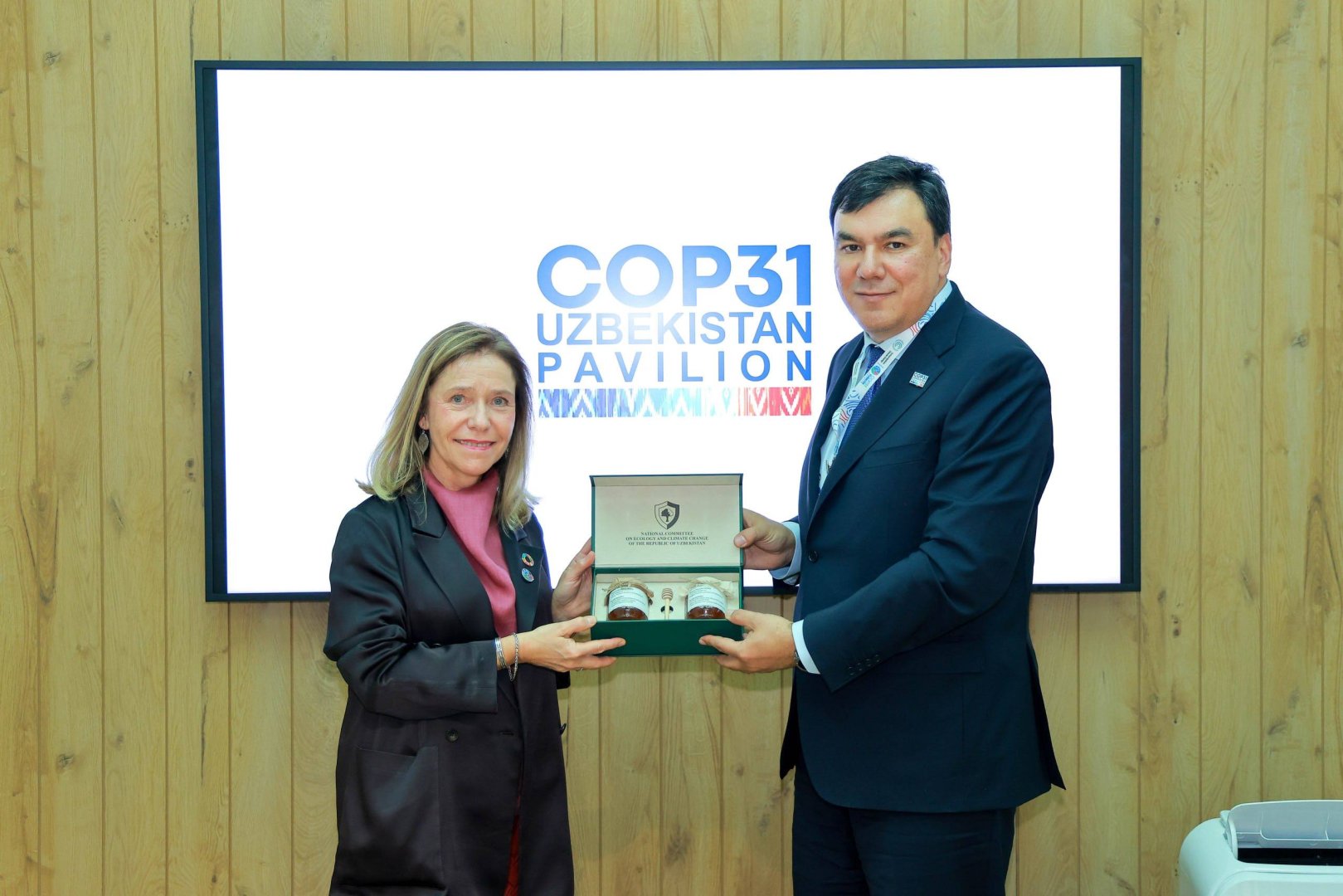

BAKU, Azerbaijan, November 11. Uzbekistan and the World Meteorological Organization (WMO) discussed expanding cooperation in weather forecasting, climate resilience and air quality monitoring, including plans to establish a regional center for monitoring and forecasting dust and sandstorms in Central Asia during a meeting on the sidelines of the 31st UN Climate Change Conference (COP31) in Antalya, Türkiye on November 10.
According to Uzbekistan's National Committee on Ecology and Climate Change, the issues were discussed during a meeting between Aziz Abdukhakimov, adviser to the Uzbek president on environmental issues and chairman of the National Committee on Ecology and Climate Change, and WMO Secretary-General Celeste Saulo.
Particular attention was paid to Uzbekistan's initiative to establish a WMO Regional Center for Monitoring and Forecasting Dust and Sandstorms in Central Asia in Tashkent. The proposed center would bring together the region's scientific and technical expertise to improve forecasting accuracy and ensure timely public warnings about natural hazards.
Additionally, the sides explored the use of artificial intelligence in meteorology, including a proposed pilot project involving Uzbekistan, the WMO and the China Meteorological Administration to adapt and evaluate MAZU technology for Central Asia.
Another proposal under discussion is the establishment of an International Observatory for Atmosphere and Air Quality in Tashkent. The facility is expected to serve as a research platform for studying air pollution, temperature inversions and the cross-border movement of pollutants.
Abdukhakimov also invited Saulo to attend the international exhibition Eco Expo Central Asia 2027, scheduled to take place in Tashkent on June 15–17, 2027.
The sides expressed their readiness to further develop cooperation and implement joint initiatives to strengthen climate resilience in Uzbekistan and across Central Asia.


