


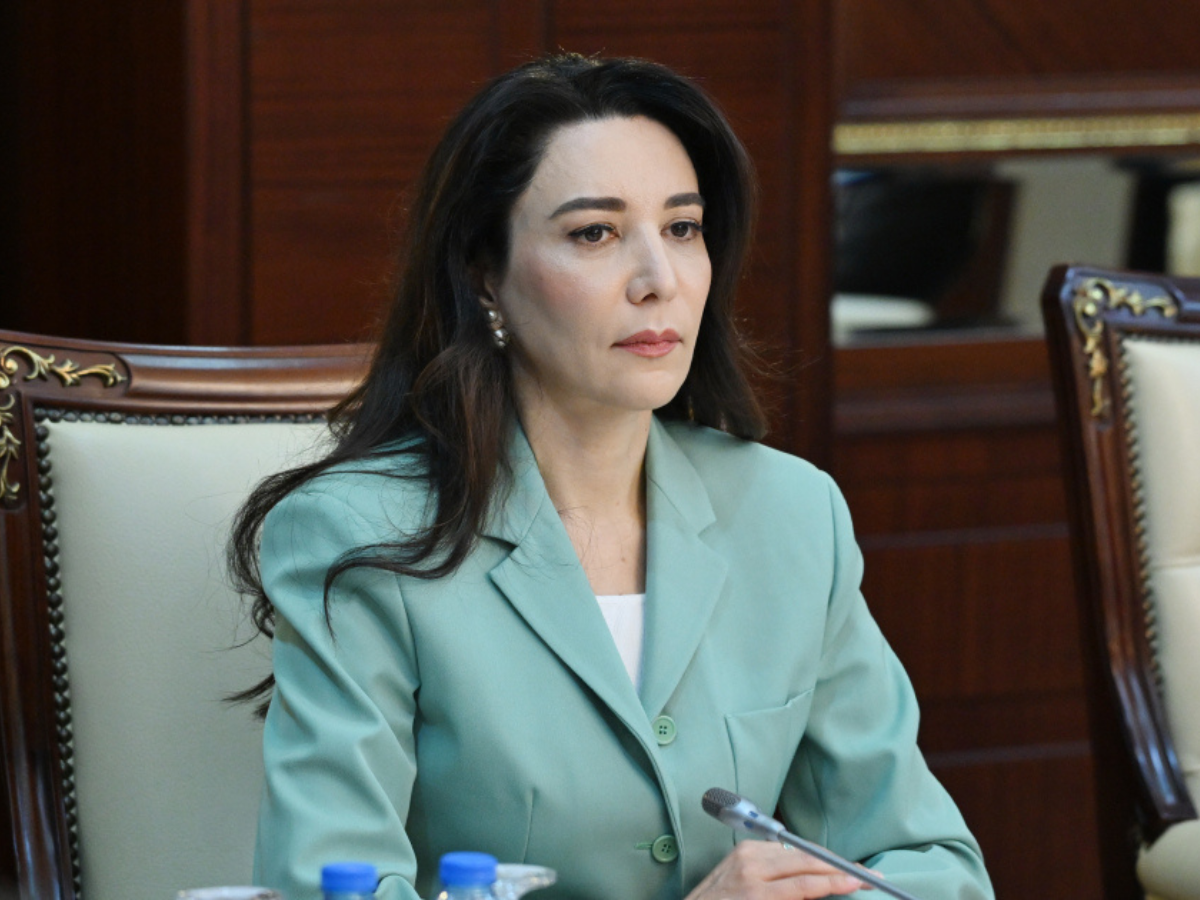

BAKU, Azerbaijan, November 11. Azerbaijani Commissioner for Human Rights (Ombudsperson) Sabina Aliyeva has proposed increasing budget allocations for social services and healthcare during the discussion of the draft law "On the state budget of the Republic of Azerbaijan for 2027" at a joint meeting of four parliamentary committees, Trend’s correspondent reports from the event.
Aliyeva proposed increasing financial allocations in the 2027 state budget for the expansion of social services for the elderly and individuals requiring special care, the provision of rehabilitation aids for persons with disabilities, and the treatment of patients with hemophilia and oncological diseases.
She noted that the discussion of the 2027 state budget is of particular importance for assessing the financial resources necessary to implement upcoming strategic objectives.
Stating that her proposals are based on an analysis of appeals addressed to the ombudsperson and the results of monitoring activities, Aliyeva presented several recommendations aimed at ensuring more effective protection of human rights and freedoms.
She suggested expanding the scope of in-home social services for elderly individuals who live alone, have limited self-care capabilities, or require special care; developing mobile social services in the regions; and improving the staffing and material-technical resources for long-term care services. In this regard, she emphasized the necessity of strengthening the relevant financial allocations within the state budget.
The ombudsperson also deemed it appropriate to expand the network of medical and social rehabilitation services in the regions, and to increase budget allocations to ensure the timely provision of prosthetic-orthopedic products, modern rehabilitation equipment, and other assistive devices tailored to the individual needs of persons with disabilities, including children.
According to her, alongside strengthening medical infrastructure and the availability of qualified personnel in the regions, it is essential to guarantee timely and uninterrupted access to necessary medications for individuals with hemophilia. To this end, it has been proposed to allocate financial resources toward improving the accessibility of these medications through regional medical facilities and establishing necessary reserves for emergency situations.
Aliyeva also highlighted the importance of increasing access to modern treatment methods and highly effective medications for cancer patients. Specifically, she proposed allocating additional funds within the state budget to expand the provision of innovative anti-tumor drugs and to enhance the quality of diagnostic and treatment services.
Furthermore, it was deemed essential to fund the safe and phased implementation of artificial intelligence-based diagnostics and clinical decision-support technologies within the healthcare system. It was noted that these technologies could facilitate the early detection of diseases, particularly in the regions, and enhance the quality of specialized medical services.
The ombudsperson emphasized that the protection of children's rights, their development within a safe and healthy environment, and the expansion of equal access to quality education require special attention within the social expenditure framework of the state budget.
In this regard, during the discussion, it was proposed to allocate necessary financial resources to advance inclusive education. This includes adapting educational institutions to ensure the equal participation of children with special educational needs, organizing individualized support services, and securing the presence of qualified specialists. She also emphasized the importance of increasing funding for awareness-raising programs aimed at protecting children from cyber threats, online abuse, and the unlawful use of their personal data.
Aliyeva also proposed providing financial support for programs focused on the retraining of workers and the development of their digital skills, in light of the impact that digitalization and artificial intelligence are having on the labor market.
She noted the need to fund measures aimed at developing accessible and alternative service options for vulnerable groups during the digitalization of public services.
Furthermore, she proposed supporting, through financial mechanisms, passenger transport routes in remote settlements that are socially significant but offer low commercial profitability.
The ombudsperson highlighted the importance of taking the needs of vulnerable groups into account when allocating funds for measures related to climate change and the risks of natural disasters. These needs include accessible evacuation, temporary accommodation, and social assistance options. Aliyeva also put forward proposals regarding the improvement of the Ombudsman Office’s structure and the more effective organization of its activities.
She noted that, in order to ensure the effectiveness and sustainability of the national preventive and independent monitoring groups, as provided for by the Constitutional Law, the costs associated with their staffing and material-technical resources must be accounted for in the state budget.
Highlighting the extensive scope of the Ombudsman’s work in improving legislation, a task stemming from her constitutional powers, Aliyeva proposed the creation of a separate structural unit within the Office. Given the significant volume of work involved in conducting legal reviews of draft normative legal acts and preparing opinions and proposals regarding them, she suggested providing support for the establishment of this unit and ensuring it is allocated the necessary staff positions.
In line with the priorities established by the President regarding the acceleration of digital transformation, she also emphasized the importance of allocating financial resources to improve and update the electronic document management system within the Ombudsman institution, as well as to integrate it into unified digital state platforms.
Aliyeva highlighted the significance of providing the necessary financial and technical support for the implementation of AI-based technological solutions within the Call Center, noting that this would facilitate more effective and agile protection of human rights.
"I believe that these proposals will be addressed in a phased manner, taking into account the country's development priorities and the capabilities of the state budget, and will make a positive contribution to ensuring human rights more efficiently," the ombudsperson added.


