


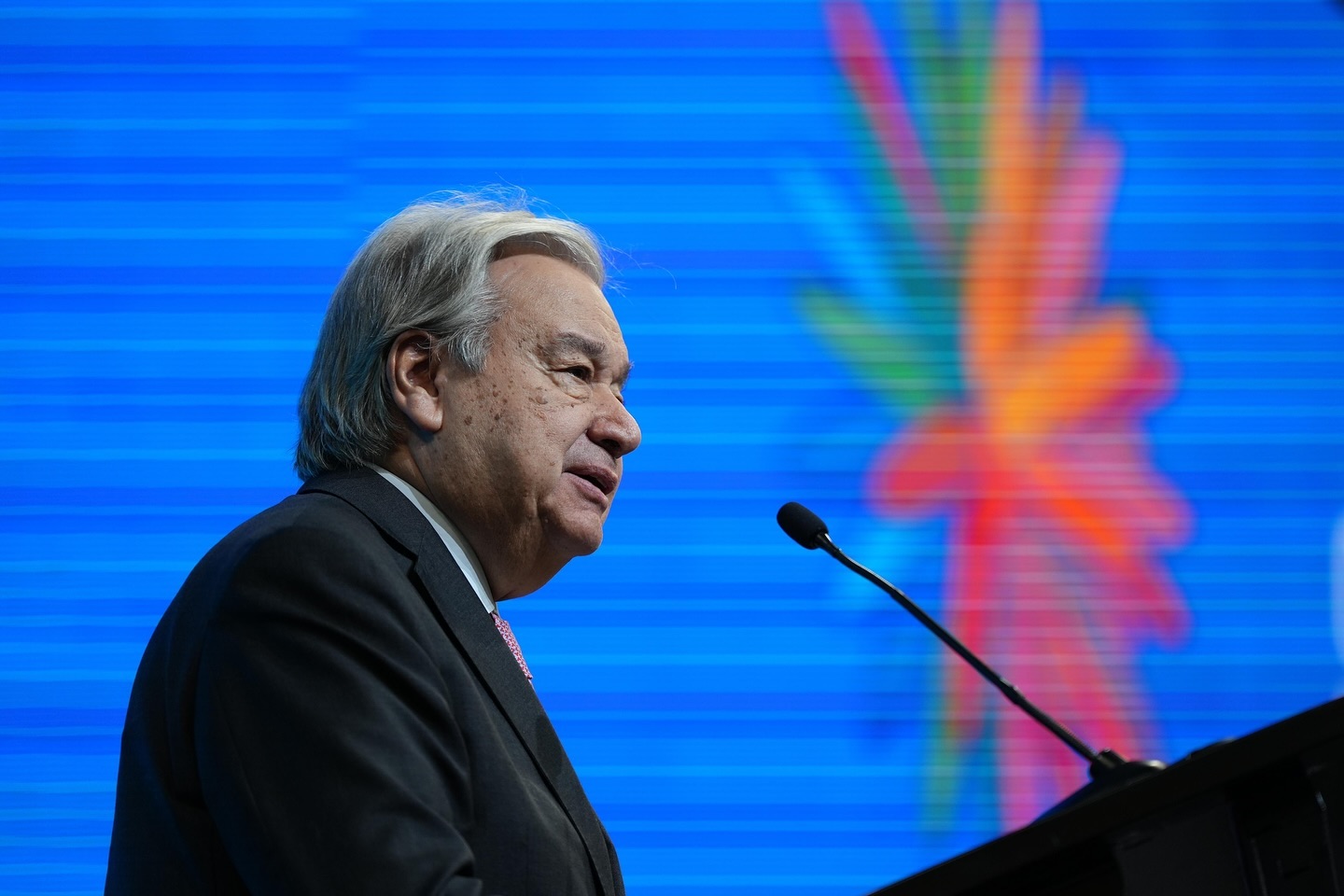

BAKU, Azerbaijan, November 11. Global renewable energy capacity must at least triple by 2035 compared to 2025 levels, while unabated coal-fired power generation must decline by at least 75%, UN Secretary-General António Guterres said at the Leaders’ Summit of the 31st session of the Conference of the Parties to the UN Framework Convention on Climate Change (COP31) in Antalya.
According to him, unabated coal-fired power generation must be almost entirely phased out by 2040, while oil and gas consumption must fall by around one-third.
"Every government must align its policies, investments, and infrastructure plans with these targets," Guterres emphasized.
He called on countries to develop credible national roadmaps for transitioning away from fossil fuels while protecting workers and communities affected by this process.
"That means no new coal projects and no new oil and gas infrastructure that would put the 1.5-degree goal further out of reach. It also means cutting methane emissions, rapidly expanding renewable energy, power grids, energy storage and clean electrification, while protecting forests, oceans and biodiversity," he said.
The UN Secretary-General noted that the transition to clean energy was already accelerating. Ten years ago, solar power accounted for just one percent of global electricity generation, whereas last year it met nearly three-quarters of the growth in global electricity demand.
Furthermore, while electric vehicles accounted for only one percent of cars sold a decade ago, their share is expected to reach nearly one-third in 2026.
Guterres also highlighted the economic risks associated with dependence on fossil fuels. According to him, three-quarters of the world's population live in countries that import fossil fuels, making them vulnerable to price shocks and geopolitical instability.
He added that the transition to renewable energy must be just, orderly and aligned with scientific recommendations.
"We have a choice: plan a just transition or pay the price through chaos and lost livelihoods," Guterres concluded.


