


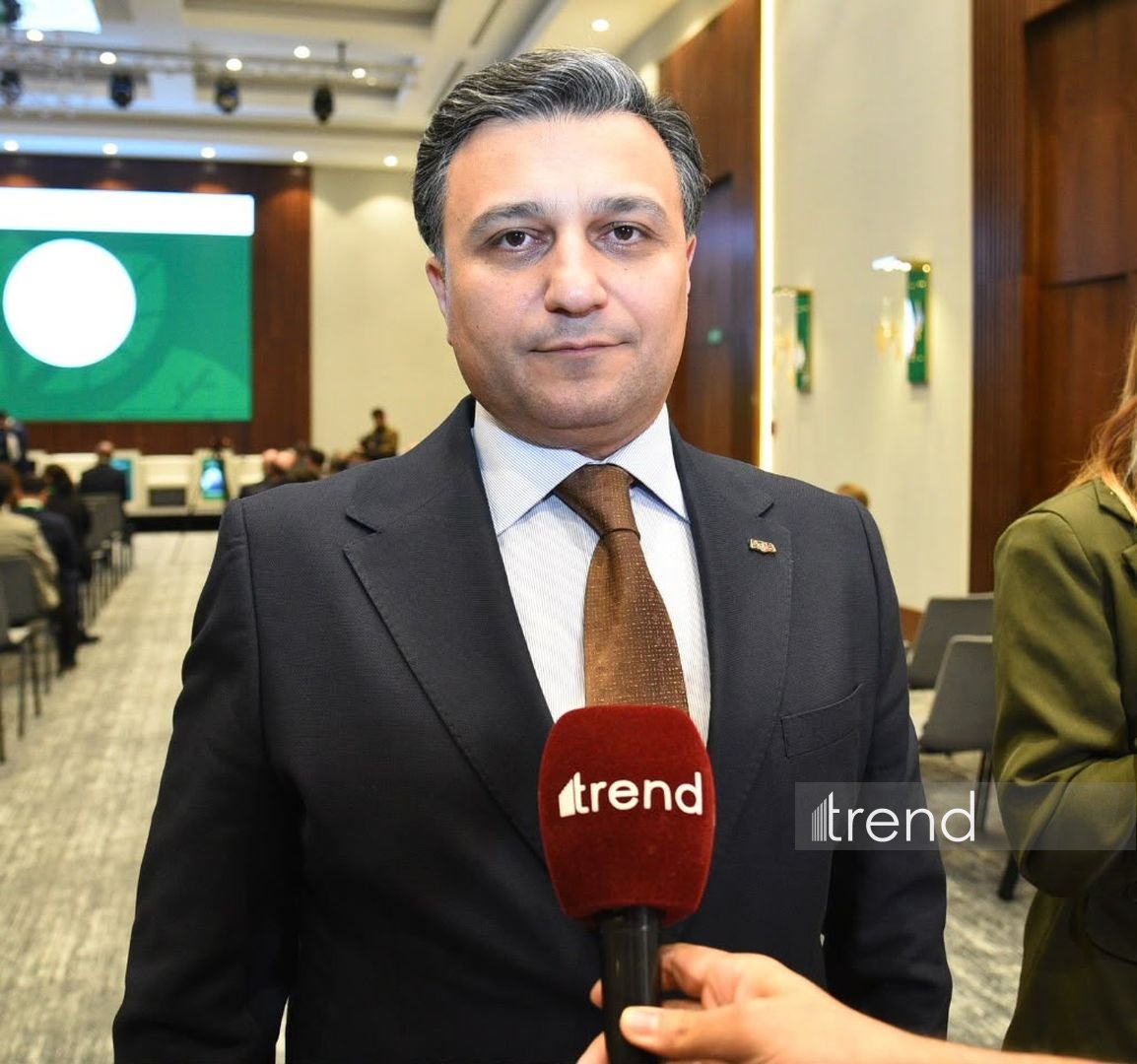

BAKU, Azerbaijan, October 10. Expanding economic cooperation between Azerbaijan and Türkiye, increasing mutual investment, developing agricultural processing and export potential, and improving transport links along the Middle Corridor and the Zangezur route are among the key areas for advancing bilateral economic ties, Chairman of the Board of the Azerbaijan-Türkiye Business Association (ATIB) Mursal Rustamov told Trend in an interview.
He said economic cooperation between Azerbaijan and Türkiye was one of the most important pillars of their strategic alliance. Political trust, mutual support and close business ties between the two countries provide a solid foundation for further expanding economic relations.
According to Rustamov, the main objective at this stage is not only to increase trade turnover but also to diversify economic cooperation, boost mutual investment and develop joint production in sectors that generate higher added value.
“I believe that at the next stage, we should also focus on technology transfer. Azerbaijan can serve as a regional production and export platform for Turkish companies, while Türkiye can provide Azerbaijani companies with access to a broad industrial base, technology and international market experience,” he said.
The ATIB chairman noted that, during meetings with Turkish businesspeople, the association emphasizes the importance of viewing Azerbaijan not merely as a market for finished products or raw materials, but also as a platform for exporting locally manufactured goods to wider regional markets.
He said the potential to access the Commonwealth of Independent States (CIS) market, with a population of around 300 million, through products manufactured in Azerbaijan also creates additional opportunities for Turkish companies.
Rustamov said one of ATIB's main tasks was to turn this potential into tangible business cooperation.
“Among the priorities for 2026 is expanding sector-specific business-to-business (B2B) meetings and cooperation platforms between Turkish entrepreneurs and local businesses. The third edition of the Agricultural Business Forum, held this year, is also particularly important for establishing new partnerships in agriculture and learning and applying modern practices,” he said.
Azerbaijani and Turkish companies join forces to enter third-country markets
The ATIB chairman said Azerbaijani and Turkish companies could strengthen their competitive positions in third-country markets by combining their financial resources, production capacity, technological expertise and international networks.
“By pooling their financial resources, production capacity, technological expertise and international networks, Azerbaijani and Turkish companies can secure stronger competitive positions in Central Asia, the Middle East and other promising markets,” he said.
According to Rustamov, ATIB's activities in this area are still at an early stage.
“Nevertheless, several members of the association have already begun implementing projects in Central Asian countries. Further expansion of partnerships among members could help scale up these projects and strengthen joint operations in new markets,” he said.
Agriculture needs to focus on creating added value
Rustamov emphasized the significant potential of agriculture for expanding economic cooperation between Azerbaijan and Türkiye.
According to him, Azerbaijan's favorable climate, diverse crop-growing opportunities and export potential create an attractive investment environment for Turkish companies.
“Türkiye, in turn, has extensive experience in agricultural technologies, greenhouse farming, irrigation systems, seed production, livestock farming and food processing. Combining these strengths can help increase productivity and improve the competitiveness of local production,” the ATIB chairman said.
He noted that key priorities included introducing modern irrigation technologies, developing digital agriculture solutions, improving product storage and sorting, establishing cold-storage facilities, and expanding packaging and processing operations.
In Rustamov's view, one of the main objectives in agriculture should be to accelerate the shift from exporting raw materials to producing goods with higher added value.
“Exporting fruit and vegetables not only as fresh produce but also in dried, frozen, canned and other processed forms can create broader economic opportunities,” he said.
The ATIB chairman added that the association supports the exchange of technological and management expertise among agricultural companies, helps connect potential investors with local producers, and promotes investment opportunities.
Middle Corridor and Zangezur route open up new opportunities
Rustamov said transport and logistics were strategic sectors with a direct impact on the development of economic cooperation between Azerbaijan and Türkiye.
According to him, Azerbaijan's geographical position linking East and West, Türkiye's extensive transport and industrial infrastructure, and growing international interest in the Middle Corridor are creating new economic opportunities for both countries.
The ATIB chairman noted that developing the Middle Corridor and establishing transport links along the Zangezur route could help expand regional trade, improve transport efficiency and create new production and supply chains.
“Making full use of these routes could strengthen Azerbaijan's transit capabilities while enabling closer economic integration with Türkiye and developing ties with Central Asian markets,” he said.
Rustamov believes that transport connectivity should go beyond building physical infrastructure, with digitalization and integrated data exchange systems also remaining a priority.
Addressing investment needs, the ATIB chairman stressed the importance of developing cold-chain infrastructure for transporting agricultural and food products to expand export opportunities.
He also highlighted the need to improve coordination between ports and railway infrastructure. Investment requirements in these areas, he said, should be determined based on cargo flow forecasts and the economic feasibility of specific projects.
“Turkish companies can be important partners in logistics center management, warehouse technologies, digital cargo tracking systems, transport services and logistics infrastructure development. There are also opportunities for Azerbaijani and Turkish companies to establish joint logistics operators and coordinate regional freight services,” the ATIB chairman added.
Rustamov concluded that ATIB would continue working to strengthen ties between the business communities of Azerbaijan and Türkiye, promote mutually beneficial initiatives and turn new cooperation opportunities into practical results.



